





Start with Comfort: Seating and Warmth
The first rule of a great stargazing session is to be comfortable. You'll be looking up for a long time, so a stiff-backed chair won't do. Opt for a reclining garden chair, a comfortable beanbag, or even just a thick pile of cushions that allows you to lean
back without straining your neck. Even on a pleasant evening, the temperature can drop unexpectedly. Keep a soft blanket or a warm shawl handy to wrap yourself in. This isn't just about staying warm; it’s about creating a cosy, relaxing environment where you can truly lose yourself in the night sky.
Your Window to the Cosmos: Binoculars
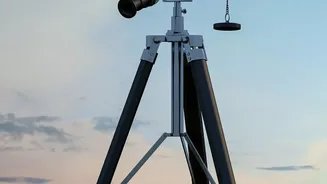
While a large telescope might seem like the ultimate stargazing tool, it’s often impractical for a balcony. This is where binoculars shine. They are portable, easy to use, and offer a wide field of view that's perfect for scanning the Milky Way or watching a meteor shower. A good pair of 7x50 or 10x50 binoculars will reveal breathtaking details, such as the craters on the Moon, the four largest moons of Jupiter, and sparkling star clusters you can't see with the naked eye. They are arguably the best first instrument for any budding astronomer.
Navigate the Night Sky: Stargazing Apps
“What star is that?” is a question you'll never have to ask again. Modern smartphone apps have made navigating the cosmos incredibly simple. Apps like SkyView, Stellarium, or Star Walk use your phone's built-in sensors to identify stars, planets, and constellations in real-time. You just point your phone at the sky, and the app will overlay names and information. Many apps also have features that show you satellite tracks, let you know about upcoming celestial events, and provide rich details about the objects you're viewing.
See in the Dark: A Red Light Torch
It can take up to 30 minutes for your eyes to fully adapt to the dark, and a single glance at a bright white light can ruin your night vision instantly. This is why a red light torch is an essential piece of kit for any stargazer. The rods in our eyes, which are responsible for night vision, are less sensitive to red light. This allows you to check your star charts or find things without having to start the dark adaptation process all over again. If you don't have a dedicated red torch, you can easily make one by covering a regular torch with a piece of red cellophane or plastic.
Know What You're Seeing: A Star Chart or Planisphere
While apps are fantastic, there's a certain magic to using a physical star chart or a planisphere. A planisphere is a rotating star map that can be adjusted for any date and time to show you exactly what constellations are visible. It's a wonderful, screen-free way to learn the layout of the night sky and how the constellations move across the seasons. It helps you build a mental map of the stars that you’ll carry with you for a lifetime, turning a series of random bright dots into a familiar celestial neighbourhood.
Set the Mood: A Warm Beverage
Stargazing is a patient and meditative activity, and nothing enhances that feeling of peace and warmth quite like a comforting drink. Preparing a flask of hot chai, coffee, or your favourite herbal tea can turn a simple observation session into a cherished ritual. The warmth of the mug in your hands as you watch a planet rise over the horizon is one of those simple pleasures that makes the experience truly memorable. It's a small touch that adds a significant layer of coziness to your cosmic journey.
Document Your Discoveries: A Notebook and Pen
Turning observation into a more active practice can deepen your connection to the hobby. Keep a dedicated notebook and pen (used with your red light, of course) to jot down your observations. You could sketch the phases of the Moon, track the movement of Jupiter's moons from night to night, or simply write down your thoughts as you gaze into the vastness of space. This logbook becomes a personal record of your journey as a stargazer, a tangible collection of your nights spent under the stars.