






Choose Your Bedding Wisely
The first step is to be selective about the guest bedding you purchase. Instead of a thick, heavy duvet that’s difficult to store, consider more versatile options. A medium-warmth duvet with a tog rating of around 10.5 is often sufficient for most Indian
climates, especially in insulated modern apartments. The tog rating simply measures thermal insulation; a lower number means a lighter, cooler duvet, while a higher number means a warmer one. Natural fillings like cotton or bamboo are often more breathable and can be less bulky than some synthetic alternatives. For a truly space-saving solution, look into high-quality folding beds that come with their own mattresses and can be slid under a bed or into a wardrobe. Another excellent choice is a sofa-cum-bed, which serves a dual purpose and eliminates the need for separate guest bedding entirely. Even a traditional, lightweight Jaipuri razai can be a wonderfully comfortable and easily stored option.
Rethink Your Storage Strategy
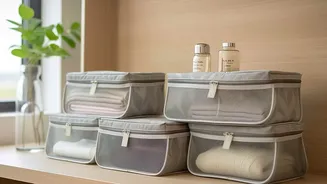
Once you have the right bedding, storage becomes simpler. Vacuum-sealed bags are a non-negotiable for small homes. They can reduce the volume of a fluffy duvet or pillows by up to 75%, allowing you to tuck them away on the top shelf of a wardrobe or in an ottoman. Speaking of which, multi-functional furniture is your best friend. A storage ottoman can hold blankets, a bed frame with built-in drawers can store sheet sets, and even a simple divan bed offers a large, concealed space for bedding. A genius, no-cost trick is to fold a complete bedding set—duvet cover, bedsheet, and pillowcases—and store it all inside one of the matching pillowcases. This keeps sets together, creating neat, stackable parcels that are easy to grab when guests arrive.
The Power of a Clear Label
This brings us to the most crucial, yet often overlooked, step: labelling. You may have perfectly compressed and stored your bedding, but it’s useless if you can't remember what’s in each bag. You’ll find yourself tearing open every package just to find the double-bedsheet set. A simple, inexpensive label maker is a fantastic investment for home organisation. Clearly label each vacuum bag or storage container. Be specific. Instead of just “Bedding,” write “Guest Duvet - King, 10.5 Tog” or “Single Bedsheet Set - Blue Cotton.” If you use storage bins, clip-on labels are another great option. This simple act transforms your storage from a chaotic pile into a functional library of linens. It saves you time and stress, making the process of preparing for guests smooth and efficient.
Decoding Labels Before You Buy
Making clear choices starts in the store, by understanding the labels on the products themselves. Don't just look at the price and colour. Check the tog rating to ensure you're not buying an overly warm, bulky duvet that’s impractical for your home and climate. Look at the material composition. A 100% cotton sheet set might be more breathable, while a poly-cotton blend may be more wrinkle-resistant and durable—important factors for guest linen. While a high thread count can feel luxurious, a count between 200-400 is often the sweet spot for durability, softness, and breathability without becoming too delicate or expensive for occasional use. Understanding these details allows you to purchase bedding that is not only comfortable for your guests but also practical for your storage limitations.