





The Rising Tide of Coastal Threats
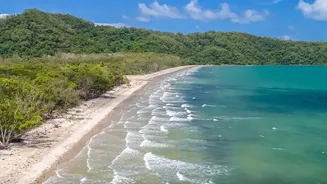
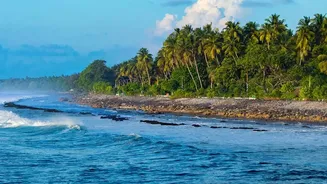
India's coastline, stretching over 7,500 kilometres, is a frontline in the battle against climate change. Increasingly frequent and intense cyclones, coupled with rising sea levels, are causing significant coastal erosion. This relentless advance of the sea threatens
homes, agricultural lands, and the livelihoods of millions. For instance, between 1990 and 2016, nearly a third of India's coastline experienced some degree of erosion. In vulnerable deltas like the Sundarbans, the loss of land is a persistent, existential threat, forcing communities to seek solutions that are both effective and sustainable. Without intervention, these coastal regions face a future of displacement and economic hardship.
Nature’s Green Fortress
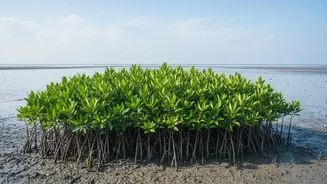
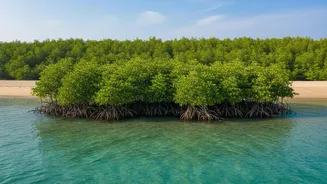
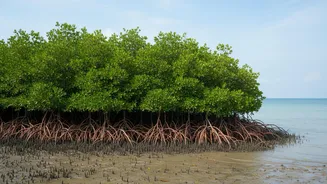
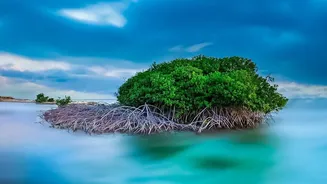
Enter the mangrove, a unique group of salt-tolerant trees and shrubs that thrive in the intertidal zone where land meets sea. Mangroves are nature's coastal engineers, and their effectiveness as a 'bio-shield' lies in their incredibly complex root systems. These dense, tangled roots act like a natural breakwater, dissipating the energy of waves and slowing down storm surges. Studies have shown that a healthy mangrove forest can reduce wave height significantly, with some estimates suggesting a reduction of 50% to 99% over a 500-metre stretch. By trapping sediment, their roots also help to stabilize the shoreline, prevent erosion, and even build up land over time. During cyclones, villages protected by mangroves have reported substantially less damage compared to those without this natural barrier.
The Community-Led Blueprint
Building a mangrove bio-shield is a deeply community-driven process. It typically begins with identifying degraded coastal mudflats where mangroves once grew. The key to success is community ownership. Often led by local NGOs, self-help groups, and village councils, the process involves several stages. First, community-managed nurseries are established to cultivate saplings of native mangrove species suited to the local salinity and soil conditions. This is crucial, as planting the wrong species can lead to failure. Then, during low tide, volunteers, often women, plant the saplings in meticulously planned rows. This work is arduous, involving wading through knee-deep mud to place each seedling. The real effort, however, lies in long-term monitoring and protection to ensure the saplings survive their vulnerable early years.
Success Stories from India's Coasts
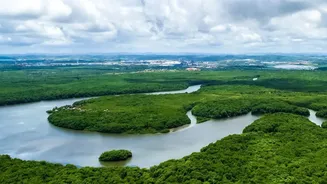
Across India, this community-led model is yielding remarkable results. In the Sundarbans of West Bengal, organisations have mobilized thousands of villagers, particularly women, to plant millions of mangroves. These restored forests have proven their worth, acting as a green wall during cyclones like Amphan and protecting inland embankments. In Odisha, Village Mangrove Councils led by women have not only planted tens of thousands of saplings but also boosted the local economy through job creation. Similar success stories can be found along the coasts of Gujarat and Maharashtra, where community-based management has restored thousands of hectares of mangrove forests, enhancing both ecological health and disaster resilience.
More Than Just a Wall of Trees
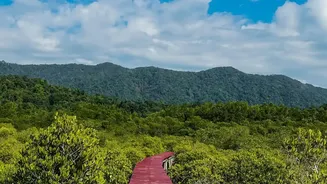
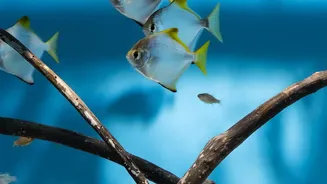
The benefits of these bio-shields extend far beyond coastal protection. Restored mangrove forests are biodiversity hotspots, serving as critical nursery grounds for fish, crabs, and shrimp. This directly supports local fisheries, providing food security and a vital source of income. The restoration work itself creates jobs, from nursery management to planting and monitoring. Furthermore, these projects empower communities, particularly women, who are often at the forefront of these conservation efforts. By placing local people as the custodians of their environment, these initiatives build social resilience alongside ecological resilience, creating a sustainable model for climate adaptation.