





Understanding the 'Caretaker' Role
In Israel's parliamentary system, a government that loses its majority or follows an election without a clear winner doesn't just disappear. It becomes a transitional or 'caretaker' government. This ensures the state continues to function without interruption.
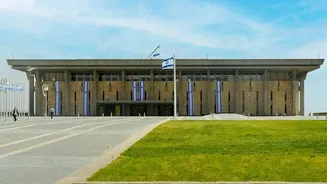
According to Israel’s Basic Laws, which act as a quasi-constitution, the outgoing administration continues to operate until a new government wins a confidence vote in the Knesset, Israel's parliament. So while Benjamin Netanyahu's coalition lost its majority in the October 27 election, he remains Prime Minister with his cabinet until a successor is sworn in. This period is defined by a 'duty of restraint,' a principle established by Israel's High Court, meaning the government should avoid making major, long-term decisions.
What Netanyahu Can (and Cannot) Do
A caretaker prime minister retains significant authority, especially on national security. The government can still manage day-to-day affairs, foreign relations, and crucially, military operations. Experts note that security issues are often seen as a necessary exception to the 'duty of restraint,' and a caretaker prime minister could legally take the country to war, though such a move would face intense scrutiny. However, major new policy initiatives, long-term economic commitments, or significant senior appointments are generally off-limits. The government's decisions are subject to a stricter standard of reasonableness by the courts. While Netanyahu can dismiss or appoint ministers under certain conditions, he cannot, for instance, pass new legislation designed to impact his ongoing corruption trial.
The State of Parliamentary Negotiations
The election resulted in a hung parliament. Netanyahu's right-wing bloc secured 53 seats, while a diverse anti-Netanyahu bloc led by former military chief Gadi Eisenkot won 48 seats—both short of the 61 needed for a majority in the 120-seat Knesset. The Arab-led parties, with a record 19 seats, have become potential kingmakers. On November 8, President Isaac Herzog gave Eisenkot the first mandate to try and form a government, based on recommendations from a majority of lawmakers. Eisenkot now has a 28-day window, with a possible 14-day extension, to build a coalition. His challenge is immense, as he must unite parties with vast ideological differences, from the right-wing Yisrael Beitenu to the Arab-led Joint List.
Possible Paths to a New Government
There are three primary outcomes to the current deadlock. First, Gadi Eisenkot could successfully negotiate a coalition and win a confidence vote in the Knesset, becoming the new Prime Minister. This would likely require the support or abstention of Arab parties, a move some in his bloc oppose. Second, if Eisenkot fails by his deadline (roughly December 6, or December 20 with an extension), President Herzog could give the mandate to another candidate, most likely Netanyahu. Netanyahu has been calling for a national unity government, but Eisenkot's bloc has so far rejected this. The third scenario is that no one succeeds in forming a government, plunging Israel into yet another election cycle in early 2027.