



A Sweet Discovery in the Stars
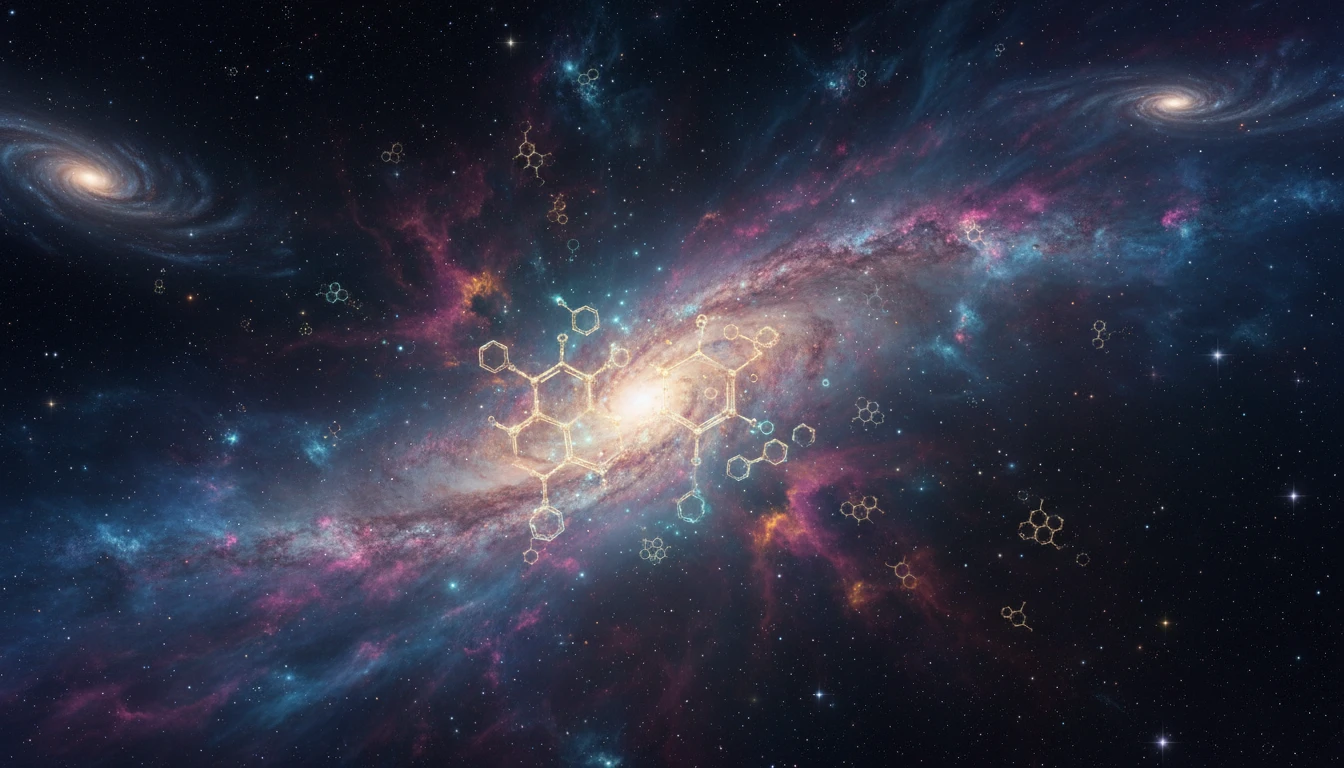
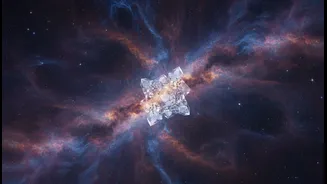
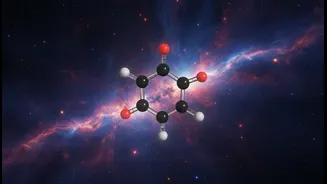
Astronomers have found something familiar in a very unfamiliar place. Using powerful radio telescopes in Spain, a team of researchers detected the chemical signature of erythrulose, a four-carbon sugar, in a massive cloud of gas and dust near the centre
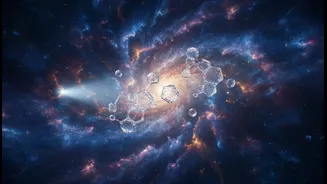
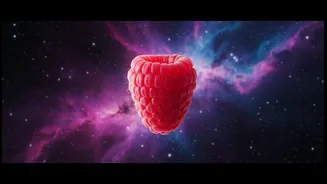
of our Milky Way galaxy. Here on Earth, erythrulose is a simple sugar naturally found in fruits like red raspberries. In space, however, its presence is a landmark discovery. While other simple organic molecules have been found before, and even sugars like glucose have been identified within meteorites that have landed on Earth, this is the first time a true sugar has been positively identified floating in the interstellar medium — the vast, cold space between stars. The discovery was made in a molecular cloud known as G+0.693-0.027, a known cosmic nursery rich in complex organic molecules.
The Cosmic Recipe for Life
Sugars are fundamental to life as we know it. They are not just a source of energy; they form the very backbone of RNA and DNA, the molecules that carry the genetic instructions for all living things. For decades, scientists have debated how these essential building blocks first appeared on early Earth. Laboratory experiments trying to recreate Earth's prebiotic conditions have struggled to produce sugars in the quantities needed to kickstart life. This has led to a fascinating hypothesis: what if the key ingredients for life didn't form on Earth at all, but were delivered from space? The discovery of erythrulose provides strong evidence for this idea. It suggests that complex chemical processes are happening in these cold, dark clouds, long before planets even begin to form. This means the raw materials for life might be universally available.
From Stardust to Planets
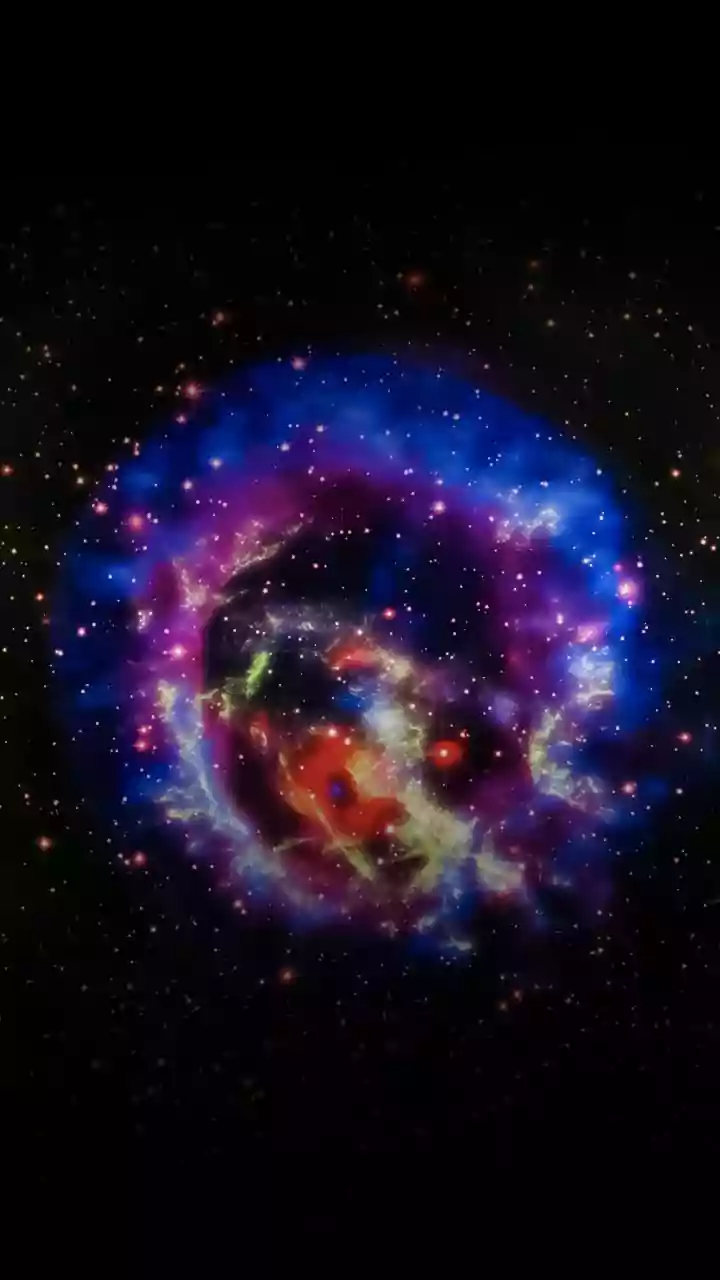
So, how does a sugar molecule in a distant cloud connect to the formation of planets? Planets are born from protoplanetary disks — vast, rotating disks of gas and dust that surround young stars. This gas and dust is inherited from the same kind of interstellar molecular clouds where erythrulose was just found. Molecules form on the icy surfaces of dust grains within these clouds. As the cloud collapses to form a star and its accompanying disk, these pre-made organic compounds are incorporated into the mix. Essentially, the cloud is pre-stocked with the chemical building blocks of life. These molecules, including sugars, can then be delivered to fledgling planets as they accrete material, or via impacts from asteroids and comets that are also formed from this same material. Scientists estimate that during a period known as the Late Heavy Bombardment, millions of tonnes of erythrulose could have been delivered to a young Earth.
A Stepping Stone to Something Bigger
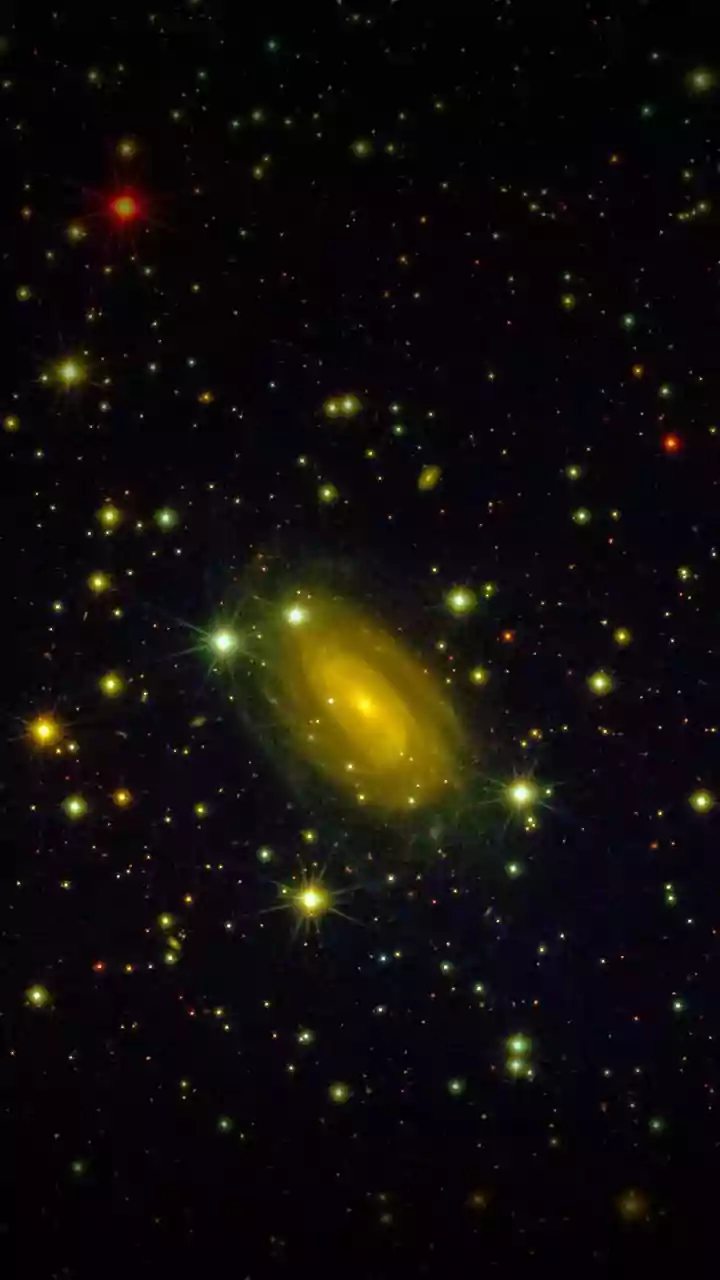
Erythrulose is what chemists call a four-carbon sugar. While important, it is considered a stepping stone to even more crucial molecules. Scientists are particularly excited because its formation pathway could also lead to the creation of five-carbon sugars like ribose, the 'R' in RNA. The fact that a relatively complex molecule like erythrulose can form under the harsh conditions of interstellar space makes it much more plausible that ribose and other vital prebiotic molecules are also out there, waiting to be discovered. This discovery refines the search strategy for astronomers. Instead of just looking for the simplest molecules, they now have evidence that more complex chemistry is at play, allowing them to hunt for even more significant compounds. Future observations with next-generation telescopes will continue to scan these cosmic cradles, hoping to find the full suite of ingredients needed to start a planet on the path to life.