






The Elixir of the Rainy Season
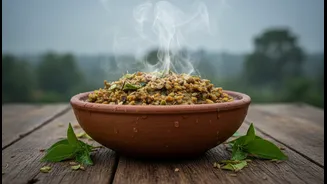
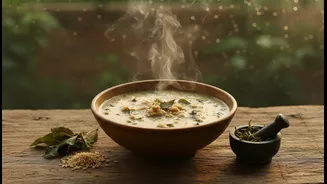
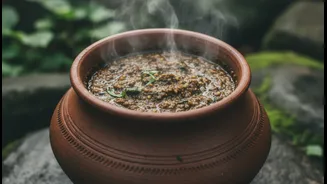
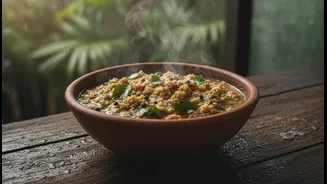
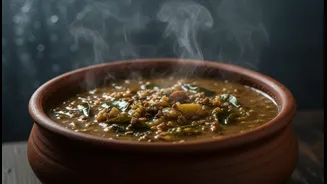
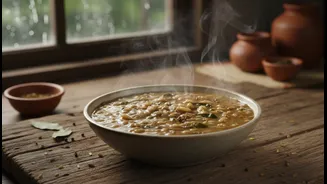
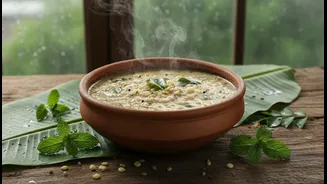
Karkidaka Kanji, also known as Oushadha Kanji or Marunnu Kanji (medicinal porridge), is a warm, medicated rice gruel traditionally consumed during Karkidakam, the last month of the Malayalam calendar which falls between mid-July and mid-August. This period
coincides with the peak of the southwest monsoon, a time when, according to Ayurvedic principles, the body's digestive fire (Agni) is weakest and immunity is low. The porridge is designed as a direct response to this seasonal vulnerability. It’s a nourishing, easily digestible meal intended to boost immunity, aid digestion, and detoxify the body. The base is typically Njavara rice, a medicinal variety unique to Kerala, cooked with coconut milk and a specific blend of herbs and spices.
Pantry Wisdom in a Bowl
The recipe for Karkidaka Kanji is a masterclass in 'pantry wisdom,' where every ingredient serves a purpose. Spices like dry ginger (chukku), cumin (jeeraka), and fenugreek (uluva) are chosen to rekindle digestive strength and reduce inflammation. The real medicinal power, however, comes from a collection of potent herbs. Many recipes call for Dasapushpam, a group of ten sacred flowers and herbs that grow wild in Kerala, each with distinct therapeutic properties recognized in traditional medicine. This blend of easily available, seasonally appropriate ingredients embodies the Ayurvedic principle of 'Ahara as Aushadha'—food as medicine. It’s a tradition passed down through generations, representing a holistic understanding of how to live in harmony with nature's cycles.
A Pan-Indian Porridge Tradition
While Karkidaka Kanji is specific to Kerala, the concept of a nourishing monsoon porridge is a pan-Indian phenomenon. Different regions have their own versions tailored to local ingredients and climates. In Bengal, the rainy season is synonymous with Khichuri, a comforting and often elaborate dish of rice and lentils served with an array of fried accompaniments. In Tamil Nadu, the month of 'Adi' sees the preparation of various mixed rice dishes and porridges like Koozh, often fermented, to suit the weather. In Goa, ragi-based porridges like the sweet Tizaan and savoury Ambil are popular. These regional variations all stem from the same core principle: that the monsoon demands a shift towards lighter, warmer, and more restorative foods to keep the body in balance.
From Kitchen Ritual to Wellness Kit
In recent years, Karkidaka Kanji has moved from being a purely domestic ritual to a commercially available wellness product. The shelves of supermarkets and pharmacies across Kerala are now stocked with 'Karkidaka Kanji Kits,' containing pre-measured packets of Njavara rice and the required herbal powders. This commercialization has made the tradition more accessible to busy urban dwellers who may lack the time or knowledge to source the individual herbs. It has also been embraced by the wellness and tourism industries, which market Karkidaka Chikitsa (monsoon treatment) as a seasonal detox and rejuvenation experience. This has given the humble porridge a fresh, modern context, positioning it as a time-tested superfood.
Acknowledging the Limits
Despite its growing popularity, it's important to approach the tradition with a balanced perspective. While Ayurvedic practitioners stand by the kanji's benefits for seasonal wellness, many of the specific health claims require more rigorous scientific validation. Furthermore, the commercialization, while convenient, raises questions about authenticity and standardization. The ingredients in ready-made kits can vary significantly between brands, potentially diluting the traditional formulations. There is also the risk of decontextualization, where the porridge is reduced to a trendy 'detox food' stripped of its cultural and medicinal underpinnings. Appreciating the kanji fully means recognizing it not as a magical cure-all, but as a piece of cultural wisdom with both practical benefits and inherent limitations.