






The Unseen Effects of Poor Lighting
Before you even think about your to-do list, the light in your workspace is sending signals to your brain. Humans are biologically wired to respond to light; it governs our internal clocks, or circadian rhythms, which regulate everything from our sleep-wake
cycles to our energy levels throughout the day. When you work in a dimly lit space, your body receives confusing cues. Instead of the bright light that signals alertness, the gloom can tell your brain it's time to wind down, leading to feelings of lethargy and sluggishness before you’ve even opened your laptop. This is why working near a window with access to natural light is consistently linked to better mood, focus, and overall well-being. Exposure to natural light helps boost serotonin, a hormone that stabilises our mood and promotes feelings of happiness.
From Discomfort to Physical Strain
The most immediate impact of a dark work corner is physical discomfort. Inadequate lighting is a primary cause of Computer Vision Syndrome (CVS), a collection of eye and vision problems from prolonged screen use. Symptoms often include eye strain, irritation, blurred vision, and frequent headaches. When you can't see your screen or documents clearly, you instinctively lean forward, crane your neck, and squint. This poor posture creates a ripple effect of physical strain, leading to neck, shoulder, and back pain. Over time, what starts as a minor annoyance can develop into chronic discomfort that impacts your health well beyond the workday. The issue isn't just about brightness; harsh, poorly placed lighting can cause glare on your screen, which is just as likely to trigger eye strain and headaches.
The Toll on Mood and Motivation
A dark workspace doesn't just make it harder to see; it can make it harder to feel motivated. The connection between light and mood is well-documented. Insufficient light, particularly a lack of natural daylight, can contribute to feelings of sadness, low energy, and irritability. For some, it can even exacerbate symptoms of seasonal affective disorder (SAD). A poorly lit environment can feel confining and oppressive, which can drain your mental energy and make even minor work challenges feel more stressful. Conversely, a bright, well-lit space is often perceived as a healthier and more positive environment, which can significantly boost morale and job satisfaction. The simple act of improving your lighting can make your work area feel more inviting and less like a cave of obligations.
Layering Light for a Better Space
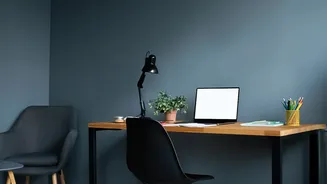
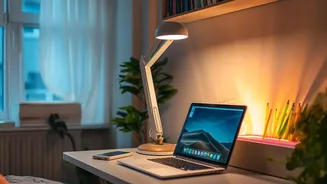
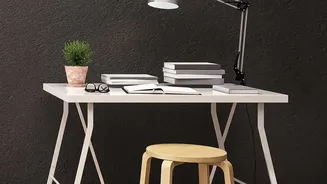
Fixing a dark corner isn’t about pointing a single, blindingly bright lamp at your desk. The key to effective workspace lighting is layering. Ergonomics experts recommend a combination of three types of light to create a balanced and comfortable environment. First is ambient lighting, the general, overall light that fills the room, usually from a ceiling fixture. This provides a base level of illumination. Second is task lighting, which is a focused light directed at your specific work area, such as an adjustable desk lamp. This is crucial for reducing eye strain while reading or writing. Finally, accent lighting can be used to add depth and reduce harsh shadows, making the space feel more dynamic and pleasant.
Simple Steps to a Brighter Workday
You can dramatically improve your comfort with a few strategic changes. Start by maximising natural light: position your desk to the side of a window if possible, rather than directly in front of or behind it, to get the benefits of daylight without the glare. For your artificial lights, choose the right colour temperature. Cool-white or daylight bulbs (around 4000K-5000K) are ideal for work areas as they promote alertness. An adjustable LED desk lamp is one of the best investments you can make, allowing you to direct light exactly where you need it and control the brightness. Finally, be mindful of glare. Use an anti-glare screen for your monitor and ensure light sources don't create distracting reflections. Taking these small steps can transform your workspace from a source of strain into a place of comfort and focus.