


Why Yoga Works for Exam Stress
When you feel stressed, your body enters a 'fight or flight' mode, which can make it hard to concentrate and rest. Yoga helps to counteract this by combining gentle physical movements with controlled breathing. This practice calms the nervous system,
reduces the stress hormone cortisol, and increases blood flow to the brain, which can improve memory and focus. It’s not about twisting into complicated shapes; it’s about giving your mind and body a much-needed break. Even just a few minutes a day can help you build resilience and better handle the pressures of studying and tests.
Child's Pose (Balasana)
This is a deeply relaxing resting pose that is perfect for when you feel overwhelmed. It gently stretches the back, hips, and shoulders, releasing tension that builds up from long hours of sitting. To do it, kneel on the floor, sit back on your heels, and fold your upper body forward, resting your forehead on the mat. You can stretch your arms out in front of you or rest them alongside your body. Focus on taking long, deep breaths, allowing your mind to quiet down. Stay here for at least 30 seconds to feel a sense of calm wash over you.
Cat-Cow Stretch (Marjaryasana-Bitilasana)
Sitting hunched over books can lead to a stiff spine and sore shoulders. The Cat-Cow stretch is a gentle, flowing movement that wakes up the spine and relieves tension in the back and neck. Start on your hands and knees. As you inhale, drop your belly and look up, creating an arch in your back (Cow Pose). As you exhale, round your spine up towards the ceiling and tuck your chin to your chest (Cat Pose). Repeating this movement 5-10 times helps to sync your breath with your body, promoting a state of mindful awareness.
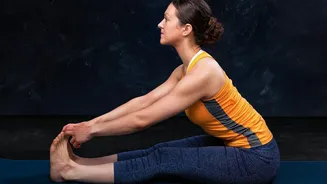
Seated Forward Bend (Paschimottanasana)
This pose is excellent for calming the mind and stretching out the hamstrings and lower back, which can get tight from sitting. Sit on the floor with your legs stretched out in front of you. As you inhale, sit up tall. As you exhale, gently fold forward from your hips, reaching for your shins, ankles, or feet. Don't worry about how far you can go; the goal is to feel a gentle release. Hold the pose and breathe deeply, allowing your mind to settle. It’s a great way to turn your attention inward and block out distractions.
Legs-Up-The-Wall Pose (Viparita Karani)
This is one of the most restorative and relaxing poses you can do. It helps to calm the nervous system, reduce fatigue, and improve circulation after a long day of studying. To practice it, sit with one side of your body against a wall. Gently swing your legs up the wall as you lie back on the floor. Your body should form an 'L' shape. Rest your arms by your sides and close your eyes. Stay in this position for 5 to 10 minutes, focusing on your breath. It's a simple, effortless way to refresh both your body and mind.
Corpse Pose (Savasana)
Though its name sounds dramatic, Savasana is the ultimate relaxation pose. It gives your body and mind a chance to fully let go and absorb the benefits of your practice. Simply lie flat on your back with your arms and legs relaxed and slightly apart. Close your eyes and allow your breathing to become natural. Try to release tension from every part of your body, from your toes to your face. Even five minutes in this pose can help reduce anxiety and leave you feeling refreshed and mentally clearer for your next study session.