



The Art of Travelling Slowly
Slow travel isn't about seeing less; it's about seeing more of what matters. In Rajasthan, a land steeped in artistic heritage, this means bypassing the crowded tourist hubs to spend time in the villages where traditions are a way of life. It’s the difference
between buying a souvenir and watching the artisan create it, between a fleeting photo and a lasting memory. This journey focuses on the craft clusters around Jaipur, where centuries-old skills are passed down through generations. By dedicating time to these communities, you support local economies and gain a deeper appreciation for the intricate processes behind Rajasthan's most famous arts.
Day 1: Arrival in Jaipur & Blue Pottery
Your journey begins in Jaipur, the Pink City. After settling in, immerse yourself in one of its most iconic crafts: blue pottery. Unlike most pottery, Jaipur's version uses a dough made from quartz powder instead of clay, a technique with Persian origins. Several workshops, many run by master artisans, offer hands-on sessions. Spend the afternoon learning to shape the unique dough, paint delicate floral motifs with natural oxides, and understand the glazing process. It’s a meditative introduction to the patience and precision that defines Rajasthani craft. Many award-winning artists host these sessions in their family studios, offering a personal glimpse into a living heritage.
Day 2: The Block Prints of Sanganer
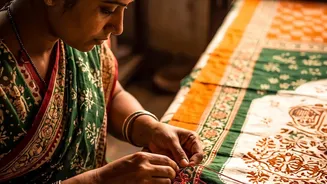
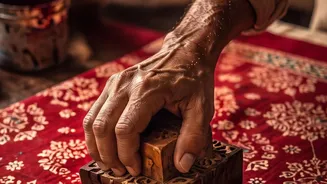
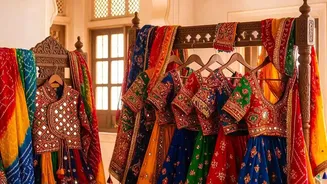
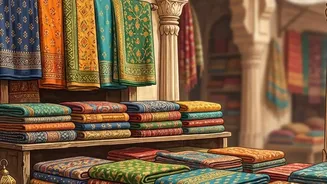
Just 16 kilometres south of Jaipur lies Sanganer, a town synonymous with fine block printing. For over 400 years, the Chhipa community here has perfected the art of printing intricate floral patterns, often on light or white backgrounds. The town's identity is so tied to the craft that you'll see colourful fabrics drying on rooftops and in open courtyards. Spend the day visiting family-run workshops where you can watch master printers at work. You'll learn how seasoned teak wood is carved into elaborate blocks and how natural dyes are prepared. Many studios offer workshops where you can try your hand at printing your own scarf or tote bag, a tangible connection to a craft protected by law as a Geographical Indication.
Day 3: Earthy Tones and Mud-Resist in Bagru
Travel about 30 kilometres southwest of Jaipur to the village of Bagru, another legendary block-printing centre with a distinct style. Unlike Sanganer's delicate florals, Bagru is known for its earthy palette of black, red, and maroon, and its signature 'dabu' mud-resist printing. Here, artisans use a special mud paste to create patterns before dyeing the fabric, often in vats of natural indigo. A walk through the Chhipa Mohalla (printers' quarter) reveals an open-air museum of textile production. Participate in a workshop to experience the full process, from applying the mud resist to seeing the final patterns emerge after washing and drying in the Rajasthani sun.
Day 4: Puppets and Purpose in Tilonia
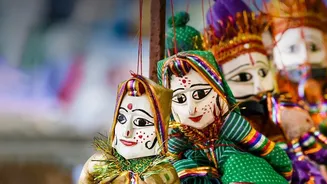
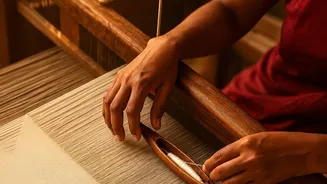
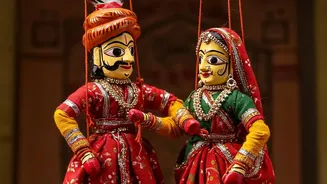
Venture further afield to Tilonia, about an hour and a half from Jaipur. This village is home to the remarkable Barefoot College, a non-profit that has been empowering rural communities since 1972. The college has played a crucial role in reviving and sustaining local crafts, including leatherwork, weaving, and puppetry. Its craft initiative, Tilonia Bazaar, helps connect artisans directly with markets. A visit here offers a powerful look at how craft can be a tool for social and economic change. You can explore the workshops, purchase ethically made goods, and perhaps even catch a traditional Kathputli (string puppet) show used for community storytelling.
Day 5: The Storytellers of Kathputli Nagar
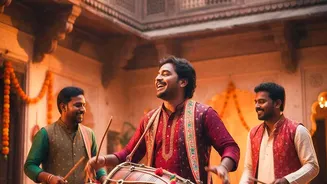
Return to Jaipur for a final, enchanting experience in Kathputli Nagar. This settlement is home to hundreds of families of hereditary puppeteers who have kept the thousand-year-old art of Kathputli alive. The name itself means 'wooden doll'. Here, you can visit the homes of artisans like Pappu Bhat, who carve, paint, and dress the vibrant puppets that narrate tales of Rajput kings and folklore. Many offer workshops where you can learn the intricate process of making a puppet and bringing it to life with strings. A performance, often accompanied by a dholak and harmonium, is a mesmerising finale to your journey through Rajasthan's living arts.