







A Prime Directive for Space
At the heart of spacecraft sterilisation is a principle called 'planetary protection'. This isn't just a good idea; it's an international commitment. Article IX of the 1967 Outer Space Treaty obligates space-faring nations to pursue exploration in a way
that avoids the 'harmful contamination' of other worlds and protects Earth from potential extraterrestrial materials. The core idea is to preserve the scientific integrity of astrobiological research. If we're going to spend billions of dollars and decades of effort to answer the question 'Are we alone?', we need to be certain that any life we find is truly alien, not just a hardy bacterium that hitched a ride from a cleanroom in Florida. A false positive, caused by our own microbial stowaways, could derail the search for life for generations.
Forward vs. Backward Contamination
Planetary protection addresses two distinct risks. The first, and the primary reason for sterilising outbound probes, is 'forward contamination'. This is the transfer of viable organisms from Earth to another celestial body. The concern is that Earth microbes, some of which are incredibly resilient, could survive the journey through space and potentially thrive in a new environment, like subsurface water on Mars or the hidden oceans of Jupiter's moon, Europa. The second risk is 'backward contamination', which is the potential for extraterrestrial organisms to be brought back to Earth's biosphere, with unknown consequences. This is a major focus for future sample-return missions, requiring elaborate containment and quarantine procedures to protect our own planet.
The Science at Stake
Even a single, microscopic contaminant could have enormous consequences. If Earth bacteria were to establish a foothold on Mars, for example, they could multiply and spread. Future missions might then detect these organisms, leading scientists to mistakenly announce the discovery of Martian life. Beyond a simple false positive, terrestrial microbes could also outcompete or destroy native life forms before we even have a chance to find them, effectively erasing the very evidence we are searching for. The protocols are therefore strictest for missions to places considered potentially habitable, such as Mars or the icy moons Europa and Enceladus. Missions are categorised based on their destination and goals, with those involving landers or life-detection experiments facing the most stringent cleanliness standards.
How Clean is 'Clean'?
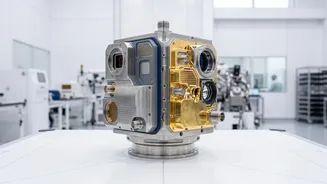
Achieving the required level of sterility is a monumental engineering challenge. The process begins with assembly in ultra-clean rooms, where air is heavily filtered and technicians wear head-to-toe 'bunny suits' to minimise shedding skin cells and microbes. Surfaces are repeatedly wiped with alcohol and other disinfectants. For the most critical missions, more drastic steps are taken. The 'gold standard' is dry heat sterilisation. This involves baking the entire spacecraft, or its most sensitive components, in a giant oven at temperatures well over 100 degrees Celsius for 30 hours or more. This was famously done for the Viking landers in the 1970s. Other methods include using vaporised hydrogen peroxide, radiation, and even new experimental techniques like plasma and lasers to kill any remaining microbes.
A Legacy of Caution
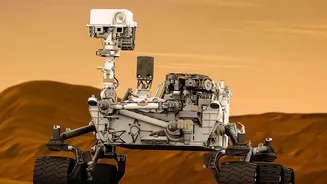
The Viking missions to Mars in 1976 set the precedent for modern planetary protection. Because the landers carried experiments specifically designed to look for life, they were subjected to a rigorous dry heat sterilisation to kill any Earthly contaminants. While the Viking experiments yielded ambiguous results about the presence of life, the mission's approach to sterilisation ensured the data wasn't compromised by terrestrial hitchhikers. More recent rovers like Curiosity and Perseverance have continued this legacy. While not always subjected to the same full-body baking as Viking, their components, especially those that will come into contact with the Martian surface like drills and sample tubes, undergo extreme sterilisation processes to ensure they don't carry a confounding biological signature from Earth.