





From State Control to an Open Market
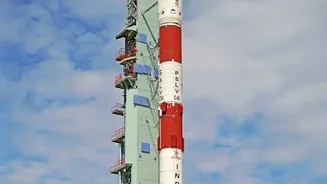
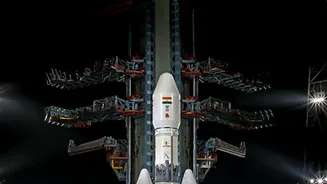
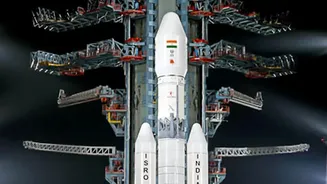
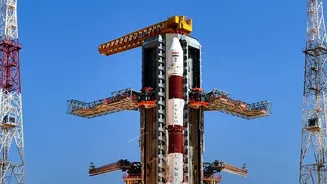
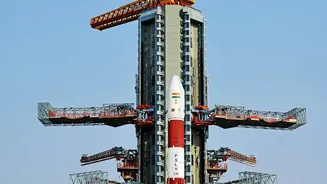
For decades, India's journey into space was almost exclusively navigated by the Indian Space Research Organisation (ISRO). While this model delivered remarkable achievements, including cost-effective satellite launches and historic lunar missions, it kept
the vast commercial potential of space largely untapped by private players. The global space economy, however, was rapidly shifting towards commercialisation. Recognizing this, India began a series of reforms in 2020, culminating in the Indian Space Policy 2023 and a dramatic overhaul of its Foreign Direct Investment (FDI) rules. This strategic pivot is designed to transition the domestic space ecosystem from a state monopoly to a vibrant, competitive market driven by private innovation and investment.
Breaking Down the New FDI Rules
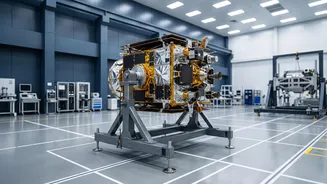
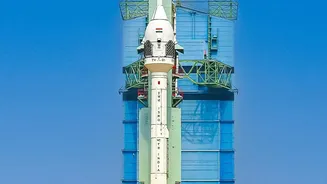
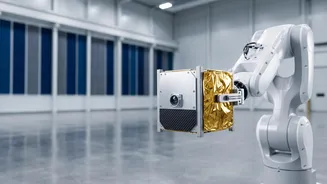
The 2024 reform fundamentally changes who can invest in India's space sector and how. It creates a tiered system that opens different sub-sectors to foreign capital. For manufacturing components and sub-systems for satellites and ground equipment, the government now permits 100% FDI through the automatic route, meaning foreign firms can invest without needing prior government approval. For more complex activities, like manufacturing and operating satellites, up to 74% FDI is allowed automatically. For strategically sensitive areas such as building launch vehicles and creating spaceports, the automatic cap is set at 49%, with larger investments requiring government clearance. This structured liberalisation aims to attract global expertise and capital while ensuring national interests remain protected.
Unlocking Private Sector Potential
These reforms are a launchpad for India’s burgeoning private space industry. The number of space startups has surged from just one in 2014 to over 400 by 2026, a clear sign of entrepreneurial energy. With the new FDI rules, these companies can now access a much deeper pool of global capital, technology, and partnerships. Total private investment has already seen a significant jump, climbing to over $600 million by March 2026. To further boost this ecosystem, the government has set up dedicated financial support, including a ₹1,000 crore Venture Capital Fund. Agencies like the Indian National Space Promotion and Authorisation Centre (IN-SPACe) act as a single-window system to streamline approvals and facilitate collaboration, effectively bridging the gap between private enterprise and state infrastructure.
ISRO's New Role and the Road Ahead
The opening of the sector doesn't sideline ISRO; it redefines its mission. The policy allows ISRO to shift its focus from routine commercial operations to pioneering research and development, deep space exploration, and national security missions. Mature technologies are being transferred to private companies, enabling them to handle commercial manufacturing and launch services. However, the path to becoming a global space hub has its challenges. The industry faces a shortage of experienced talent in highly specialised fields like propulsion and avionics. While policies are in place, experts note the need for a comprehensive space law to provide greater clarity on issues like liability and intellectual property. Furthermore, limited access to testing and launch infrastructure, which is still largely controlled by ISRO, can create bottlenecks for private firms.
India's Place in the Global Space Race
With these reforms, India is positioning itself to capture a much larger share of the global space economy, which is currently valued at over $600 billion. India’s space economy, estimated at around $8-9 billion, is projected to reach $44 billion by 2033. By combining its proven record of cost-effective engineering with fresh private investment, India can offer globally competitive satellite manufacturing and launch services. This directly challenges established players in the US and Europe. The influx of FDI is expected to not only bring in capital but also accelerate technology absorption, helping India become more self-reliant in critical space-grade components and reducing its dependence on imports. As private Indian companies begin launching their own rockets and building satellite constellations, the country is solidifying its credentials as an end-to-end space solutions provider.