


Understand the Wide-Angle Deception
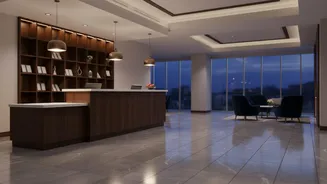
The number one tool in a hotel photographer’s kit is the wide-angle lens. This lens is fantastic at making small spaces look palatial by capturing more of the room in a single shot. However, it does this by distorting perspective, stretching the edges
of the photo and exaggerating the distance between objects. If a room looks impossibly vast or the furniture seems to be floating in a wide-open space, it’s a tell-tale sign that a wide-angle lens is at play. Assume the reality is more compact. Another giveaway is when vertical lines, like the corner of a wall or a door frame, appear to bend or curve slightly at the edges of the image.
Use the Door as Your Ruler
One of the most reliable reference points in any room is the door. Standard interior doors have a height of around 80 inches (about 6 feet 8 inches). Look at the furniture, like the bed or a desk, in relation to the door. How high does the mattress come up against it? Is the desk dwarfed by the door’s height? This simple comparison can instantly ground your perception. A photo that conveniently crops out most of the door might be trying to hide an otherwise cramped layout. A confident hotel, on the other hand, will often show a wide shot from the doorway, which gives you a more honest perspective.
Hunt for Everyday Objects
Professional photographers are masters of staging, but they often leave behind clues. Look for universally understood objects to give you a sense of scale. A coffee mug on the nightstand, a laptop on a desk, or a magazine placed on the bed all have relatively standard sizes. If that “huge” desk only looks big enough for a single laptop with no extra space, the desk is not that big. Similarly, if the bed is flanked by two tiny nightstands that can barely hold a phone and a glass of water, it helps you mentally resize the entire scene. The absence of these everyday items can also be a red flag, as it makes it harder to judge the true proportions of the furniture.
Scrutinise the Bed and Chairs
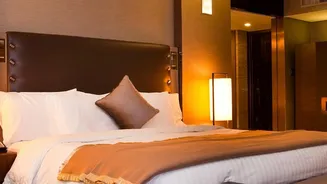
The bed is the main event in any hotel room, but its size can be misleading in photos. A king-sized bed should look substantially larger than the pillows on it. Count the pillows. A true king bed is often styled with three standard pillows or two king pillows across its width. If you see just two smallish pillows that seem to take up the whole headboard, you might be looking at a much smaller double bed made to look grand. Likewise, pay attention to the chairs. Does that plush armchair look big enough for an adult to sit in comfortably, or is it a small, decorative piece tucked into a corner to create an illusion of a seating area?
Check the Bathroom for Benchmarks
The bathroom is often where a lack of space becomes most obvious. Toilets and sinks have fairly standard dimensions, making them excellent benchmarks for scale. If a photo shows the toilet wedged tightly between the shower and the wall with barely any space on either side, you can bet the bathroom is tiny, no matter how the wide-angle lens makes it appear. Look at the floor tiles as well; standard tiles are often 12 inches square. By counting the tiles, you can get a surprisingly accurate estimate of the floor space. If there are no clear photos of the bathroom at all, that's a major red flag that the hotel may be hiding a dated or unpleasantly small space.
Trust Guest Photos Over Professional Shots
Ultimately, the most reliable source of truth is photos taken by fellow travellers. Booking sites and map services often have a separate section for photos uploaded by guests. These unedited, un-staged smartphone pictures will show you the room in real-world lighting, from normal angles, and without the flattering distortion of a professional lens. They reveal the actual view from the window, the true condition of the furnishings, and the real amount of space you’ll have. If the professional gallery looks like a palace and the guest photos look like a closet, believe the guests every time.