







The Rise of the Untethered Nomad
The post-pandemic world has supercharged the remote work revolution, and a new generation is seizing the opportunity. They're swapping office desks for mountain vistas and city cubicles for beachside cafes. But this newfound freedom comes with a modern-day
challenge: staying powered up. Traditional power banks can only last so long. Enter the solar-powered setup. It's become a game-changer, not just for convenience, but as a symbol of true independence. This isn't just about charging a phone; it's about enabling a sustainable, off-grid lifestyle where the only limit is your wanderlust and the amount of sunlight.
Anatomy of a Solar Setup
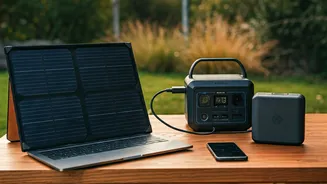
So, what exactly is a “solar setup”? At its core, it's a simple, portable system designed to capture the sun's energy and store it for later use. Think of it as your personal, silent, and clean power grid. The system consists of two main components: solar panels to capture sunlight and convert it into electricity, and a portable power station to store that electricity and distribute it to your devices. These setups range from small, foldable panels that can charge a phone directly, to more robust systems capable of running a laptop, lights, and even a small cooler for days.
The Engine: Portable Power Stations
The heart of any modern nomad's solar kit is the portable power station. Forget the noisy, fuel-guzzling generators of the past. These are essentially massive, intelligent power banks, packed with lithium-ion batteries and a variety of outputs — standard AC sockets for your laptop charger, USB-A and USB-C ports for phones and tablets, and even 12V car sockets. Brands like Jackery, Goal Zero, and Anker have become household names in the nomad community. The key metric to look for is watt-hours (Wh), which tells you how much energy the station can store. A 250-500Wh station is perfect for solo travellers charging personal electronics, while larger 1000Wh+ units can support multiple people or more demanding gear.
The Collector: Solar Panels
A power station is useless without a way to charge it. While you can plug them into a wall, the magic of a true off-grid setup comes from solar panels. For travellers, portability is key. Most nomads opt for foldable solar panels, which pack down neatly and can be easily deployed at a campsite or even strapped to a backpack while hiking. These panels are rated in watts (W), typically ranging from 60W to 200W for portable versions. In good sunlight, a 100W panel can realistically recharge a medium-sized power station in about 6-8 hours, providing a constant, renewable source of energy wherever you find a patch of blue sky.
Beyond the Laptop: Powering the Lifestyle
The impact of this technology goes far beyond just keeping a laptop alive for a work call. It powers the entire nomadic lifestyle. Creative professionals can run cameras, drones, and lighting gear in remote locations. Van-lifers use larger setups to power mini-fridges, induction cooktops, and interior lights, turning their vehicle into a fully functional mobile home. Even weekend campers are finding that a small solar setup can elevate their experience, powering fairy lights, speakers, and fans without the hum of a generator, making the experience quieter and more connected to nature.
Is It Worth the Investment?
Freedom, however, comes at a price. A decent entry-level setup (e.g., a 250Wh power station and a 60W panel) can cost upwards of ₹30,000, with more powerful systems running into lakhs. It's a significant upfront investment. There's also the reliance on weather; a few cloudy days can quickly drain your reserves. However, for those committed to the lifestyle, the cost is often justified by the unparalleled freedom and the long-term savings on powered campsites or cafe-hopping for a socket. It’s an investment in a different way of seeing the world, untethered from the grid and fully self-sufficient.