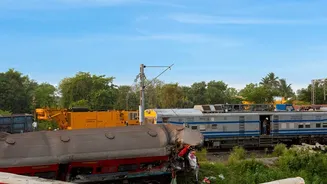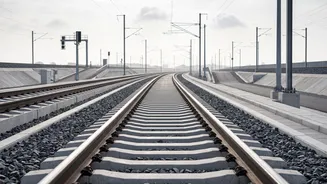






The twisted metal and derailed carriages outside Toledo, Spain, following a deadly high-speed train collision on October 28, 2026, tell a story of human tragedy. But for rail operators worldwide, the incident tells another story about technology.
A Disaster on a High-Tech Line
On the
morning of October 28, two high-speed trains carrying a combined total of over 540 passengers were traveling south from Madrid toward Seville. Following a computer problem that disabled the primary automated safety system, known as LZB, both trains were halted. Subsequently, one train was cleared to proceed under manual control but collided at high speed with the stationary train ahead of it. The resulting crash was catastrophic, causing dozens of fatalities and injuring over 200 people. The immediate focus of the investigation turned to a critical question: how could a collision like this happen on a modern, high-speed line equipped with layers of safety technology?
The Promise of Automated Control
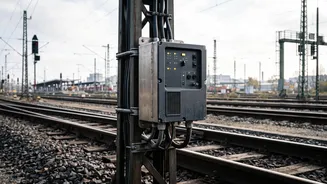
Modern rail networks, especially high-speed ones, rely on sophisticated train control systems to prevent accidents. In Europe, this is often the European Train Control System (ETCS), while the United States uses Positive Train Control (PTC). Both are designed to be a digital guardian angel, constantly monitoring a train's position and speed. If an engineer fails to respond to a signal or exceeds a speed limit, the system can automatically apply the brakes to slow or stop the train, preventing certain types of human-error-driven collisions. Following several preventable accidents, the implementation of these systems was mandated and celebrated as a monumental leap in rail safety, with billions invested to cover thousands of miles of track.
When the Digital Co-Pilot Fails
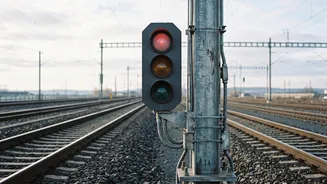
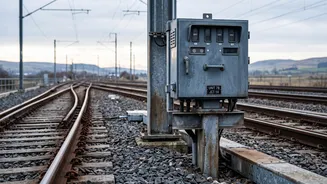
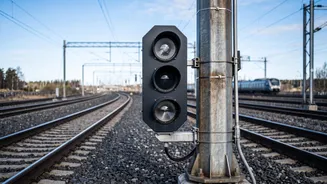
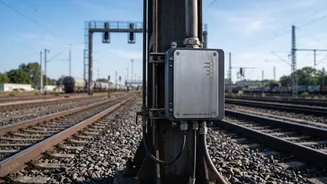
The Toledo disaster starkly illustrates what happens when the primary automated system fails and operations revert to human control under a backup system. This transition is a known vulnerability. Advanced control systems are not a single piece of hardware but a complex web of trackside sensors, onboard computers, and data communication networks. Potential points of failure are numerous. Software glitches can occur, communication links can be lost, and different systems operated by competing rail companies on the same track must be perfectly interoperable. In the Toledo crash, the automated LZB system failed, forcing a reliance on trackside signals and human controllers, a situation that ultimately led to disaster. This highlights that the greatest challenge is not just the technology itself, but ensuring a flawless handover when one layer of safety is removed.
Higher Speeds, Higher Stakes
As countries push for ever-faster trains, the reliance on these automated systems becomes absolute. At speeds of 200 mph or more, human reaction time is insufficient to prevent a disaster; the train must be able to protect itself. This makes the integrity of the control system the single most critical component for safety. Every element, from the software managing train separation to the wireless networks transmitting data, must be fail-proof. The increasing complexity brings new risks, including cybersecurity threats and the challenge of maintaining and upgrading legacy infrastructure to communicate with new digital systems. The collision in Spain serves as a sobering reminder that as the speed of our transportation grows, so does the complexity of keeping it safe, demanding a new level of precision and reliability.