





Beyond Radio Waves
Since the dawn of the space age, missions have relied on radio frequency (RF) communications to send data back to Earth. This tried-and-true method has been the backbone of space exploration, but it faces a growing problem: it’s slow and the spectrum
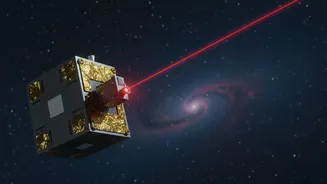
is crowded. As scientific instruments become more powerful, capturing high-resolution images and vast amounts of data, RF systems have become a bottleneck. Sending a single detailed image from Mars can take hours. Enter optical communications. Instead of radio waves, this technology uses infrared lasers to encode and transmit data. Because infrared light has a much higher frequency than radio waves, it can carry significantly more information in each transmission—between 10 and 100 times more, according to NASA. It’s the difference between a garden hose and a fire hydrant for data.
A Landmark Demonstration in Deep Space
The breakthrough comes from NASA's Deep Space Optical Communications (DSOC) experiment, a technology demonstration that hitched a ride on the Psyche spacecraft launched in October 2023. As Psyche travels toward a metal-rich asteroid between Mars and Jupiter, the DSOC system has been shattering records. In one of its most famous tests, the system streamed a 15-second, ultra-high-definition video of a cat named Taters from 19 million miles away. The video was sent at the system's maximum bitrate of 267 megabits per second (Mbps), a speed comparable to terrestrial broadband internet, and it took just 101 seconds to reach Earth. Even at a much greater distance of 140 million miles, the system successfully transmitted data at 25 Mbps, far exceeding the capabilities of traditional RF systems over similar distances.
How It Achieves Unprecedented Speeds
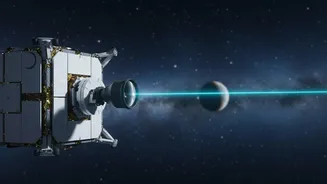
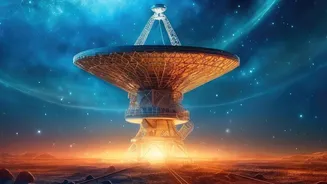
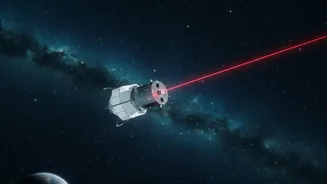
The secret to this incredible performance lies in the precision of lasers. While radio waves spread out over vast distances, the DSOC system uses a highly focused, narrow beam of near-infrared light. This concentration of energy means more data can hit the receiver. The process requires extraordinary accuracy. A ground station, like the one at JPL's Table Mountain Facility, fires a powerful laser beacon toward the spacecraft. The flight transceiver aboard Psyche then locks onto this beacon and aims its own downlink laser back at a receiving telescope on Earth, such as the famous Hale Telescope at Palomar Observatory. Despite the immense distances, the system has demonstrated remarkable pointing accuracy, which is essential to avoid the laser beam missing its target entirely.
The Future of Cosmic Communication
The success of the DSOC project is more than just a technical achievement; it signals a new era for space exploration. High-bandwidth communications are critical for future ambitious missions, especially human expeditions to Mars. Astronauts will need to send and receive high-definition video feeds and handle massive streams of real-time data to ensure mission safety and success. For robotic missions, this technology means scientists can receive ten times more data, allowing for more detailed planetary maps, higher-resolution images, and more complex scientific investigations. It could reduce the time to transmit a full map of Mars from nine weeks to just nine days. This leap in capability will enable more discoveries and a richer understanding of our solar system and beyond.