





The Foundation: Bodyweight Squats
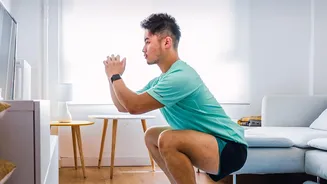
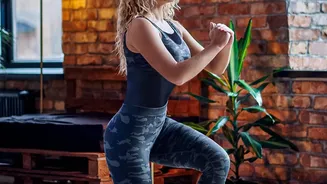
The squat is a powerhouse exercise that is fundamental to functional fitness. It strengthens your quadriceps, hamstrings, and glutes, while also engaging your core for stability. Stand with your feet shoulder-width apart, keeping your chest up and back
straight. Lower yourself as if sitting in a chair, ensuring your knees track over your feet but not past your toes. Aim for your thighs to be parallel to the floor. Drive through your heels to return to the starting position. This movement mimics daily actions and builds a strong foundation for overall fitness. For an added challenge, you can slow down the movement or add a pause at the bottom.
Upper Body Power: The Push-Up
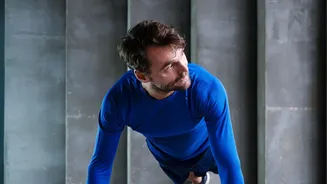
A timeless classic, the push-up is one of the most effective exercises for building upper body and core strength, targeting your chest, shoulders, and triceps. If you're a beginner, start by doing push-ups against a wall or with your hands on an elevated surface like a sturdy table. You can also perform them on your knees. To execute a standard push-up, place your hands slightly wider than your shoulders, keep your body in a straight line from head to heels, and lower yourself until your chest nearly touches the floor. Push back up forcefully. The key is maintaining a rigid core throughout the movement.
Core Stability: The Plank
The plank is an isometric exercise that works your entire core, including your abs, obliques, and lower back. It's excellent for improving posture and stability. To perform a plank, get into a push-up position, but rest on your forearms instead of your hands. Ensure your elbows are directly under your shoulders and your body forms a straight line—avoid letting your hips sag or rise too high. Engage your core and glutes. Start by holding the position for 20-30 seconds and gradually work your way up to a minute or more as you get stronger.
Lower Body Sculptor: Lunges
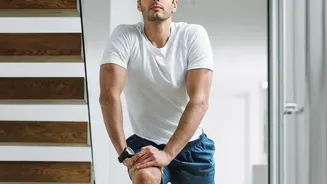
Lunges are fantastic for targeting each leg individually, which helps improve balance and correct strength imbalances. You can do them forward, backward, or even to the side. Reverse lunges are often recommended for beginners as they can be easier on the knees. From a standing position, take a big step backward with one foot, lowering your hips until both knees are bent at a 90-degree angle. Your front knee should be directly above your ankle. Push off your back foot to return to the start and repeat on the other side.
Cardio Burst: The Burpee (Modified)
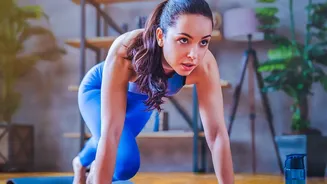
The burpee is a full-body exercise that provides a great cardiovascular challenge. However, the standard version requires a bit of space and can be noisy. For tight quarters, a no-jump modification is perfect. Start standing, then drop into a squat position and place your hands on the floor. Step both feet back into a plank position. Step them back in towards your hands, and then stand up. This removes the jumping and impact, making it apartment-friendly while still elevating your heart rate and working multiple muscle groups.
Posterior Chain: The Glute Bridge
So much of our day is spent sitting, which can lead to weak glutes. The glute bridge targets this area specifically, as well as your hamstrings and lower back. Lie on your back with your knees bent, feet flat on the floor close to your glutes, and arms by your sides. Squeeze your glutes and lift your hips off the floor until your body forms a straight line from your shoulders to your knees. Hold for a moment before slowly lowering back down. This exercise requires minimal space and is incredibly effective.