

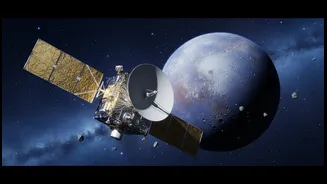


A Metal World in the Asteroid Belt
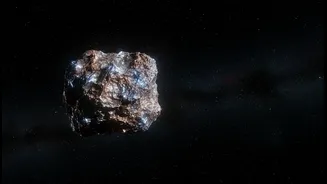
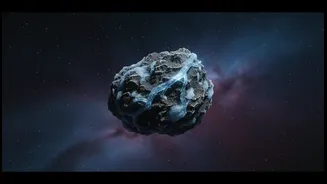
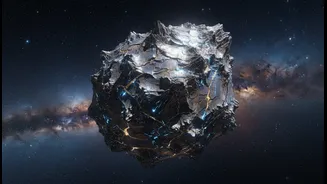
First discovered in 1852, 16 Psyche is a giant metallic asteroid, one of the most intriguing objects in the main asteroid belt. Measuring about 280 kilometres at its widest point, it is unlike most asteroids, which are typically rocky or icy. Scientists
believe Psyche could be the exposed nickel-iron core of an ancient protoplanet—a small celestial body that was a building block for planets like Earth. This world-that-never-was may have lost its rocky outer layers due to violent collisions billions of years ago, leaving behind a dense, metallic heart. Its composition is what makes it so special, offering a rare glimpse into the hidden cores of planets, including our own.
The Quadrillion-Dollar Prize
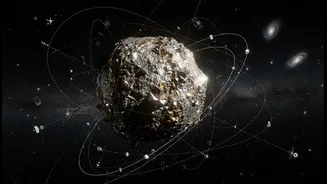
The incredible hype surrounding 16 Psyche often boils down to one staggering figure: a potential value of $10,000 quadrillion. This number comes from estimating the value of its vast quantities of iron, nickel, and potentially precious metals like gold and platinum at current market prices. While bringing these resources back to Earth would undoubtedly crash commodity markets, the figure highlights the sheer scale of resources available in space. However, experts caution that this valuation is purely theoretical. The primary value of Psyche for now is not economic but scientific. It represents a priceless opportunity to study the formation of our solar system.
NASA's Reconnaissance Mission
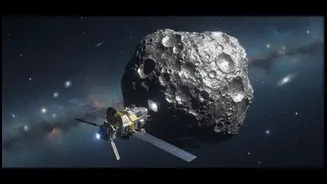
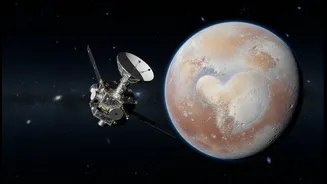
Leading the charge to investigate this metal world is NASA. The agency launched its Psyche spacecraft in October 2023. Its mission is not to mine the asteroid but to study it. The orbiter will spend at least 21 months mapping the asteroid’s surface and determining its precise composition. In a crucial manoeuvre in May 2026, the spacecraft successfully used Mars's gravity to gain speed and adjust its course, slingshotting it toward its final destination. The Psyche spacecraft is on track to arrive at the asteroid in August 2029, where it will begin sending back data that could rewrite our understanding of how planets form.
A New Global Space Race?
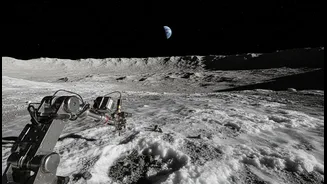
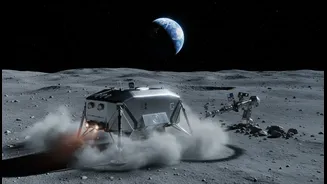
While NASA has a head start, it is not the only player with an eye on asteroid resources. China's space program is rapidly advancing its own capabilities. The China National Space Administration (CNSA) launched the Tianwen-2 mission in May 2025, a complex project to sample a near-Earth asteroid and return those samples by 2027. China is also openly stepping up research into space resource extraction technologies, developing specialised robots for mining in microgravity. Other nations, including Luxembourg and the United Arab Emirates, have also established legal frameworks or planned missions related to space resources, signalling a growing international interest in the future of off-world mining.
The Challenges of a Celestial Gold Rush
Despite the excitement, a literal gold rush on 16 Psyche is not happening any time soon. The technological hurdles are immense. Developing robotic systems capable of mining, processing, and returning tonnes of material from deep space is a monumental challenge that is still in the early stages of research. Furthermore, the legal landscape is a grey area. The 1967 Outer Space Treaty forbids any nation from claiming sovereignty over a celestial body, but it's ambiguous about whether private or national entities can extract and own resources. While the US and its partners in the Artemis Accords argue that resource extraction is permissible, this view is not universally accepted, setting the stage for potential future disputes.