







A Disappearing Shoreline
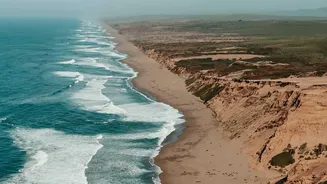
Coastal erosion is the wearing away of land by the sea. For a country with a mainland coastline stretching over 6,000 kilometres, the stakes are immense. According to the National Centre for Coastal Research (NCCR), about one-third of India's coastline is experiencing
some degree of erosion. Some states are hit particularly hard. West Bengal, for example, has seen over 60% of its coastline erode, while Kerala and Tamil Nadu face erosion along nearly half of their shores. This isn't just about losing scenic beaches. It means the loss of habitable land, the disappearance of spaces used by fishing communities for their daily work, and the steady advance of the sea towards homes, roads, and businesses. The problem is a mix of natural processes and human activities, including the construction of dams that trap sediment and unplanned coastal development.
The Climate Change Accelerator
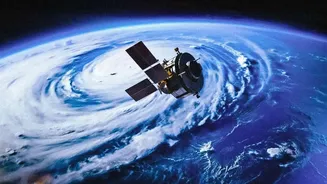
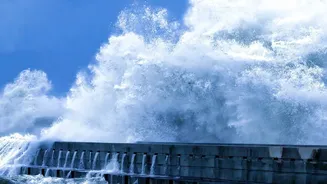
Climate change is acting as a powerful accelerator for coastal erosion. Two key factors are at play: rising sea levels and an increase in extreme weather events. As global temperatures rise, oceans expand and ice sheets melt, leading to a steady increase in sea levels. This allows waves to reach further inland, eating away at the shore more aggressively. Compounding this is the growing intensity and frequency of cyclones. Warmer sea surface temperatures fuel more powerful storms, which unleash destructive waves and storm surges that can devastate coastal areas in a matter of hours. A recent report from Azim Premji University warns that with sea levels projected to rise significantly by 2050, the threat of coastal erosion and the creation of 'ghost villages' in vulnerable areas like Odisha is becoming an immediate reality.
Beyond the Beach: A Cascade of Consequences
The impacts of coastal erosion extend far beyond the shoreline, creating a domino effect that disrupts entire regions. Economically, coastal states contribute significantly to India's GDP, and ports handle the vast majority of the nation's trade. When coastal infrastructure is threatened, so is the national economy. Socially, the livelihoods of an estimated 250 million people living near the coast are at risk. Fishermen lose space to park boats and mend nets, while farmers face saltwater intrusion into their freshwater sources and farmlands, rendering them unusable. Ecologically, vital natural buffers like mangrove forests and coral reefs, which protect the coast from storm surges, are being degraded, leaving communities even more exposed. The loss of these ecosystems also means a loss of biodiversity and the critical services they provide.
The Perils of a Disconnected Approach
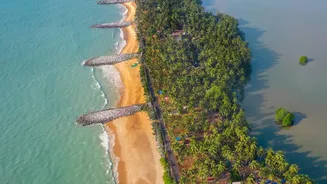
For too long, the response to coastal erosion has been fragmented. Planners and engineers have often relied on 'hard' structures like seawalls and breakwaters. While they may offer temporary protection to a specific area, these structures often just deflect the sea's energy elsewhere, worsening erosion in adjacent areas. This approach fails to address the root causes and can lead to a costly, unwinnable battle against nature. On the other hand, climate scientists possess the data and models to predict future sea-level rise and identify high-risk zones, but their findings don't always translate into policy and on-the-ground action. This disconnect between scientific knowledge and urban planning results in development permits being granted in areas that are known to be vulnerable, locking in future risk.
A Unified Front for a Resilient Coast
The only viable path forward is an integrated one, where science directly informs planning. This approach is known as Integrated Coastal Zone Management (ICZM). It means climate scientists must provide clear, actionable data—high-resolution maps showing erosion hotspots and future flood risks. Planners and policymakers must then use this evidence to create smarter, more adaptive strategies. This includes enforcing no-development zones, promoting 'nature-based solutions' like mangrove restoration and beach nourishment, and updating building codes to withstand future climate impacts. In some highly vulnerable areas, it may even mean planning for managed retreat, a strategy that helps communities move to safer locations before disaster strikes. This collaborative framework turns reactionary defence into proactive resilience.