







The Great Myth of the Cloudy Day
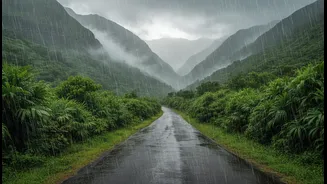
It’s the most common skincare myth during the monsoon: if you can't see the sun, it can't harm you. The reality is that clouds are surprisingly ineffective at blocking harmful ultraviolet (UV) radiation. While heavy cloud cover can reduce the intensity,
up to 80% of UV rays still penetrate the atmosphere and reach your skin. This means that on your daily commute, whether walking to the metro or sitting by a window in a cab, you are still exposed. Even rain offers no real protection; in fact, wet roads and puddles can reflect UV rays, potentially increasing your overall exposure.
Meet the Invisible Culprits: UVA and UVB
Understanding the enemy is half the battle. The sun emits two main types of UV rays that reach us: UVB and UVA. UVB rays are the primary cause of sunburn and are partially blocked by clouds. This is why you're less likely to feel your skin burning on an overcast day. However, UVA rays, which have a longer wavelength, penetrate clouds, rain, and even glass with ease. These are the rays responsible for premature ageing—think wrinkles, fine lines, and sagging—as well as stubborn hyperpigmentation. Since UVA rays are present year-round, rain or shine, protecting your skin is a daily necessity, not just a summer habit.
The Monsoon Challenge: Humidity, Sweat, and Rain
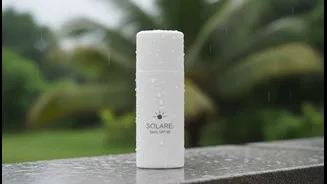
The Indian monsoon isn’t just about cloudy skies; it’s about the oppressive humidity that comes with it. High humidity levels can increase your skin's sebum (oil) production, making it feel sticky and greasy. This creates several problems for sunscreen users. Firstly, heavy, creamy formulas can feel suffocating and clog pores, leading to breakouts. Secondly, the combination of humidity and sweat can cause sunscreen to break down and slide off your face much faster, leaving your skin unprotected. For commuters, unexpected downpours present an obvious challenge, as rain can wash away non-resistant formulas in minutes.
Choosing Your Monsoon Armour: The Right Formula
To combat these issues, your choice of sunscreen must adapt to the season. Put away the thick creams of winter and look for formulas tailored to humid conditions. The key is to find a product that is broad-spectrum (protecting against both UVA and UVB rays) with an SPF of 30 or higher. Beyond that, three terms are your best friends: lightweight, non-comedogenic, and water-resistant. A lightweight gel, fluid, or water-based formula will feel more comfortable and absorb quickly without a greasy residue. 'Non-comedogenic' means the product is formulated so it won't clog your pores—a must when your skin is already producing excess oil. Finally, water-resistant sunscreen uses film-forming polymers to help the product adhere to your skin, providing durable protection through sweat and rain for a specified time (usually 40 or 80 minutes).
Application and Reapplication Is Everything
The best sunscreen in the world won't work if it's not used correctly. Apply a generous amount to your face and any other exposed skin about 20 minutes before you leave home to allow it to form a protective layer. For monsoon commuters, reapplication is crucial. The rule of thumb is every two hours, but you should reapply more frequently if you get caught in the rain or sweat excessively. This can feel impractical, especially over makeup. This is where products like powder sunscreens or SPF setting sprays can be incredibly useful for a quick top-up during the day without disturbing your look.