




Beyond the Basic Plastic Bag
When faced with packing a wet item, most of us reach for a simple plastic carrier bag or a standard dry pouch. The logic is straightforward: create a waterproof barrier to stop dampness from spreading to dry clothes. While this method contains the water,
it creates a new problem. By sealing a wet item in a non-breathable bag, you trap not only the water but also the humid air surrounding it. This creates a perfect breeding ground for mould, mildew, and odour-causing bacteria. Your clothes might be protected from the initial wetness, but after a few hours, your entire suitcase can develop a persistent musty smell. Air extraction pouches, often known as vacuum compression bags, offer a far more advanced solution.
The Science of Air Extraction
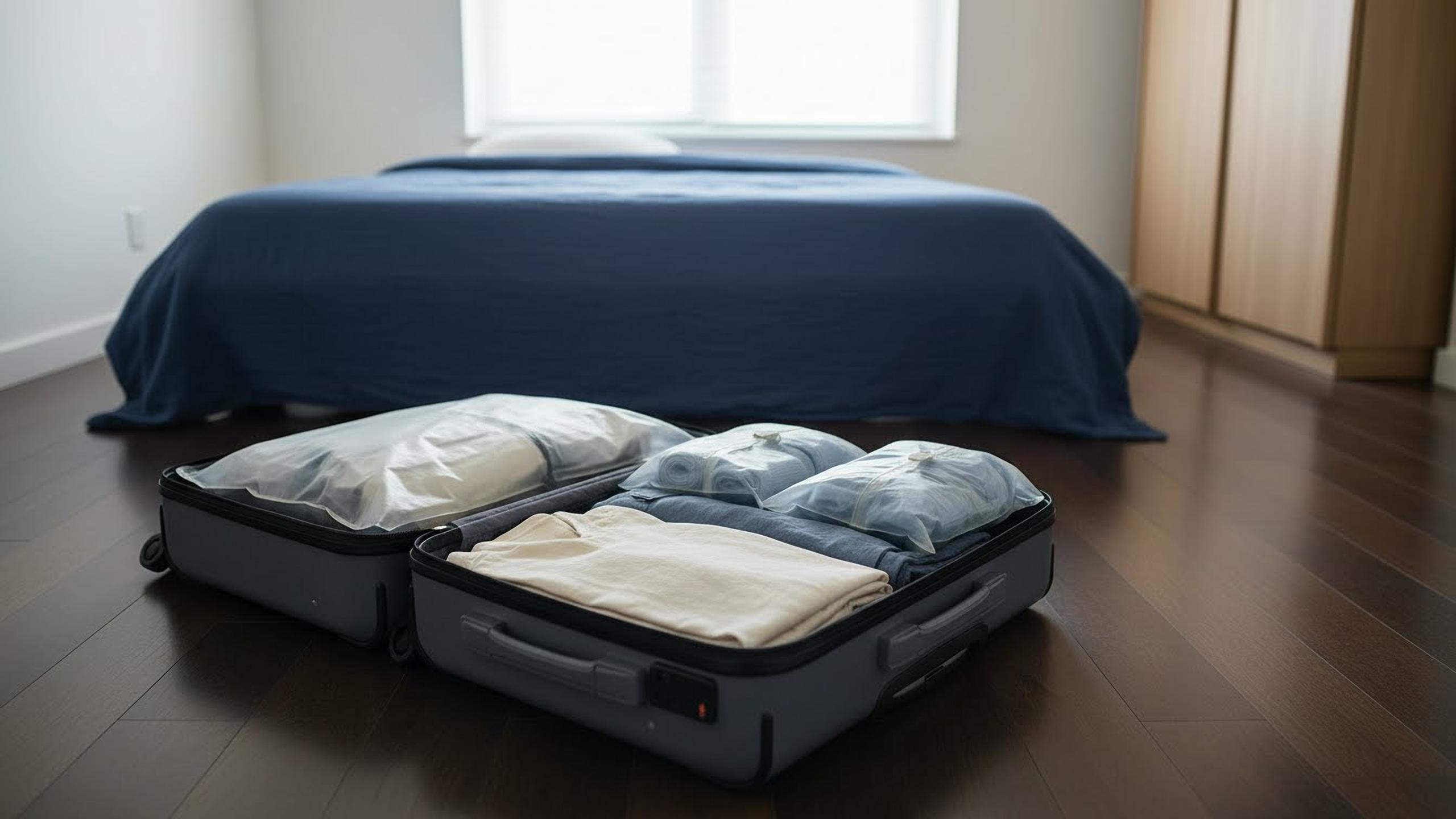
Air extraction pouches work on a simple but powerful principle: if you remove the air, you also remove the moisture suspended in it. These are not just bags; they are systems designed to create an airtight, vacuum-sealed environment. Most travel-friendly versions feature a one-way valve and a durable, double-zipper seal. After placing items inside, you seal the zipper and then either roll the bag tightly from the bottom or use a small, often pocket-sized, pump to force air out through the valve. As the air is expelled, the bag compresses dramatically, shrinking soft items like jackets and sweaters by up to 60% or more. This process physically removes the airborne water vapour that would otherwise be trapped inside, actively combating the conditions that lead to mildew and bad smells.
Active Moisture Removal vs. Passive Barriers
This is where air extraction pouches prove their superiority. A standard waterproof bag is a passive barrier; it only contains the problem. An air extraction pouch is an active solution. By removing the air, it changes the environment within the bag to one that is hostile to mould and bacterial growth. This is critical for travellers in humid climates or during monsoon season, where even clothes that feel dry can carry enough ambient moisture to cause problems. Packing a damp towel in a regular dry bag means you'll open it to a smelly, still-damp towel hours later. Packing it in an air extraction pouch means the remaining moisture has been significantly reduced, slowing bacterial growth and containing any odours. The airtight seal provides complete protection from external dust, moisture, and odours as well.
Practical Uses for Every Kind of Trip
The applications for these pouches go far beyond just a wet swimsuit. For adventure travellers, they are indispensable for packing away rain-soaked gear or damp towels after a wild swim. For families, they can isolate soiled baby clothes or contain spills. They also provide excellent protection for sensitive electronics and documents in humid environments, creating a fortress against ambient moisture. Furthermore, the compression benefit is a major space-saver. You can use them to shrink bulky items like puffer jackets and fleece sweaters, freeing up significant room in your luggage for other essentials or souvenirs. On the return journey, they are perfect for separating dirty laundry from your clean clothes, keeping your remaining outfits fresh.
What to Look For When Choosing
When selecting air extraction pouches, durability is key. Look for bags made from thick, multi-layered plastic (often 100 gsm or higher) that can resist punctures and tears. The quality of the seal is paramount; a double-zipper closure offers better protection against leaks than a single one. Also, consider the valve mechanism. For travel, roll-up bags that don’t require any external tools are incredibly convenient. However, systems that come with a small, portable electric or hand pump often achieve a tighter and more effective vacuum. Investing in a variety pack with multiple sizes gives you the flexibility to pack everything from small garments to bulky winter coats.