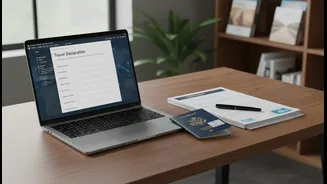









What is the Australia Travel Declaration?
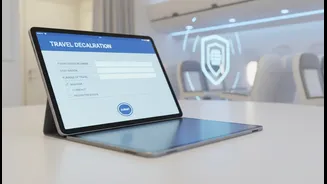
The Australia Travel Declaration (ATD) is the new digital alternative to the paper Incoming Passenger Card that has been a staple of Australian arrivals for decades. Instead of completing a form on the plane, travellers can now submit their personal details,
customs declarations, and biosecurity information online before they land. The initiative, a collaboration between the Australian Border Force, the Department of Agriculture, and Qantas, is designed to modernise border processes. Following a successful pilot program that began in October 2024 and involved over 450,000 passengers, the government has committed $56.1 million to roll the system out nationwide. The goal is to make arrivals simpler, faster, and more secure.
How It Speeds Up Your Arrival
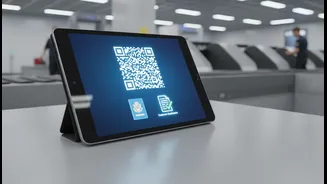
The primary benefit for travellers is speed. By submitting your declaration up to 72 hours before you arrive, you eliminate the need to fill out paperwork on the plane or in the arrivals hall. This allows border agencies to receive and assess passenger information earlier, which helps them identify potential biosecurity or security risks ahead of time. For the passenger, this means less time spent in queues at immigration and a more streamlined path from the gate to the exit. Once submitted, you receive a digital pass with a QR code, which an Australian Border Force officer simply scans upon your arrival. This pre-vetted process is a key part of moving towards a more seamless, biometric-enabled digital border experience.
A Step-by-Step Guide for Travellers
Using the new system is straightforward. The nationwide rollout will occur in phases over the next 12 to 18 months. Initially, it will be accessible via a web form, with plans to integrate it into more airline apps following the successful trial with Qantas. Travellers can complete their declaration up to three days before their flight. You will need to provide your passport details, travel information, and answer the same customs and biosecurity questions as the paper form. After submitting, you'll receive the QR code pass in the app and via email from the Department of Home Affairs. It's crucial to have your phone charged and the pass easily accessible, as it will be scanned as you exit the airport.
The Rollout Plan and What to Expect
The digital declaration has been trialled on select Qantas flights into Sydney, Melbourne, and Brisbane since late 2024. The pilot will be expanded to include Perth and Adelaide before the end of 2026. Following that, a phased national rollout will bring the system to all international airports and seaports over the next 12 to 18 months. While the system becomes standard, don't panic if you're not digitally savvy or your phone battery dies. Paper arrival cards will continue to be available during the transition and as a backup option for those who cannot access the digital form. The aim is to make the process more efficient, not to leave anyone behind.
Beyond Convenience: A Stronger, Smarter Border
While travellers will appreciate the convenience, the ATD offers significant advantages for Australia's border management. Digital data collection improves the quality of information for risk assessments and allows authorities to respond more rapidly to global events, such as biosecurity threats. Minister for Agriculture Julie Collins noted the system will strengthen Australia's biosecurity by helping officials identify and manage risks before they reach the shore. This modernisation is also a strategic move to manage the expected surge in traveller volumes ahead of events like the 2032 Brisbane Olympic and Paralympic Games, ensuring the border remains secure while becoming more efficient.