


What Am I Looking For?
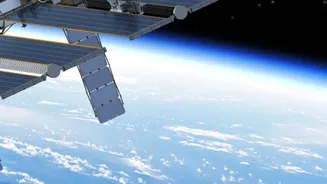
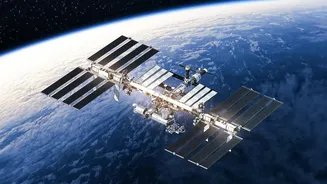
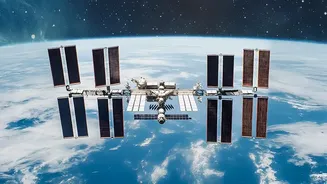
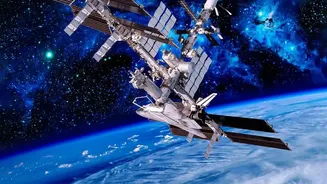
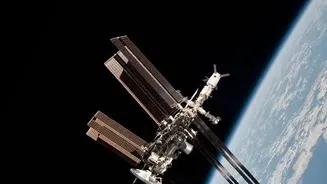
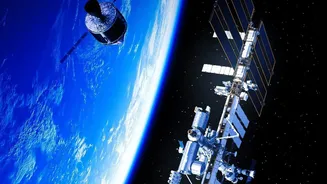
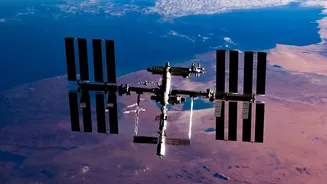
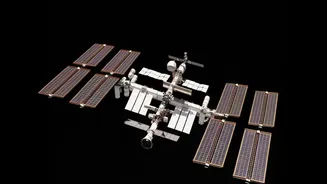
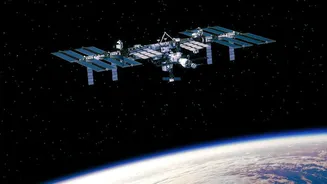
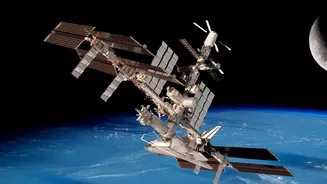
The ISS is a marvel of human engineering, orbiting Earth at about 28,000 kilometres per hour, roughly 400 kilometres above our heads. It appears as a very bright, fast-moving point of light, similar to a star but travelling steadily across the sky. Unlike
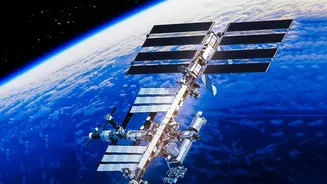
an airplane, it doesn't have blinking lights, though its brightness can vary as it moves. What makes it visible is reflected sunlight. The station's massive solar panels act like giant mirrors, catching the sun's rays and bouncing them down to Earth. This is why the best viewing times are typically around dawn and dusk, when the sky is dark on the ground, but the ISS is high enough to still be in sunlight. A pass can last anywhere from under two minutes to nearly eight minutes for a full horizon-to-horizon flight.
The Magic of Mobile Apps
While you can spot the ISS by chance, the most reliable way to know when and where to look is by using a mobile app. These apps use your phone's location to provide precise predictions for visible passes. They can tell you the exact time a pass will start, the direction it will appear from (usually in the west), how high it will travel in the sky, and its duration. Many apps offer push notifications, sending you an alert a few minutes before a pass is about to begin so you don't miss it. Some even feature augmented reality (AR) views, using your phone's camera to show you exactly where to point it in the night sky.
Top Apps for ISS Tracking
Several excellent apps are available for both Android and iOS to help you become an expert station-spotter. NASA's official 'Spot The Station' app is a great starting point, offering alerts, a real-time tracker, and an AR compass. Another highly recommended app is 'ISS Detector', which not only tracks the ISS but can be expanded to include other famous satellites like the Hubble Space Telescope and Starlink satellite trains. It also handily checks local weather conditions to let you know if the sky will be clear enough for a good view. 'Heavens-Above' is a long-time favourite among astronomers for its detailed and accurate predictions, offering sky charts and orbit details. Many of its calculations are performed locally on your device, so you only need an internet connection every few days to update the data.
Key Features to Look For
When choosing an app, look for a few key features that will enhance your experience. Real-time tracking on a map is useful for seeing where the station is at any given moment. A list of upcoming passes with details on visibility, maximum height (a 90-degree pass means it will go directly overhead), and brightness is essential for planning. The best passes are those with a high elevation, as the station will appear brighter and be visible for longer. A 'night mode' with a red-on-black display is also a helpful feature, as it helps preserve your night vision while you're outside stargazing. Finally, some apps allow you to integrate pass times into your personal calendar, ensuring you never forget to look up.
Tips for a Perfect Sighting
Once your app alerts you to an upcoming pass, the preparation is simple. Find a viewing spot with a clear, unobstructed view of the sky, away from bright city lights if possible. Head outside at least five minutes before the scheduled time to let your eyes adjust to the darkness. Face the direction the app indicates the pass will begin, and wait. You'll see what looks like a star rise above the horizon and begin its silent journey across the sky. You don't need any special equipment like binoculars or a telescope; the ISS is one of the brightest objects in the night sky, often outshining Venus. The experience of watching this outpost of humanity soar overhead is a profound and easily accessible way to connect with the cosmos.