
The Hunt for Lunar Water
For decades, scientists suspected the Moon wasn't entirely dry. Definitive proof arrived thanks to missions like India's Chandrayaan-1 in 2008 and NASA's Lunar Reconnaissance Orbiter (LRO). Now, a new generation of probes and advanced analysis of existing
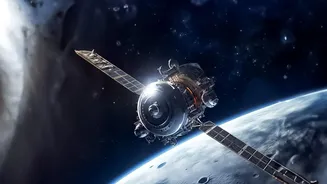
data are creating the most detailed maps of this crucial resource yet. Orbiters from multiple nations, including instruments from NASA, ISRO, and others, use radar and spectrometers to peer into the darkest, coldest parts of the Moon. These efforts have confirmed billions of kilograms of water ice, enough to fill hundreds of thousands of Olympic swimming pools, with newer techniques promising to find even more.
Not Lakes, but a Tricky Frost
It's important to manage expectations: this isn't a landscape of frozen lakes. The water ice is primarily located at the lunar poles, inside permanently shadowed regions (PSRs)—craters whose floors have not seen sunlight for billions of years. Here, temperatures plummet to below -160 degrees Celsius, trapping the ice. The ice itself is not in pure sheets but is mixed in with lunar soil, or regolith, like a dirty, frozen frost. This makes accessing it a significant technical challenge, as future robotic miners will have to operate in extreme cold and darkness to excavate the frozen dirt.
Why Water is Liquid Gold in Space
So, why is this frozen dust so important? Because in space, water is everything. For future astronauts living on the Moon, it provides drinking water and, when used for agriculture, a source of food. More critically, its two core components—oxygen and hydrogen—are vital. Oxygen can be extracted to create breathable air for habitats. Together, liquid oxygen and liquid hydrogen are the most powerful and efficient chemical rocket propellant known. This dual-use potential is what transforms water ice from a simple resource into the cornerstone of a sustainable space economy.
A Gas Station in the Sky
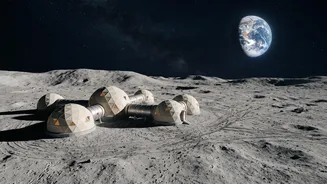
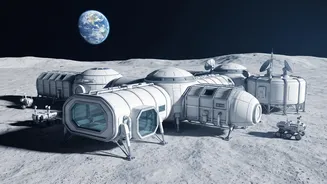
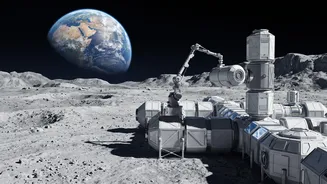
The ability to manufacture rocket fuel on the Moon—a concept known as in-situ resource utilization (ISRU)—is a complete game-changer. Currently, every kilogram of supplies, including fuel, must be launched out of Earth's powerful gravity, a tremendously expensive process. A lunar base that can refuel rockets would act as a 'gas station' in space. It's far easier and cheaper to launch missions to Mars or the outer solar system from the Moon's low-gravity environment. This would drastically reduce the cost and increase the ambition of future deep-space exploration, turning the Moon into a critical stepping stone for humanity's journey into the cosmos.
The Challenges and the Global Effort
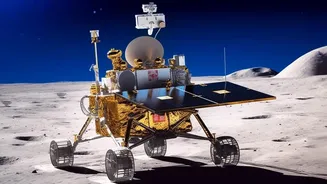
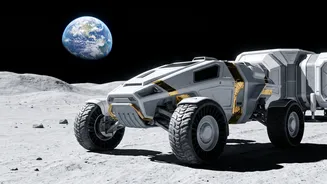
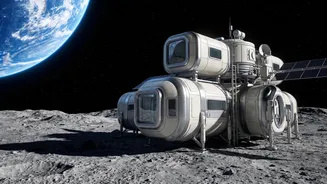
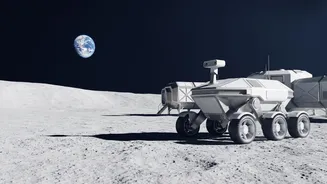
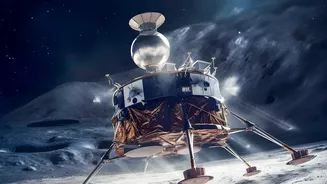
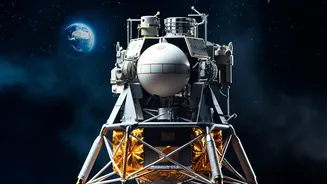
Despite the promise, the path ahead is difficult. Developing the technology to mine, transport, and process the ice in the harsh lunar environment is a major engineering hurdle. Machines must withstand abrasive lunar dust and extreme temperatures while being powered by solar arrays or future nuclear reactors. This challenge is being tackled by a global coalition. NASA's Artemis program, which aims to land astronauts near the south pole by 2028, has made lunar resources a central goal. It's a collaborative effort, with international partners like Japan, Canada, and India contributing through missions like LUPEX, which will carry NASA instruments to prospect for this very ice.