



Your Pre-Trip Vehicle Checklist
A safe journey begins before you even turn the key. A thorough vehicle check is non-negotiable for a monsoon hill drive. Start with your tyres, which are your only connection to the slippery road. Ensure they have a tread depth of at least 3mm for good
grip on wet surfaces. Also, check the tyre pressure, including the spare, as it can affect handling and your car's ability to avoid hydroplaning. Next, inspect your wiper blades; if they leave streaks or make noise, replace them. Visibility is crucial, so top up your windshield washer fluid. Test all your lights—headlights, tail lights, brake lights, and fog lamps—as heavy rain and fog can drastically reduce visibility. Finally, have your brakes inspected. Wet roads increase stopping distances, so your braking system must be in top condition.
On-the-Road: Driving Techniques for the Hills
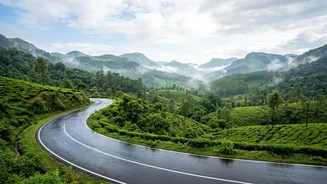
Driving in the mountains during the monsoon demands a different approach. The golden rule is to slow down. This gives you more time to react to unexpected hazards like potholes hidden under puddles or sudden sharp turns. Maintain a greater distance from the vehicle ahead; braking is less effective on wet roads. When navigating hairpin bends, reduce your speed before entering the turn, not during. Gently accelerate through the curve to maintain grip. Be extremely cautious of hydroplaning, where your tyres lose contact with the road surface. If you feel the car sliding, do not brake suddenly. Instead, ease off the accelerator and steer straight until you regain traction. Avoid driving on loose soil or muddy shoulders of the road, as these are unstable. Always be considerate to two-wheelers and pedestrians, who are more vulnerable in these conditions.
Spotting and Avoiding Monsoon Hazards
The most significant dangers in the hills during monsoon are landslides and flash floods. Before you travel, check the latest weather forecasts and road advisories from local authorities or the National Disaster Management Authority (NDMA). Be vigilant for warning signs of a potential landslide, such as cracks appearing on the road, leaning trees, or small streams of mud and rocks. If you encounter a landslide, do not attempt to cross it. The ground can remain unstable for hours. It's safer to turn back or wait for authorities to clear the road. Never drive through fast-flowing water crossing the road, as the current can be stronger than it appears and can sweep your vehicle away. Similarly, avoid large puddles, which can conceal deep potholes that could damage your car or cause you to lose control.
Packing Your Monsoon Emergency Kit
In the hills, help can be far away, so a well-stocked emergency kit is crucial. Your kit should include items for both you and your vehicle. For the car, pack a tow rope, jumper cables, a basic toolkit with pliers and duct tape, a tyre inflator, and a puncture repair kit. A powerful flashlight with extra batteries is essential, as a phone torch won't suffice. For personal safety and comfort, include a comprehensive first-aid kit with basics like bandages, antiseptic, pain relievers, and any personal medications. Pack high-energy, non-perishable snacks like nuts and biscuits, along with ample drinking water, in case you get stranded. A fully charged power bank is non-negotiable, as navigation apps drain your phone's battery and mobile networks can be unreliable in remote areas. It's also wise to pack a raincoat and a few dry towels.
What to Do If You Get Stuck
Despite careful planning, you might find yourself in a difficult situation. If your car is caught in a landslide, your safety is the top priority. If the vehicle is stable and not in the direct path of further debris, it's often safest to stay inside, as the car provides some protection. If it is safe to do so, move to higher ground away from the slide path. Do not attempt to outdrive a large, moving landslide. If you are stranded for an extended period due to a road blockade, conserve your car's fuel. Use your hazard lights to make your vehicle visible to rescue teams or other traffic. Try to stay informed by listening to local radio or checking for updates on your phone if you have a signal. The key is to remain calm, assess the situation, and prioritise the safety of yourself and your passengers above all else.