





An Icon's Sunset
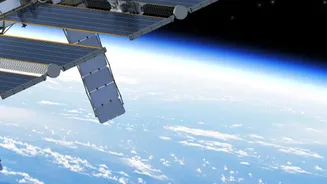
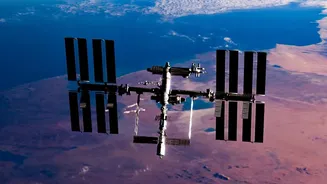
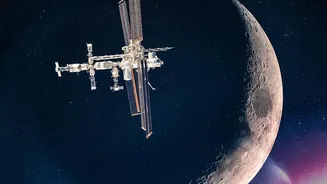
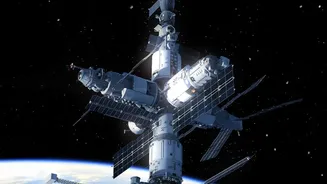
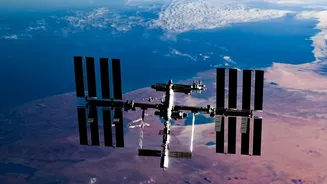
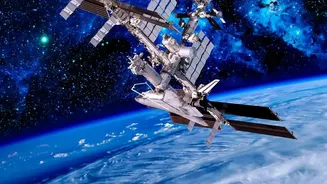
The International Space Station, a marvel of global cooperation and scientific achievement, is scheduled to be deorbited around 2030. After more than three decades of continuous human presence and thousands of experiments, the aging structure faces rising
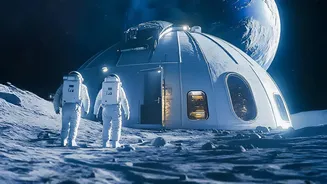
maintenance costs and inevitable structural fatigue. Rather than build another government-funded replacement, NASA is orchestrating a strategic handoff, aiming to become just one of many customers in a new, commercially operated ecosystem in low-Earth orbit (LEO). This transition is designed to save the agency billions, freeing up resources to focus on deep-space missions to the Moon and Mars, while ensuring the US maintains a permanent presence in LEO.
NASA's New Business Model
The plan hinges on the Commercial LEO Destinations (CLD) program, a public-private partnership where NASA provides seed funding and technical support to companies developing their own space stations. Instead of owning and operating the orbital real estate at a cost of nearly $3 billion per year, NASA will buy services—like a seat for an astronaut or space for a scientific payload—from these new commercial providers. The model mirrors the success of the Commercial Crew and Cargo programs, which enabled companies like SpaceX to take over the business of ferrying astronauts and supplies to the ISS. After some strategic shifts and industry pushback in early 2026, NASA reaffirmed its commitment to supporting free-flying commercial stations, a decision that has galvanized the private space industry.
Meet the New Neighbors in Orbit
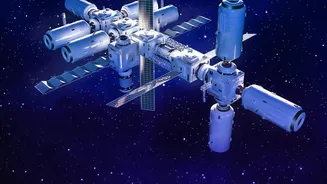
Several companies are now in a race to become the first private landlords in space. Axiom Space plans to first attach its own modules to the ISS, starting as early as 2026, before detaching to become a free-flying station before the ISS is retired. Another key player is Vast, which is developing Haven-1, a single-module station aiming for a launch in early 2027 that could make it the first standalone commercial habitat in orbit. Other major projects include Orbital Reef, a 'mixed-use business park' envisioned by Blue Origin and Sierra Space, and Starlab, a joint venture from Voyager Space and Airbus. Each of these companies is betting on a future where LEO is not just a place for government astronauts, but a bustling hub for research, tourism, and industry.
Beyond Research and Tourism
The business case for these new stations extends far beyond flying wealthy tourists or housing government scientists. The long-term vision is to create a robust in-space economy. The unique microgravity environment is ideal for a range of high-value activities that are difficult or impossible on Earth. These include manufacturing exotic fiber optics, growing flawless protein crystals for new pharmaceuticals, and developing advanced materials. Some even envision orbital data centers powered by abundant solar energy to meet the massive electricity demands of artificial intelligence. By dramatically lowering the cost of access, these private stations aim to unlock industries that were previously the stuff of science fiction.
Challenges on the Final Frontier
The path to a thriving commercial LEO economy is not without significant hurdles. The primary challenge is financial; developing a human-rated space station is an extraordinarily expensive and risky endeavor. Companies must prove to investors that a sustainable market exists beyond NASA. Who will the other customers be, and will there be enough of them to make these multi-billion-dollar ventures profitable? Technical risks also remain high, with tight timelines leaving little room for the delays that often plague complex aerospace projects. Ensuring the safety and reliability of these new platforms is paramount, as a single catastrophic failure could set the entire industry back for years.