



The Old Cosmic Rulebook
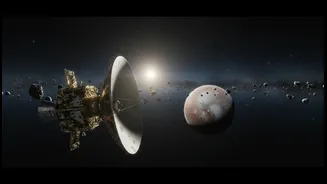
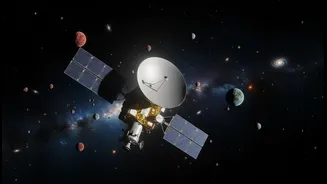
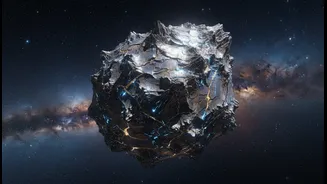
In the classic model of our solar system, the lines were drawn clearly. Asteroids are primarily rocky or metallic objects that mostly reside in the main asteroid belt, a vast ring of debris between the orbits of Mars and Jupiter. They follow relatively
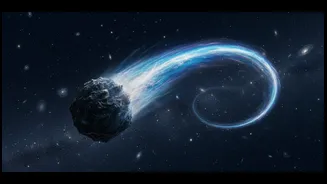
stable, somewhat circular orbits. Comets, on the other hand, are the dramatic wanderers. Composed of ice, dust, and rock, they originate in the frigid outer reaches of the solar system, in regions known as the Kuiper Belt and the Oort Cloud. Their highly elliptical orbits send them swinging in close to the Sun, where the heat causes their ices to vaporize, creating a glowing coma and the magnificent tails that have captivated humanity for millennia. One group lives in the suburbs; the other takes long, dramatic road trips into the city. For a long time, this distinction was a reliable way to categorize these small celestial bodies.
A New Class of Cosmic Rebels
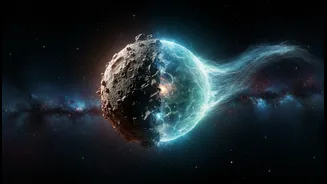
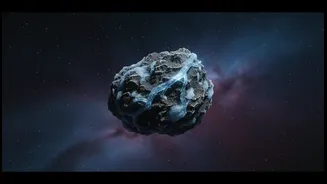
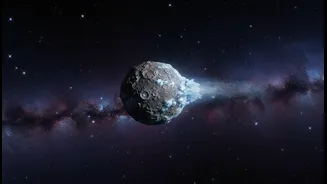
The trouble started in 1996, with an object named 133P/Elst-Pizarro. It had the orbit of a perfectly respectable asteroid, yet it was sporting a faint, comet-like tail. Since then, astronomers have discovered dozens of these baffling objects, now formally known as 'active asteroids' or 'main-belt comets'. These bodies reside in the asteroid belt, following asteroid-like orbits, yet they exhibit cometary activity, losing mass and creating tails. They refuse to fit into our neat boxes, representing not just an exception, but an entirely new and puzzling category that bridges the gap between the solar system’s two most famous types of debris. They are the celestial equivalent of finding a polar bear sunbathing in the Sahara.
An Orbit Entirely Out of Place
The most fundamental point of confusion is the object's address. A comet's activity is directly linked to its journey. It’s the intense solar radiation encountered during its brief visit to the inner solar system that turns its ice into a spectacular display. Asteroids, however, live in a region that was long thought to be too warm for surface ice to survive over billions of years. Active asteroids like 288P, the first known binary asteroid to also show a tail, orbit squarely within the main belt. Its path doesn't take it to the icy depths of space where comets are born. So, the question for astronomers is profound: how can an object in an asteroid’s orbit act like a comet? Is it an asteroid that has somehow started to shed material, or is it a comet that was captured into an unusual orbit long ago?
A Tail of Ice and Dust
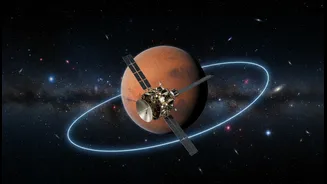
The 'volatile clues' mentioned in the headline refer to what the tail is made of and what it tells us. A key breakthrough came from observations by the James Webb Space Telescope, which studied an active asteroid named Comet Read. Webb confirmed the presence of water vapor, proving that water ice can indeed be preserved in the asteroid belt. This suggests that the activity is driven by sublimation—the process of ice turning directly into gas—just like a traditional comet. However, Webb’s observations also deepened the mystery, as Comet Read was surprisingly missing carbon dioxide, a common ingredient in other comets. Other theories for the activity on these bodies include collisions with smaller objects kicking up dust, or the asteroid spinning so rapidly from solar heating that it begins to fling material off its surface. Each object seems to tell a slightly different story.
Why These Rule-Breakers Matter
Objects that defy categorization are often the most important, as they challenge our assumptions and lead to deeper understanding. Active asteroids are more than just curiosities; they are rewriting our models of the solar system’s formation. For one, they provide a plausible mechanism for how water may have been delivered to the early Earth. While classical comets were long considered the primary source, their chemical composition doesn't perfectly match Earth's oceans. These main-belt objects, which contain water ice and are much closer to home, offer a compelling alternative. They suggest the line between a 'dry' inner solar system and a 'wet' outer solar system was never as clear as we once believed. These objects are not just blurring categories; they are filling in crucial gaps in our own origin story.