





From Field to Kitchen: A Tale of Two Processes
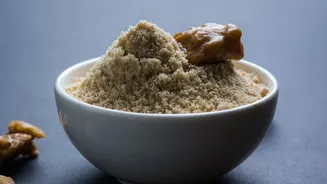
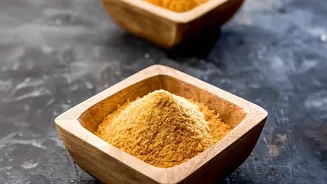
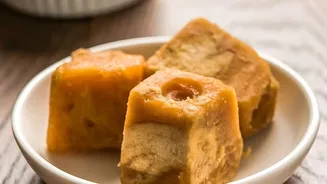
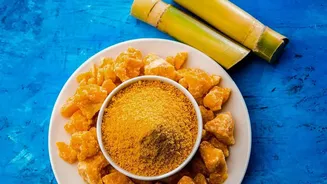
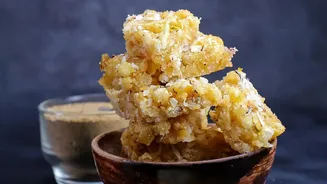
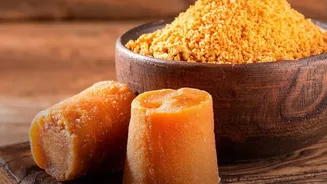
Both jaggery and white sugar begin their journey as juice extracted from sugarcane. However, their paths diverge significantly from there. Jaggery production is a minimalist process: the sugarcane juice is boiled in large, open pans until most of the water
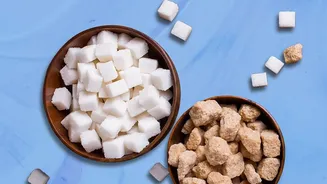
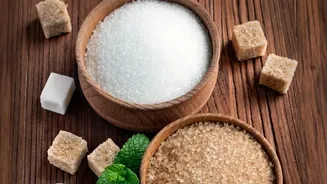
evaporates and the liquid thickens. This concentrated syrup is then cooled and set into blocks or sold as a granular powder. Crucially, this method retains the molasses, which is a natural byproduct of the sugar-making process.White sugar, on the other hand, undergoes extensive industrial refining. After the juice is boiled, it goes through several stages of clarification, filtration, and crystallization to separate the pure sucrose crystals from everything else. The molasses is deliberately stripped away, and the resulting crystals are often bleached to achieve their familiar white colour. This difference in processing is the single biggest reason for their distinct colours, flavours, and nutritional profiles.
The Nutritional Divide: Minerals vs. Empty Calories
Because jaggery retains molasses, it also holds onto a small amount of micronutrients that are completely removed from white sugar. Jaggery contains trace amounts of essential minerals like iron, magnesium, potassium, and calcium. Some lab tests show 100 grams of jaggery can contain a notable amount of iron, around 11 mg. White sugar, having been refined to almost 99.9% pure sucrose, provides what experts call 'empty calories' — energy with virtually no accompanying vitamins or minerals.However, it's crucial to consider serving size. While the mineral content of jaggery looks impressive on a 'per 100g' basis, a typical serving is closer to one or two teaspoons (about 7-15 grams). At this realistic portion, the contribution of minerals to your daily requirement is quite small. Therefore, while jaggery is nutritionally superior, it should not be considered a primary source of these minerals.
Calories and Blood Sugar: A Surprising Similarity
One of the most persistent myths is that jaggery has far fewer calories and is safer for blood sugar management. The data tells a different story. Calorie-wise, the two are nearly identical: 100 grams of jaggery contains about 383 calories, while the same amount of white sugar has about 387 calories. Swapping one for the other will not make a meaningful difference in your calorie intake.Even more surprising is the glycemic index (GI), a measure of how quickly a food raises blood sugar levels. Multiple sources indicate that sugarcane jaggery has a high GI, often reported to be around 84, which is actually higher than that of white sugar (around 65). This is because jaggery contains free glucose and fructose alongside sucrose, which can cause a faster spike in blood sugar. For this reason, both sweeteners should be consumed with caution, especially by individuals with diabetes.
The Winter 'Warming' Effect Explained
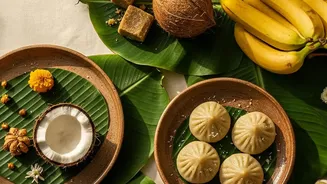
In Ayurveda and traditional Indian wisdom, jaggery is considered a 'warming' food, making it a popular choice during winter to boost immunity and fend off colds. While it does contain antioxidants and minerals like zinc and selenium that support the immune system, the warming effect is primarily due to the energy your body expends to metabolize it. Any food that requires digestion will generate some heat, but the idea that jaggery has unique thermal properties is not supported by modern science. The comfort it brings is real, but it is largely due to its energy content and its role in traditional winter recipes and remedies for coughs and colds.
The Verdict: Flavour and Moderation Over Miracles
So, which one should you choose? The answer is less about declaring a definitive health champion and more about understanding their roles. Jaggery is undeniably the less processed of the two, offering a complex, caramel-like flavour and a small profile of minerals that white sugar lacks. If you enjoy its taste and are replacing white sugar, jaggery is a marginally better choice.However, it is crucial to remember that jaggery is still, fundamentally, a sugar. It is calorically dense and has a significant impact on blood sugar levels. The idea that it can be consumed freely as a 'healthy' alternative is a misconception. The real key to a healthy winter diet isn't swapping one sugar for another but moderating your total intake of all added sweeteners. Enjoy jaggery for its flavour and tradition, but do so with the same mindfulness you would apply to white sugar.