



Beyond the Visible Rainbow
The light our eyes can see is a small part of a much broader spectrum of energy called the electromagnetic spectrum. This spectrum includes everything from long-wavelength, low-energy radio waves and microwaves to short-wavelength, high-energy X-rays
and gamma rays. Until the 20th century, astronomy was limited to what could be observed in visible light. Now, by building telescopes that can detect this 'invisible' light, scientists can piece together a far more complete picture of celestial objects. Different wavelengths reveal different cosmic phenomena; what is invisible in one type of light can shine brightly in another.
Radio Waves: Mapping Cold Gas and Ancient Echoes
At the long-wavelength end of the spectrum, radio waves tell a story of the cold universe. Radio telescopes allow astronomers to map vast clouds of cool hydrogen gas, the most abundant element and the primary fuel for star formation. By tracking this gas, they can outline the grand spiral structure of galaxies like our own Milky Way. Radio astronomy also reveals some of the most exotic objects in the cosmos. Pulsars, which are rapidly spinning neutron stars left over from supernova explosions, flash like cosmic lighthouses in the radio spectrum. Furthermore, some of the most powerful radio signals come from active galaxies, where jets of particles are shot out from the vicinity of a central supermassive black hole.
Infrared: Peering Inside Stellar Nurseries
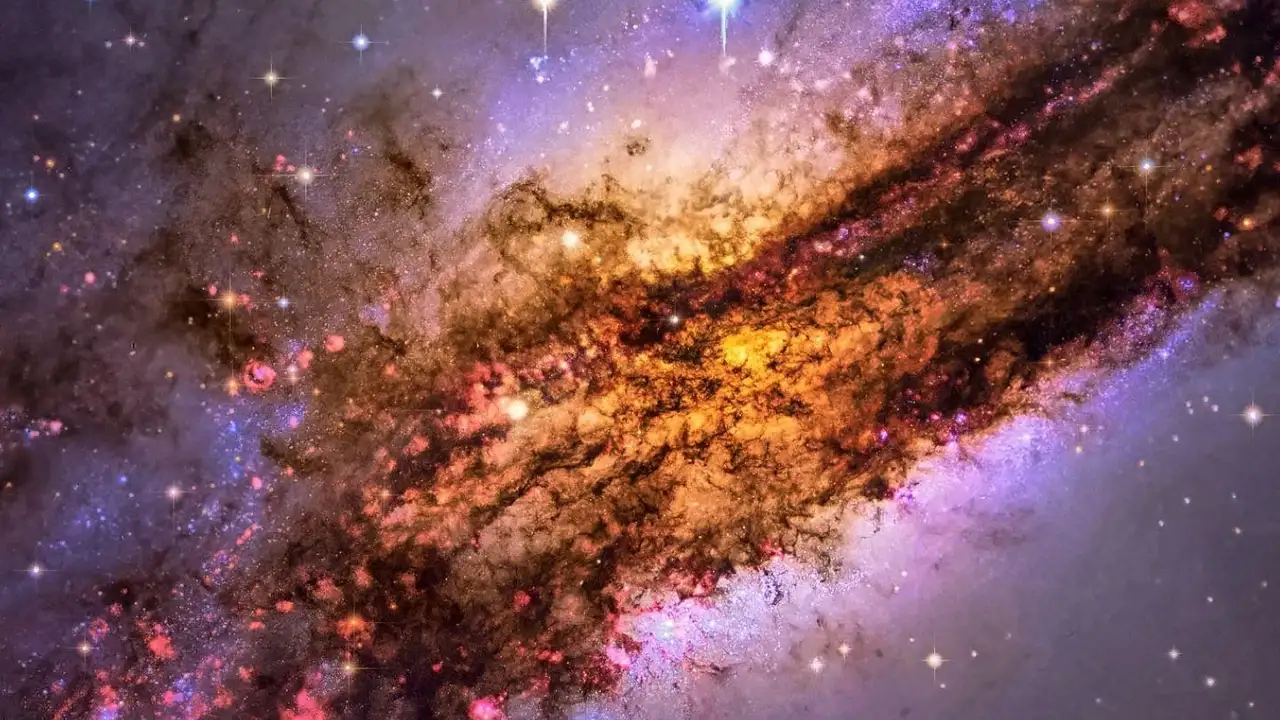
Moving up in energy, infrared radiation is essentially heat. Many cosmic objects that are too cool to shine brightly in visible light can be detected in the infrared. One of infrared astronomy's most powerful capabilities is its ability to peer through the dense clouds of cosmic dust that normally block our view. Visible light gets scattered by this dust, but infrared light can pass through it, unveiling what lies behind. This makes it an invaluable tool for studying star formation, as new stars are born deep within these dusty cocoons. Images from telescopes like the James Webb Space Telescope show these 'stellar nurseries' in stunning detail, revealing newborn stars that are completely hidden in visible-light images.
X-rays and Gamma Rays: The Hot and Violent Universe
At the high-energy end of the spectrum, X-rays and gamma rays unlock the most violent and energetic processes in the universe. Since our atmosphere thankfully absorbs this harmful radiation, these observations must be done from space. X-ray telescopes detect matter heated to millions of degrees, which is often found in extreme environments. This includes gas swirling around black holes, the remnants of exploded stars (supernovae), and vast clouds of superheated gas in galaxy clusters. Gamma rays, the most energetic form of light, point to even more extreme events, such as the annihilation of particles, hypernovae, and gamma-ray bursts, which are among the most luminous explosions known.
A Symphony of Light
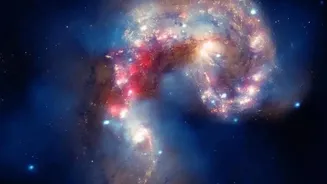
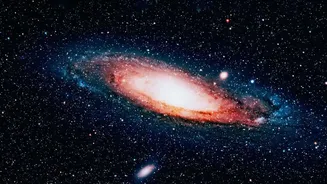
No single wavelength can tell the whole story of a galaxy. A galaxy that looks serene in visible light might be bursting with hidden star formation when viewed in the infrared. What appears as an ordinary galaxy in an optical image might show enormous jets of energy in a radio map, betraying a feeding supermassive black hole at its core. For example, an optical image of the Andromeda Galaxy shows its stars and dark dust lanes, while an infrared view highlights concentric rings of cool dust where stars are forming. By combining images taken in radio, infrared, visible, ultraviolet, X-ray, and gamma-ray light, astronomers create a composite, multiwavelength view. This allows them to study the full life cycle of a galaxy—from its cold gas reservoirs to its hot young stars and its violent, energetic core.