






The Harvest Against Time
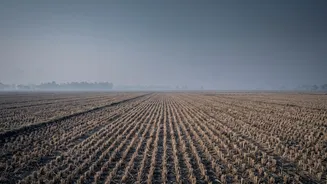
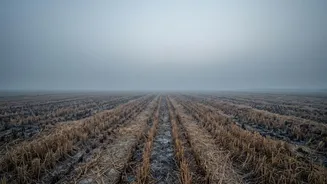
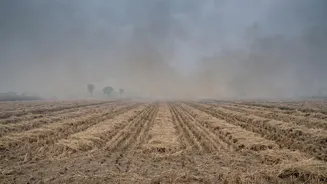
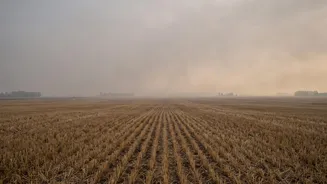
The problem begins with the agricultural clock. The withdrawal of the monsoon in September and October marks the end of the Kharif growing season. Farmers across Punjab, Haryana, and western Uttar Pradesh rush to harvest their paddy (rice) crops. Almost
immediately, they must prepare the fields for the next crop cycle, primarily wheat. This gives them an incredibly narrow window, often just two to three weeks, to clear several million tonnes of leftover rice stubble from their fields. This time crunch is a key reason why farmers turn to the quickest and cheapest solution available to them. A 2009 law designed to conserve groundwater by delaying paddy sowing had an unintended consequence: it pushed the harvest later into the year, further squeezing this already tight schedule.
Why Fire Becomes the Default
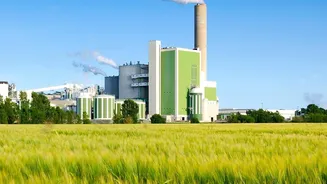
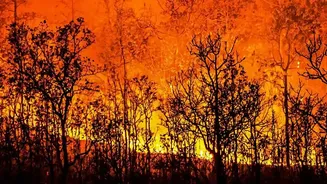
For a farmer facing a race against time, burning the stubble is the most practical option. It is fast, costs almost nothing, and clears the land effectively. While alternatives exist, they come with their own set of challenges. Machines like the 'Super Seeder' or 'Happy Seeder', which can sow wheat seeds without needing to remove the stubble, are expensive and often require powerful tractors that many small-scale farmers do not own. Other solutions, such as using the crop residue for composting with bio-decomposers, converting it into cattle fodder, or supplying it to biomass power plants for energy generation, are not yet scalable or economically viable for everyone. Without robust and affordable alternatives, burning remains the path of least resistance for a majority of farmers.
An Atmospheric Lid Traps the Smoke
This is where meteorology turns a regional practice into a widespread crisis. The weather patterns after the monsoon are fundamentally different. As temperatures drop, the air becomes denser and more stable. This often leads to a phenomenon known as temperature inversion, where a layer of warm air sits on top of a layer of cooler air near the ground. This inversion acts like a lid, trapping pollutants and preventing them from dispersing into the upper atmosphere. Compounding this, wind speeds are typically low during this period. The slow-moving northwesterly winds gently push the smoke from the farm fires across the entire Indo-Gangetic Plain, carrying it for hundreds of kilometres and allowing it to accumulate over cities like Delhi.
From Nuisance to Public Health Emergency
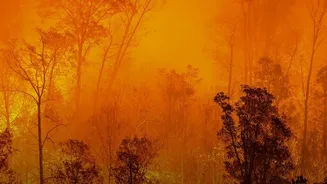
The smoke is far more than an unpleasant haze; it is a toxic cocktail. It is loaded with fine particulate matter (PM2.5), black carbon (soot), carbon monoxide, and other harmful pollutants. These microscopic PM2.5 particles are small enough to penetrate deep into the lungs and enter the bloodstream, causing respiratory diseases, aggravating heart conditions, and posing a severe risk to children, the elderly, and those with existing health problems. Studies have shown that during peak burning season, agricultural smoke can be responsible for a significant percentage of air pollution-related deaths in downwind cities. What starts in a field becomes a public health emergency blanketing one of the world's most densely populated regions.
The Search for a Lasting Solution
Tackling this issue requires a multi-pronged approach, which authorities are trying to implement. The Commission for Air Quality Management (CAQM) has been issuing directives to states to enforce action plans. These strategies include providing subsidies to farmers for purchasing residue management machinery, promoting the use of bio-decomposers, and creating a supply chain for the ex-situ (off-field) use of stubble in industries like bio-energy. Awareness campaigns are also run to educate farmers on the harmful impacts of burning. However, the scale of the problem is immense, and ensuring these solutions are effective, affordable, and accessible at the grassroots level remains a significant challenge year after year.