



The Sobering View from Webb
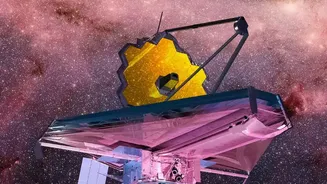
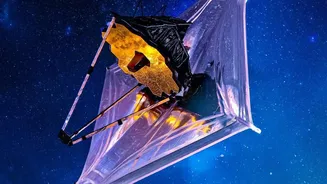
In its first few years, the JWST has delivered breathtaking images and data, but for those hunting for habitable, rocky worlds, the news has been sobering. Astronomers aimed the telescope at promising Earth-sized planets, especially those orbiting common,
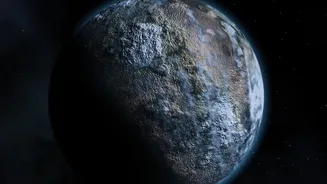
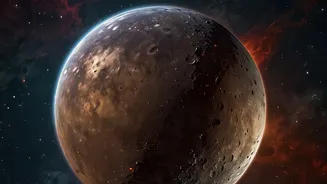
cool stars called M-dwarfs, hoping to find the chemical signatures of an atmosphere. Instead, for many of these worlds, like TRAPPIST-1 c and LHS 3844 b, they found... nothing. The data suggests these are bare rocks, stripped of the gaseous blanket considered essential for life. This isn't a failure of the telescope; it's a critical discovery that highlights a massive challenge in the search for life.
Cosmic Thieves: How Planets Lose Their Air
A planet's atmosphere is in a constant battle with its star. This process, known as atmospheric escape, happens through several mechanisms. One is hydrodynamic escape, where a star's intense X-ray and ultraviolet (XUV) radiation heats the upper atmosphere, causing gases to expand and stream off into space. This is particularly harsh for planets orbiting close to young, active stars. Another major culprit is stellar wind, a constant flow of charged particles from the star that can physically strip away atmospheric gases over billions of years. The combination of these thermal and non-thermal processes can be devastating, especially for smaller, rocky planets with weaker gravity.
The M-Dwarf Dilemma
M-dwarf stars are the most common type in our galaxy, making their planets prime targets for study. Because these stars are cooler than our sun, a planet must orbit much closer to be in the 'habitable zone'—the region where liquid water could exist. This proximity, however, is a double-edged sword. It makes the planets easier for JWST to observe, but it also exposes them to the star's most violent tendencies. M-dwarfs are known for frequent, powerful flares and intense radiation, especially in their youth, which can blast away the atmospheres of nearby worlds. The growing number of bare rocks found by JWST suggests that for many M-dwarf planets, the habitable zone may be a dangerously uninhabitable place.
Rethinking the 'Goldilocks' Zone
These findings are forcing scientists to refine the concept of the habitable zone. Merely being at the right temperature for liquid water is not enough. A planet must also be able to hold onto its atmosphere. The new data suggests that the true habitable zone might be narrower or located differently than previously thought. Planetary habitability models are now being updated to more heavily weigh factors like the age and activity of the host star, the planet's magnetic field (which can shield an atmosphere), and its mass and density. The focus is shifting from a simple 'where is it?' to a more complex 'what has it endured?'. Some studies even challenge prevailing wisdom, showing evidence for an atmosphere on an ultra-hot super-Earth, suggesting some planets can replenish their atmospheres from molten surfaces.
A More Focused, Smarter Search
While finding airless rocks might seem like a setback, it is actually making the search for life more efficient. By identifying which types of planets in which systems are unlikely to retain atmospheres, astronomers can better prioritise future observation time, which is incredibly valuable. Rather than randomly searching, they can focus on planets that have a better chance of being truly habitable—perhaps those orbiting quieter, more stable stars, or larger rocky planets with enough gravity to hang onto their air. The lessons learned from JWST are already shaping the design of future missions like the planned Habitable Worlds Observatory, which will be specifically designed to find and characterize Earth-like planets around Sun-like stars.