



A Monumental Leap in Ambition
Chandrayaan-4 is not just another landing mission; it's India's first attempt at a lunar sample return. This means performing a soft landing, collecting soil and rock, launching off the Moon, and bringing the precious cargo safely back home. If successful,
India will join an exclusive club of nations—the United States, the former Soviet Union, and China—that have accomplished this feat. The mission represents a massive technological jump, aiming to retrieve samples from the lunar south pole, a region of immense scientific interest that remains largely unexplored. The goal is to collect pristine material that could unlock secrets about the Moon's origin, its history, and the potential for resources like water ice.
The Allure of the Lunar South Pole
The focus on the south pole is deliberate and scientifically driven. This region is home to permanently shadowed craters, areas that haven't seen sunlight in billions of years. These ultra-cold traps are believed to harbor significant quantities of water ice, a resource that could be vital for future long-term lunar missions, providing drinking water, breathable air, and even rocket fuel. Studying these ancient ice deposits can also offer a unique window into the history of the solar system, as they may contain a preserved record of volatile materials delivered to the Moon over eons. By bringing these samples back for analysis in advanced labs on Earth, scientists hope to answer fundamental questions about the formation of the Earth-Moon system and the origins of water in our cosmic neighborhood.
A Complex, Five-Module Mission
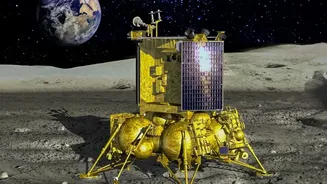
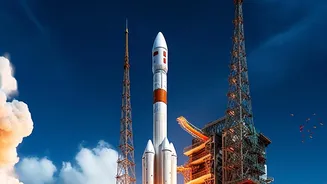
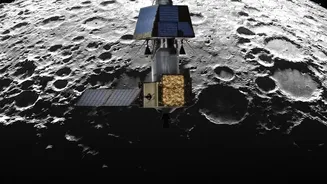
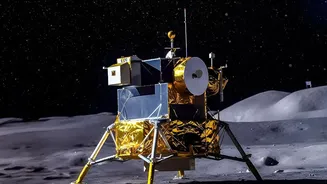
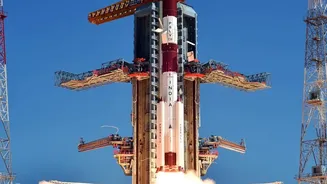
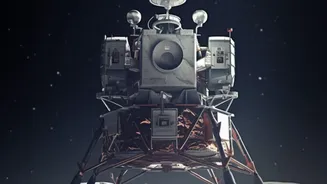
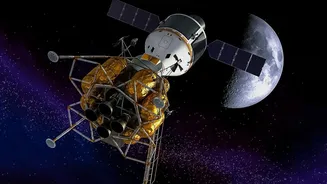
To achieve its ambitious goal, Chandrayaan-4 will be ISRO's most complex mission to date, comprising five separate modules: a Propulsion Module, a Descender Module (lander), an Ascender Module, a Transfer Module, and a Re-entry Module. Due to the significant mass, the mission will require two separate launches using powerful LVM3 rockets. One rocket will carry the Descender and Ascender, while the second will launch the other three modules. The two sets of spacecraft will then perform a crucial rendezvous and docking maneuver in Earth's orbit before journeying to the Moon as a single integrated unit. This intricate orbital ballet is a critical new capability that ISRO is developing, essential not only for this mission but also for future projects like the proposed Bharatiya Antariksha Station.
Robotics on the Lunar Surface
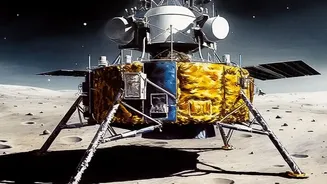
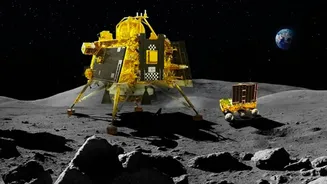
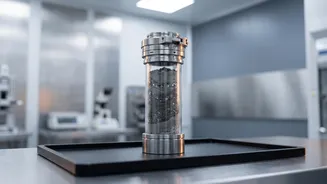
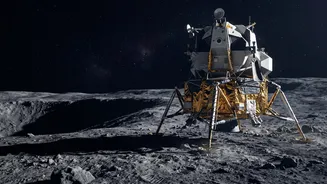
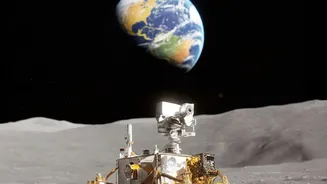
Once in lunar orbit, the Descender and Ascender modules will separate and begin their powered descent to a pre-selected site near the south pole. After a successful soft landing, the collection process begins. A robotic arm on the lander will scoop up surface soil, or regolith, while a drilling mechanism will collect samples from beneath the surface. These samples, totaling around 2-3 kg, will be carefully transferred into sealed containers inside the Ascender Module to protect them from contamination. Once the collection is complete, the Ascender Module will use the lander as a launchpad, firing its engine to lift off from the lunar surface and return to orbit—a major milestone in itself.
The Long Journey Home
The journey back is just as complex. The Ascender, now carrying the lunar samples, must rendezvous and dock with the Transfer and Re-entry modules waiting in lunar orbit. The samples will be robotically transferred from the Ascender to the Re-entry Module, which is specifically designed to survive a fiery passage through Earth's atmosphere. With the precious cargo secured, the Transfer Module will fire its engines to begin the trip back to Earth. As it approaches our planet, the Re-entry Module will separate and perform a ballistic re-entry, ultimately landing on Earth where it can be recovered. This final step will deliver a piece of the Moon into the hands of Indian scientists, heralding a new era for the nation's planetary science program.