


Beyond the Visible Rainbow
To understand infrared astronomy, we first have to think about light itself. The familiar rainbow of colours we can see is just a tiny fraction of the total light that exists, known as the electromagnetic spectrum. Just beyond the red light our eyes can detect
lies infrared. You can't see it, but you can feel it as heat. Every object with a temperature above absolute zero, from a person to a planet, emits infrared radiation. Astronomers have built powerful telescopes capable of detecting this specific type of light, giving them a completely different view of the universe. By capturing these wavelengths, which are longer than those of visible light, researchers can study phenomena that are otherwise completely hidden from view.
Piercing the Cosmic Veil
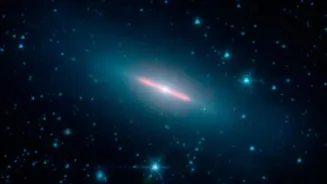
One of the biggest challenges in traditional astronomy is cosmic dust. Huge clouds of gas and dust drift between stars and fill galaxies, acting like a thick fog that blocks visible light. This makes it impossible to see what's happening inside stellar nurseries, where new stars are born, or at the crowded centre of our own Milky Way galaxy. However, the longer wavelengths of infrared light can pass through these dusty clouds much more easily than the shorter wavelengths of visible light. This is because visible light tends to scatter off the tiny dust particles, while infrared waves slip right past them. This allows infrared telescopes to peer through the cosmic fog and reveal the secrets hidden within.
Seeing the Warm and the Cool
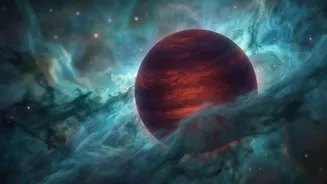
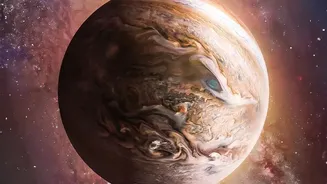
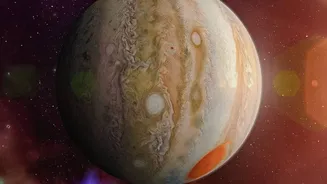
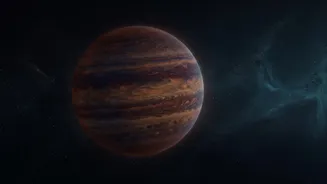
Visible light astronomy is great for studying hot, bright objects like stars. But what about objects that are cooler and fainter? Things like brown dwarfs—often called 'failed stars'—or planets orbiting other stars are not hot enough to glow brightly in visible light. However, they do emit their own heat in the form of infrared radiation. Infrared telescopes are sensitive enough to pick up this faint glow, allowing astronomers to detect and study these cool objects directly. This capability has been crucial for discovering exoplanets and even analysing the composition of their atmospheres. It also lets us see the very earliest stages of star formation, observing the warm cores of collapsing gas clouds, known as protostars, long before they become hot enough to ignite.
A Window to the Dawn of Time
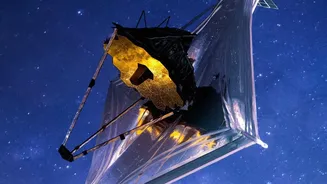
Perhaps the most mind-bending application of infrared astronomy is its ability to look back in time. Because the universe is constantly expanding, the most distant galaxies are moving away from us at incredible speeds. This rapid movement causes the light they emit to stretch, a phenomenon called 'redshift'. Light that was originally emitted as visible or even ultraviolet light from the universe's first stars and galaxies has been stretched so much over its journey of billions of years that it now arrives at Earth as infrared light. Telescopes that see in the visible spectrum cannot detect this ancient light. Only infrared telescopes, like the James Webb Space Telescope (JWST), are powerful enough to capture these faint, redshifted signals and give us a glimpse of the cosmic dawn.
The Tools of the Trade
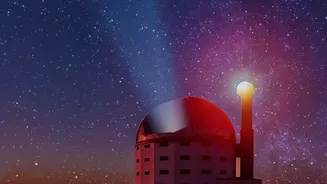
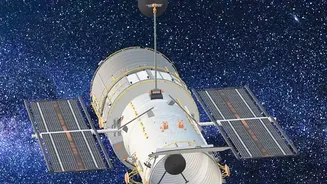
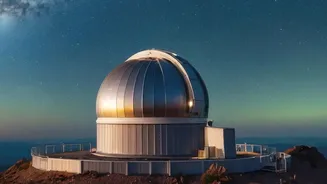
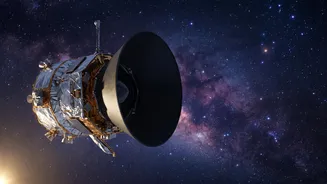
Ground-based infrared telescopes are challenging because Earth's atmosphere, particularly water vapour, absorbs a lot of infrared radiation. This is why astronomers prefer to place infrared observatories on high, dry mountaintops or, even better, in space. Space telescopes like the Spitzer Space Telescope, which was retired in 2020, and the Hubble Space Telescope, with its own infrared capabilities, have made incredible discoveries. Today, the undisputed champion is the James Webb Space Telescope. Launched in 2021, JWST is specifically designed to conduct infrared astronomy with its suite of advanced cameras and spectrographs, like NIRCam and MIRI, which are sensitive to near- and mid-infrared light. This makes it the most powerful tool humanity has ever built to explore the invisible universe.