


The Hunt for Hidden Worlds
To understand why a planet might 'disappear', we first need to know how we find them. Most exoplanets, or planets outside our solar system, are found using the 'transit method'. Imagine a moth flying in front of a bright lamp. From a distance, you'd notice
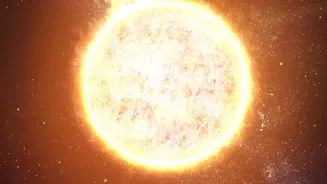
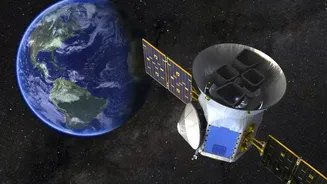
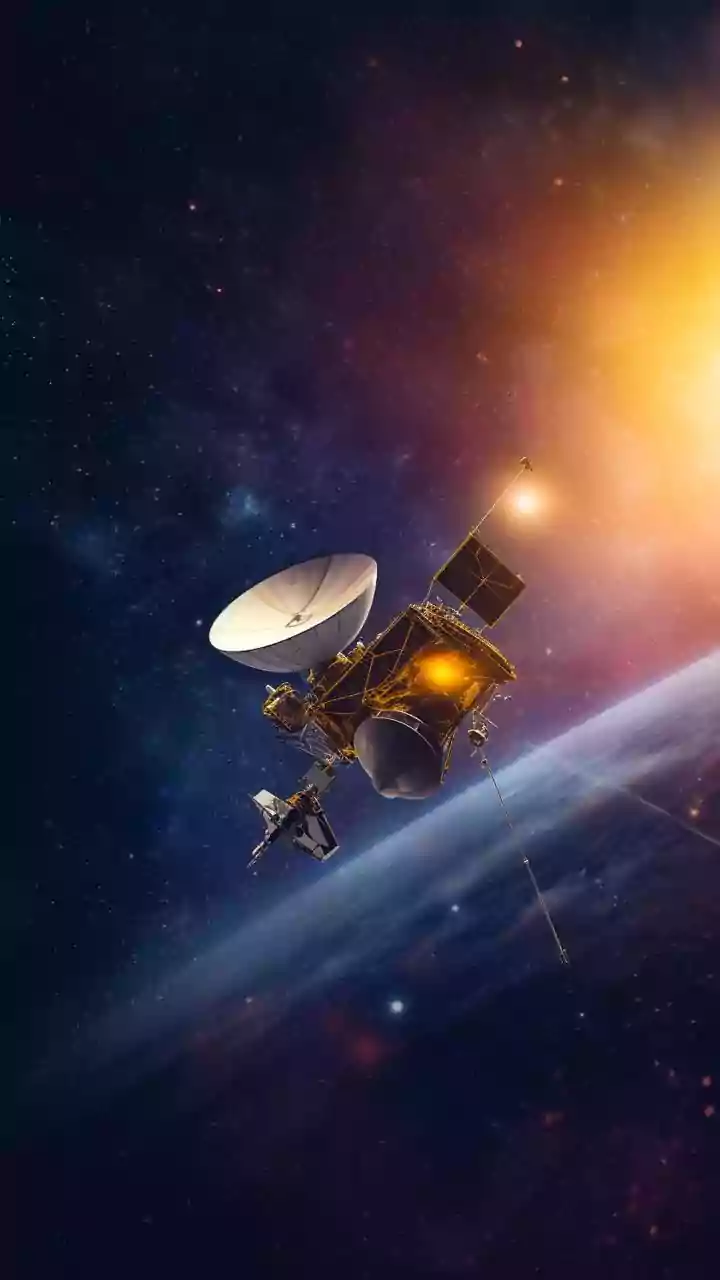
a tiny, brief dip in the lamp's brightness. Astronomers look for a similar effect with stars. When a planet passes directly between its star and Earth, it blocks a minuscule fraction of the starlight. Powerful telescopes like NASA’s Transiting Exoplanet Survey Satellite (TESS) monitor hundreds of thousands of stars, looking for these periodic dips that signal an orbiting planet. This method has revealed thousands of distant worlds, but it has one major requirement: perfect alignment. We can only see planets whose orbits are perfectly edge-on from our perspective.
A Planet Found, Then Lost
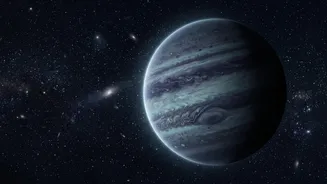
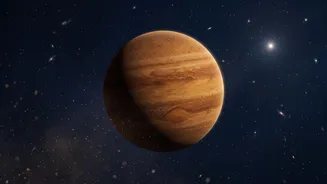
TOI-2535 b is what's known as a 'hot Jupiter'—a massive gas giant that orbits incredibly close to its star, completing a full circle in just over eight days. TESS first spotted it in 2019, and for seven years, astronomers watched it reliably transit its star. But then, something strange started happening. The transits began arriving off-schedule, sometimes by as much as six hours. The dips in starlight also became shorter and shallower. Then, in early 2026, the transits stopped altogether. The planet that had been a regular presence in their data had seemingly vanished into thin air.
A Cosmic Wobble
So, what happened? The planet didn't explode or get consumed by its star. Instead, its orbit tilted. The reason is a gravitational tug-of-war with an unseen neighbour. Researchers believe there is another large, hidden planet in the system whose orbit is slightly inclined relative to TOI-2535 b's. The gravitational pull between these two massive worlds is causing both of their orbits to slowly wobble, like a spinning top that's starting to tilt. This wobble, known as orbital precession, gradually shifted the path of TOI-2535 b. Over seven years, astronomers watched its transit path move from the middle of the star to its outer edge, until finally, its orbit tilted just enough that it no longer crosses in front of the star from our viewpoint. It's now passing just above or below the star from our perspective, making it invisible to the transit method.
Why This 'Missing' Planet Matters
The disappearance of TOI-2535 b is more than just a cosmic magic trick; it’s the first time astronomers have watched a planet's transit vanish in real-time due to this kind of gravitational dance. It highlights a crucial challenge in planet hunting: our view of the universe is not static. Planetary systems are dynamic, constantly evolving places. This event shows that our current detection methods might be biased towards finding planets in stable, clockwork-like systems. The story of TOI-2535 b forces scientists to account for these wobbling, shifting orbits and reveals a new layer of complexity in how planetary systems are arranged. It also offers clues about how hot Jupiters form, suggesting a slow migration inward rather than a violent one.
The Decades-Long Wait
The planet may be out of sight, but it's not out of mind. Based on their models, astronomers predict that the orbital wobble will continue, and TOI-2535 b will eventually tilt back into our line of sight. However, they'll need to be patient. The next transit isn't expected for another 30 to 50 years. In the meantime, the hidden companion that caused all this drama might just wobble into view sooner. The case of this 'missing' planet is a powerful reminder that the cosmos is always in motion, and what is hidden today may reveal itself tomorrow—or in a few decades. Its changing alignment has turned an observational loss into a treasure trove of evidence about the hidden architecture of a distant solar system.