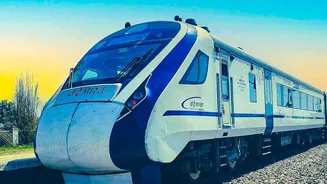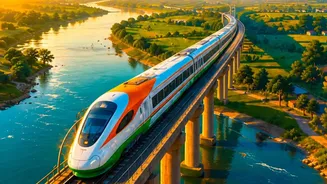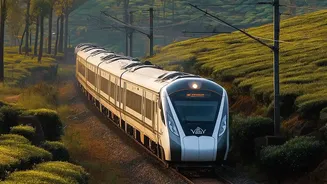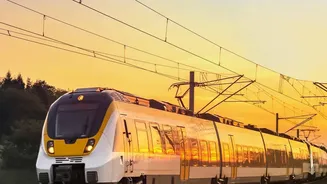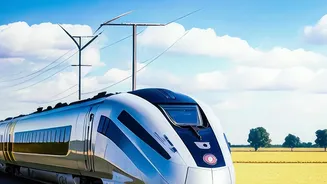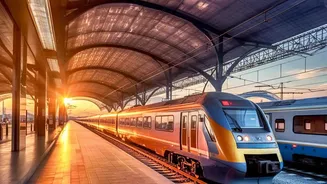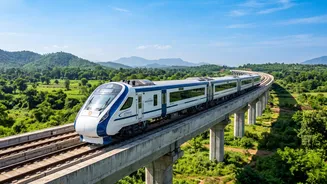



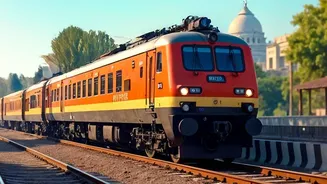
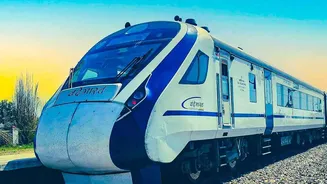
India's long-held dream of high-speed rail is fast approaching reality. The nation's first bullet train service is slated to begin in 2027, with the initial phase connecting the industrial hubs of Surat and Vapi in Gujarat.
The First Leg of a Grand Vision
The Surat to Vapi service is
the inaugural section of the ambitious 508-km Mumbai-Ahmedabad High-Speed Rail (MAHSR) corridor. This 'starter' section, approximately 100-km long, is being prioritized because construction progress in Gujarat has been swift. The phased rollout strategy aims to make high-speed travel available to the public as soon as sections are completed, rather than waiting for the entire corridor to be finished. A key milestone was recently achieved on November 20, 2026, when the overhead electrical equipment on the 50-km Surat-Bilimora stretch was successfully 'energised', or made live, paving the way for testing.
What to Expect in 2027
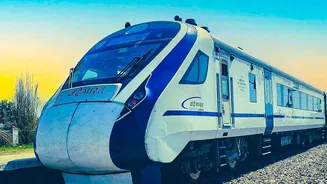
According to Railway Minister Ashwini Vaishnaw, the first bullet train service is expected to commence in the last quarter of 2027. This follows a period of extensive testing. Trial runs on the Surat-Bilimora section are scheduled to begin around May 2027. These trials will use the new indigenously developed B28 trainsets, which are designed for operational speeds of 280 kmph. The launch of commercial services depends on the successful completion of these trials and subsequent safety clearances. While the Surat-Vapi route will be the first to open, the goal is to have the entire Ahmedabad-Vapi section operational by the end of 2027.
The Shinkansen Connection and Local Manufacturing
The MAHSR project is a collaboration between India and Japan, utilising Japan's renowned Shinkansen (bullet train) technology, known for its impeccable safety and punctuality record. Japan is providing significant financial assistance through a low-interest loan. While the core technology is Japanese, there is a strong 'Make in India' component. The B28 trainsets for the initial runs are being manufactured in India. This approach is designed to boost domestic manufacturing capabilities and create a local ecosystem for high-speed rail technology.
More Than Just Speed
The bullet train promises to slash travel time between Mumbai and Ahmedabad from around eight hours by road to just under two hours once the full corridor is active. But the impact goes beyond speed. The project is a massive economic engine, expected to create thousands of jobs during construction and for permanent operations. It is also anticipated to spur economic development along the corridor, boosting industries and real estate in cities like Surat, Vapi, and Bilimora. Proponents also highlight environmental benefits, as high-speed rail produces significantly lower carbon emissions per passenger compared to cars and planes.
The Road Ahead: Challenges and Milestones
The journey to India's first bullet train has not been without hurdles. The project has faced significant delays and cost escalations, with the latest estimates being nearly double the original projection. Land acquisition, particularly in Maharashtra, and pandemic-related shutdowns caused initial setbacks. However, construction has since gained significant momentum. As of late 2026, major progress has been made on the elevated viaducts, piers, and station construction, especially in Gujarat. Following the Surat-Vapi launch, the next target is to extend services to Thane by 2029, which includes completing a complex undersea tunnel. The full line is slated for completion by the end of 2029.