





The Key Is the Right Variety
The secret to successful container gardening with pomegranates lies in choosing the correct plant. While standard pomegranate trees can grow quite large, there are dwarf varieties specifically suited for pots. The most popular choice is 'Punica granatum
Nana'. This compact, ornamental shrub typically grows to only about 2 to 4 feet tall, making it perfect for small spaces. It produces vibrant orange-red flowers followed by miniature, edible fruits. While you can grow a plant from the seeds of a store-bought pomegranate, it's a lengthy and often unreliable process. For faster results and guaranteed fruit, it is best to purchase a healthy, grafted sapling from a local nursery. Indian varieties like 'Bhagwa' or 'Ganesh' may also be available as grafted options suitable for pots.
A Home for Your Plant
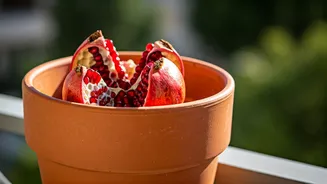
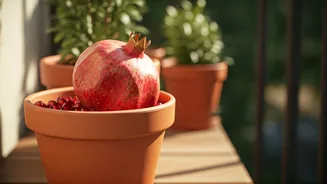
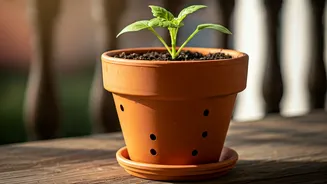
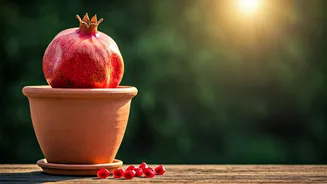
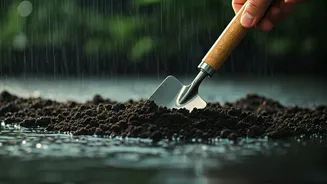
Your pomegranate will need a spacious home to thrive. Start with a pot that is at least 12-18 inches in diameter and depth. A 10-gallon container is a good starting point. Ensure the pot has plenty of drainage holes at the bottom to prevent waterlogging, which can lead to root rot. Terracotta pots are an excellent choice as they allow for better air circulation to the roots. The soil itself must be well-draining. A good potting mix can be made by combining garden soil, compost or well-decomposed cow dung manure, and sand. A common ratio is 40% garden soil, 30% compost, and 20% sand, with some gardeners adding cocopeat to the mix.
Sunlight, Water, and Food
Pomegranates are sun-loving plants that thrive in warm, arid conditions. Place your pot in a location where it will receive at least 6 to 8 hours of direct sunlight every day. A south-facing balcony is often ideal. Watering is crucial, but it's a balancing act. Water the plant deeply, but allow the top inch or two of soil to dry out before watering again. Overwatering is a common mistake and can be fatal to the plant. During India's hot summer months, you may need to water more frequently, while in winter and during the monsoon, you'll need to reduce it significantly. Potted plants deplete nutrients faster, so regular feeding is necessary. Use a balanced organic fertiliser, like compost or cow dung manure, every month or so during the growing season.
Pruning for Shape and Fruit
Pruning is essential to maintain the plant's shape, encourage fruit production, and keep it a manageable size for a pot. The best time to prune is during the plant's dormant period in late winter, before new growth begins. Your main goals are to remove any dead, damaged, or crossing branches to improve air circulation and sunlight penetration. You can also trim the top of the plant once it reaches two to three feet in height to encourage bushier growth. Since pomegranates produce fruit on the wood of previous years' growth, be careful not to prune too aggressively, as this can reduce your harvest. Regularly removing suckers that grow from the base of the plant will help it direct energy towards producing fruit.
Patience and the Sweet Reward
Growing fruit requires patience. While a healthy plant might produce flowers in its first year, it typically takes two to three years for a sapling to start bearing a good amount of fruit. Pomegranates are self-pollinating, so you only need one plant to get fruit. The flowers will appear in spring and summer, and if successfully pollinated, will develop into fruit that ripens in late summer or autumn. Don't be discouraged if some flowers or small fruits drop off the plant; this is normal. You'll know the fruit is ready to harvest when it has developed a deep, rich colour and feels heavy for its size. Use a pair of pruners to cut the fruit from the stem to avoid damaging the plant.