
A New Class of Worlds Takes Centre Stage
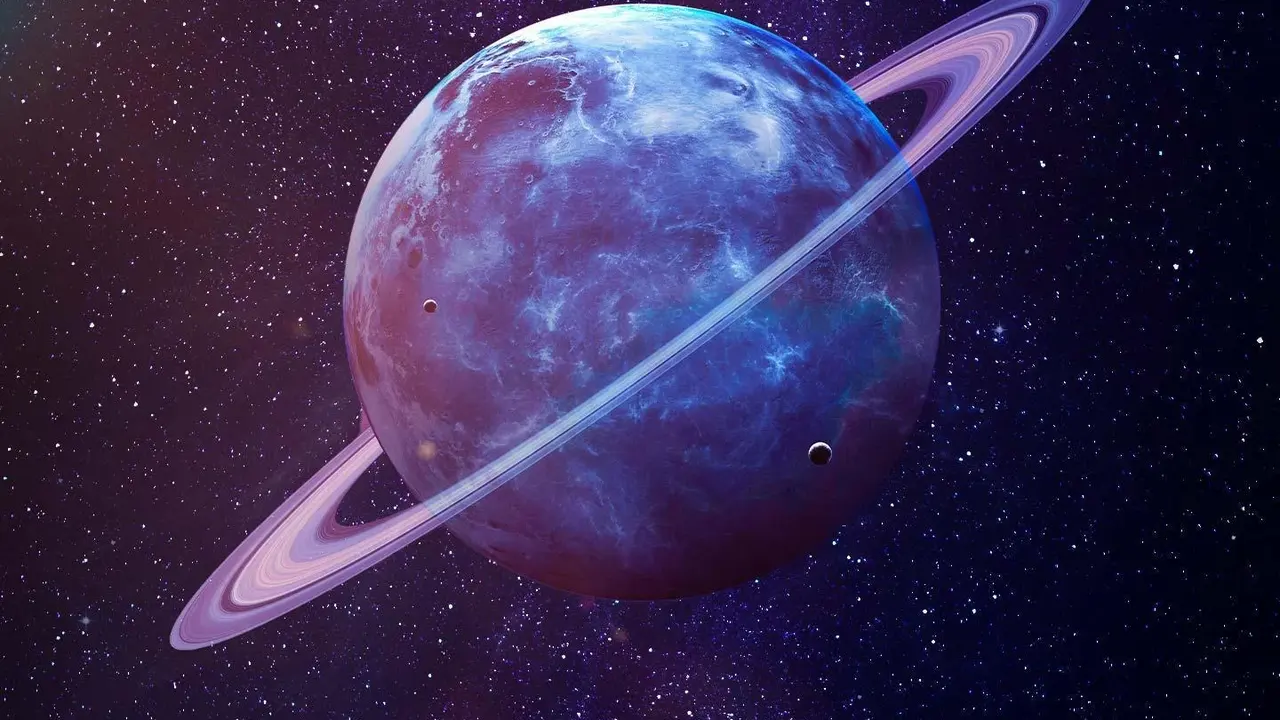
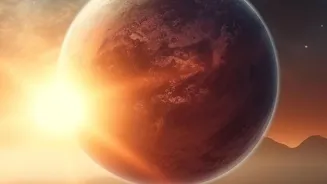
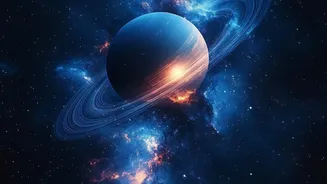
The focus of this exciting discovery is a class of exoplanets known as 'sub-Neptunes' or 'warm Neptunes'. These are worlds larger than Earth but smaller than Neptune, and they are one of the most common types of planets found in our galaxy so far. One
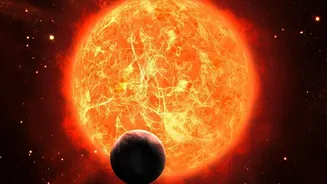
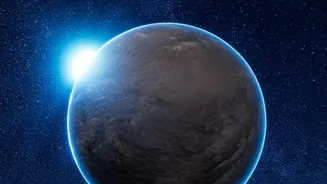
prime example is a planet named K2-18 b, located 124 light-years away. It is 8.6 times more massive than our own planet and orbits within its star's habitable zone, the region where temperatures could allow for liquid water. Recent observations confirmed the presence of carbon-bearing molecules, including methane and carbon dioxide, in its atmosphere. This has led scientists to theorise that K2-18 b could be a 'Hycean' world—a hot planet with a hydrogen-rich atmosphere covering a deep, global ocean.
Why Methane Is Such a Big Deal
On Earth, methane is overwhelmingly produced by living organisms, from microbes in wetlands to our own digestive systems. This makes it a key 'biosignature'—a substance that provides scientific evidence of life. Finding it on a distant planet is therefore a landmark event for astrobiologists. The James Webb Space Telescope's ability to even detect this gas from so far away is a technological marvel. Before JWST, methane was surprisingly elusive in exoplanet atmospheres, leading to many theories about why it was missing. Its definitive detection opens a new chapter in characterising these worlds. However, scientists are quick to add a note of caution. Methane can also be produced by purely geological processes, such as volcanic activity, so its presence alone is not definitive proof of life.
More Than Just One Molecule
The true power of this discovery lies not just in finding methane, but in what other molecules are present—or absent. The JWST data from K2-18 b revealed both methane and carbon dioxide, a combination that is intriguing to researchers. Crucially, the atmosphere showed a shortage of ammonia. Since ammonia is highly soluble in water, its absence strongly supports the hypothesis that a vast liquid water ocean may exist beneath the planet's hydrogen-rich atmosphere. Adding another layer of intrigue, the initial observations also hinted at the possible presence of dimethyl sulfide (DMS). On Earth, DMS is a compound that is exclusively produced by life, primarily marine phytoplankton. While this detection is still tentative and requires more data to be confirmed, it represents a potentially groundbreaking find.
The Power of the Webb Telescope
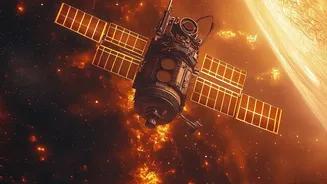
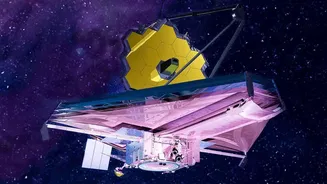
This level of atmospheric analysis is possible thanks to the unprecedented power of the James Webb Space Telescope. Astronomers use a technique called transmission spectroscopy. When an exoplanet passes in front of its host star from our point of view, a tiny fraction of the starlight filters through the planet's atmosphere. Different gas molecules absorb light at specific, unique wavelengths. By analysing the starlight that reaches the telescope, scientists can identify the chemical fingerprints of the gases present in that alien air. For years, observing sub-Neptunes was frustrating because thick clouds or hazes often blocked the view, resulting in flat, featureless data. JWST's sensitivity allows it to peer through these layers and detect key molecules, finally giving us a real glimpse into the composition of these common but mysterious worlds.
So, Have We Found Aliens?
In short: no, not yet. This discovery is not proof of extraterrestrial life, but it is a monumental step forward in our ability to search for it. Detecting methane and other key molecules on a potentially ocean-covered world proves that we now have the technology to identify planets with habitable conditions. It dramatically narrows down the list of targets for future, more intensive study. The findings from worlds like K2-18 b provide a powerful framework for what to look for. Astronomers will now conduct follow-up observations to confirm the presence of dimethyl sulfide and build a more complete picture of the planet's chemistry. Each new piece of data helps distinguish between biological and non-biological sources, moving us closer to answering one of humanity's oldest questions.