


More Than Just a Sweet Treat
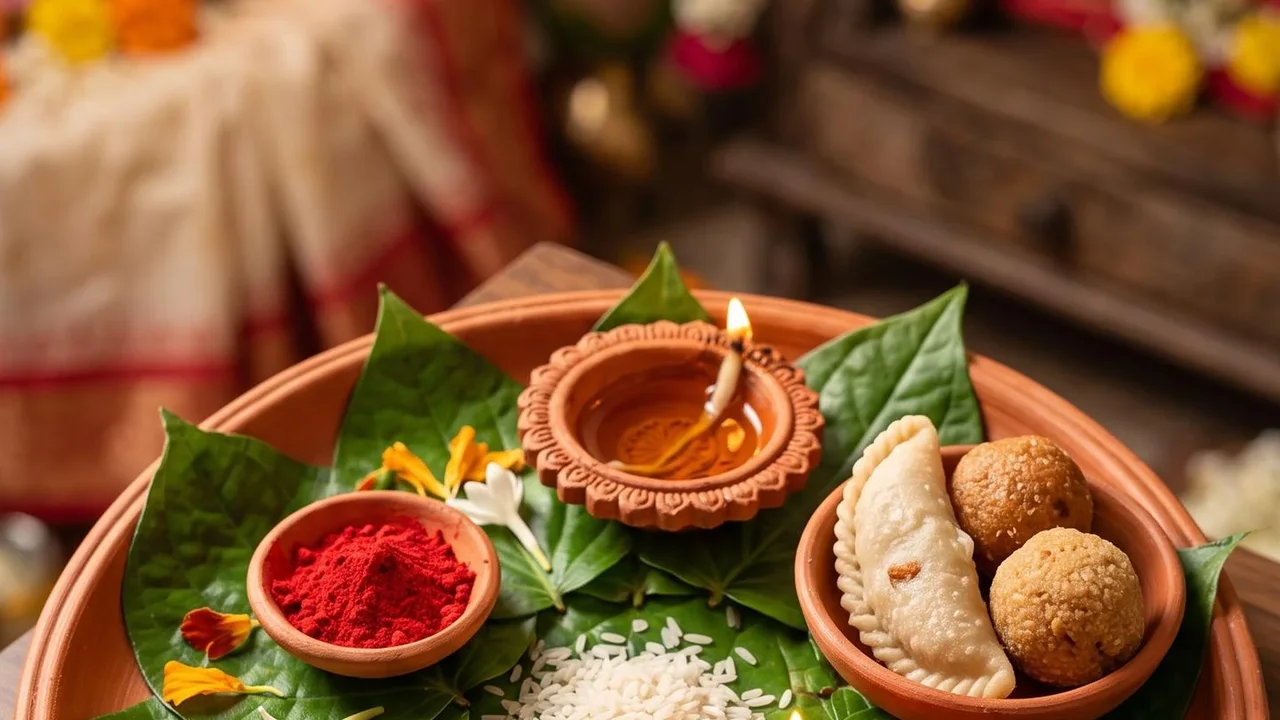
In Bengali culture, sweets are deeply woven into the fabric of life, and never more so than during Durga Puja. The tradition begins with 'bhog' — the sacred food offered to Goddess Durga. It is believed that offering sweets is a way to show reverence
and seek blessings. These offerings, known as 'prasad', are then distributed among devotees, fostering a sense of community. But beyond the rituals, sweets are a language of love and hospitality. After the idol immersion on Bijoya Dashami, which marks the victory of good over evil, a period of celebration begins. Families visit each other's homes, exchange 'Shubho Bijoya' greetings, and the custom dictates that no guest should leave without having 'mishti-mukh' (a taste of something sweet). A box of sweets becomes a gesture of warmth, connection, and shared joy that continues for weeks.
The Taste of Heritage
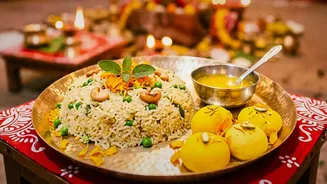
While countless varieties of sweets exist, certain heritage 'mishti' are inseparable from the Puja experience. The two undisputed icons are Sandesh and Rosogolla. Sandesh, a delicate sweet made from fresh cottage cheese ('chhena'), can be moulded into various shapes and comes in flavours like the seasonal 'Nolen Gur' (date palm jaggery). Rosogolla, the spongy white ball soaked in light sugar syrup, is considered a pure and auspicious offering. The history of these 'chhena'-based sweets is a story of cultural fusion, often credited to the influence of the Portuguese in the 16th century, who introduced the technique of curdling milk. Before their arrival, intentionally curdling milk was considered taboo. This innovation revolutionised Bengali confectionery. Other mainstays include homemade treasures like 'Narkel Naru', which are simple but beloved coconut and jaggery balls, and 'Payesh', a slow-cooked rice pudding that symbolises divine blessings.
Guardians of a Sweet Legacy
The enduring popularity of these sweets is a credit to Kolkata's legendary sweet shops, many of which are institutions that have stood for over a century. Establishments like Bhim Chandra Nag, founded in 1826, Girish Chandra Dey & Nakur Chandra Nandy, and Balaram Mullick & Radharaman Mullick (1885) are not just businesses but custodians of culinary heritage. These shops, often run by the same families for generations, have preserved authentic recipes while also innovating. For instance, Girish Chandra Dey & Nakur Chandra Nandy is famed for inventing the 'Jol Bhora Sandesh', and Bhim Chandra Nag is credited with creating the 'Ledikeni' in honour of Lady Canning. During Durga Puja, these shops see immense crowds, with families making their annual pilgrimage to buy specific sweets that have become part of their personal tradition.
A Tradition Passed Through Time
The choice of heritage sweets is deeply tied to family and memory. For many, the taste of a specific Sandesh from a particular shop is the taste of Durga Puja itself. It's a tradition passed down from grandparents to parents to children. The act of going to a specific heritage shop is a ritual in itself, connecting the younger generation to their roots and the stories of their elders. Sharing these sweets becomes an act of passing down not just a recipe, but a piece of family history. Even as modern fusion sweets gain popularity, the classic, heritage mishti remains the emotional anchor of the festival. They represent a comforting constant in a changing world, a flavour that instantly evokes the feeling of home, family, and festive cheer.