



The recent, tragic train collision in Toledo has cast a harsh spotlight on a complex and often invisible aspect of our national infrastructure: railway signalling. As investigators work to determine the cause, the incident serves as a critical reminder
of why the reliability of these systems is paramount to public safety.
A System Designed for Safety
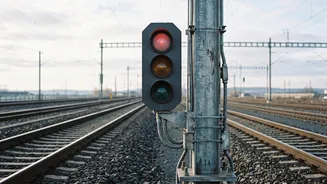
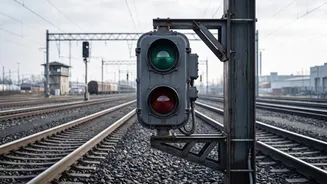
At its core, a railway signalling system is the 'traffic control' for trains. Its fundamental purpose is to keep trains safely apart and prevent them from entering a section of track occupied by another train. Tracks are divided into segments called 'blocks'. In a basic system, only one train is permitted in a block at any given time. Signals—the familiar trackside lights—tell drivers when it is safe to proceed into the next block. A green light means the path is clear, yellow serves as a warning to slow down, and red means stop. This simple logic, managed by a complex web of interconnected systems, is the foundation of rail safety. When it works, millions of passengers and tonnes of cargo move seamlessly. When it fails, the consequences can be catastrophic.
The Anatomy of a Failure
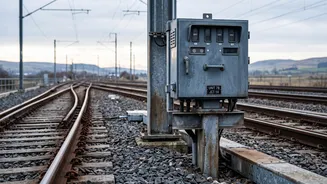
A 'signalling failure' can refer to a wide range of issues. It could be as simple as a power outage or a blown fuse. More often, failures stem from issues with track circuits, which are low-voltage currents running through the rails to detect a train's presence, or axle counters that track wheels entering and leaving a block. These components are exposed to the elements and can be affected by everything from corrosion and rail contamination to flooding and extreme heat. When a component fails, the system is designed to default to its safest state, which typically means signals turn red and all traffic stops. This is known as a 'right-side failure'. While this causes delays, it prevents collisions. The much more dangerous scenario is a 'wrong-side failure', where the system fails to an unsafe condition—for example, showing a green light when the track ahead is occupied. These are rare but are investigated with extreme scrutiny.
The Human and Technological Backstop
While hardware is crucial, signalling also involves a significant human element. Misinterpreting a signal, communication breakdowns between operators and dispatchers, or fatigue can all contribute to accidents. To mitigate this, modern networks are increasingly reliant on automated safety systems. The most significant of these in the United States is Positive Train Control (PTC). PTC is an advanced system that uses GPS, wireless radios, and onboard computers to monitor a train's position and speed. It can automatically slow down or stop a train to prevent collisions, derailments from excessive speed, or moving through a wrongly aligned switch. The system acts as a vital technological backstop designed to override human error. Following a 2008 mandate from Congress, PTC has been widely implemented on major rail lines, representing a significant leap forward in safety technology.
The Challenge of Modernization
Despite advancements like PTC, the sheer scale and age of the national rail network present ongoing challenges. Upgrading legacy systems is a monumental and expensive task. A network can have hundreds of thousands of individual signalling assets, all situated in diverse and often harsh environmental conditions. Ensuring reliability requires not just advanced technology but also rigorous and proactive maintenance. Experts note that many well-known causes of failure, like outdated power designs or poor electrical grounding, are often not addressed until an incident occurs. Modernizing these vast networks requires immense capital investment and a commitment to not only installing new systems but also maintaining the foundational infrastructure they rely on. The conversation about rail safety must therefore always include the less glamorous but essential topics of maintenance, component life cycles, and consistent funding.