







From Pugmarks to Pixels
For decades, wildlife conservation in India relied on traditional methods like tracking pugmarks—a system prone to error. Today, the approach is vastly more sophisticated. The backbone of modern efforts, especially for the flagship Project Tiger, is a multi-phased
monitoring system managed by the National Tiger Conservation Authority (NTCA) and the Wildlife Institute of India. This involves a combination of ground surveys by forest staff, habitat assessment, and high-tech tools to create a comprehensive picture of our ecosystems. The most visible of these tools is the camera trap. For the 2022 tiger census, an astonishing number of camera traps were deployed, capturing millions of images. This technology allows researchers to identify individual tigers based on their unique stripe patterns, leading to far more accurate population estimates. The latest census revealed an estimated 3,682 tigers, a significant jump from 1,411 in 2006, demonstrating the power of these methods.
The View from Above
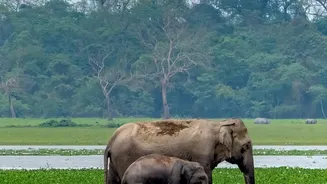
While camera traps give us a close-up view, satellite technology provides the bigger picture. GPS collaring and satellite imagery are crucial for tracking species with large home ranges, particularly elephants. A recent five-year study in Assam used GPS collars to track several elephant herds, generating over 38,000 data points on their movements. This revealed their seasonal migration patterns, their use of tea plantations as secondary habitats, and critical corridors they follow, sometimes across international borders into Bhutan. Such information is invaluable for mitigating human-wildlife conflict, which remains a severe challenge. By understanding exactly where and when elephants cross roads, railway lines, and agricultural land, authorities can better plan for wildlife-friendly infrastructure like underpasses and eco-ducts, and issue timely warnings to local communities.
Listening to the Environment Itself
One of the most groundbreaking frontiers in monitoring is environmental DNA, or eDNA. Every organism sheds genetic material into its surroundings through skin, faeces, or saliva. By collecting samples of soil, water, or even air, scientists can detect the presence of species without ever seeing them. This non-invasive technique is a game-changer for monitoring rare, elusive, or aquatic creatures. The Zoological Survey of India is pioneering eDNA projects to assess biodiversity. For example, it is being tested to track the spread of invasive fish species in India's freshwater bodies and to understand the distribution of frog species in the Western Ghats. As the technology develops, it could provide a rapid, cost-effective way to get a snapshot of an entire ecosystem's health from a single sample.
What the Data Reveals About Challenges
While monitoring highlights successes, it also shines a harsh light on persistent threats. Data confirms that habitat loss and fragmentation, driven by infrastructure projects and agricultural expansion, remain the primary dangers to wildlife. Monitoring helps identify critical wildlife corridors that are being squeezed by human activity, making animals more vulnerable and increasing the likelihood of conflict. For instance, while the tiger population is rising, the area they occupy has not grown at the same rate, indicating that tigers are living in denser, more fragmented pockets. Furthermore, monitoring reveals 'empty forests'—reserves like Buxa and Dampa that, according to the latest census, have no resident tigers left, underscoring that simply designating an area as 'protected' is not enough. These insights are vital, pushing conservation strategies beyond a focus on single species toward protecting entire, connected landscapes.