



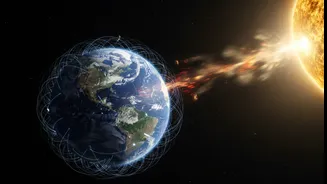


The Sun’s Volatile Behaviour
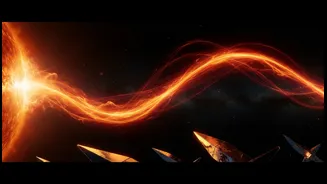
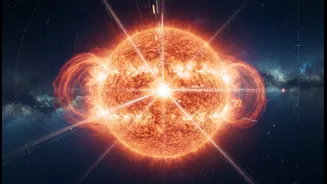
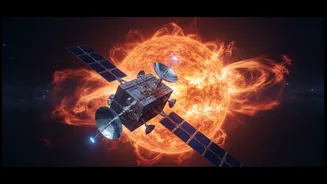
Our star is anything but quiet. It frequently releases powerful bursts of energy and matter known as solar flares and coronal mass ejections (CMEs). A solar flare is an intense eruption of radiation that travels at the speed of light, reaching Earth in about
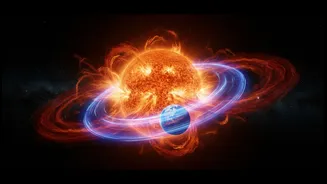
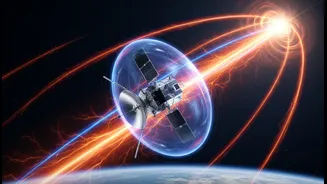
eight minutes. CMEs are vast clouds of charged particles and magnetic fields that travel more slowly, taking one to three days to arrive. When this space weather is aimed at Earth, it can wreak havoc on our technology. The bombardment of high-energy particles can damage sensitive satellite electronics, degrade solar panels, and even cause phantom commands that send a spacecraft tumbling. Furthermore, these solar storms heat and expand Earth's upper atmosphere, increasing drag on satellites in low-Earth orbit, which can cause their orbits to decay.
A Global Network of Solar Sentinels
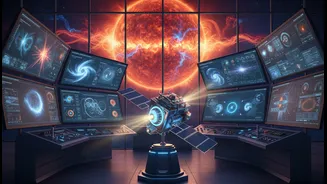
To counter this threat, space agencies around the world operate a network of solar observatories. These sentinels, both on the ground and in space, constantly monitor the Sun for signs of an impending eruption. Missions like NASA's Solar Dynamics Observatory (SDO) and the joint ESA/NASA Solar and Heliospheric Observatory (SOHO) provide uninterrupted views of the sun's activity. A crucial vantage point is the Sun-Earth Lagrange Point 1 (L1), about 1.5 million kilometres from Earth, where spacecraft can 'hover' and observe the solar wind before it reaches our planet. This is the operational home for spacecraft like the Deep Space Climate Observatory (DSCOVR) and India's own pioneering mission, Aditya-L1. Launched by ISRO, Aditya-L1 provides crucial data on CMEs and solar dynamics, bolstering global space weather prediction efforts.
From Data to Actionable Warnings
Observation is only the first step. The data collected by these observatories is streamed to space weather prediction centres, such as NOAA's Space Weather Prediction Center (SWPC) in the United States. Here, scientists analyse the data to forecast the intensity and trajectory of solar storms. They issue alerts, watches, and warnings to government agencies, infrastructure operators, and satellite companies across the globe. This process gives satellite operators a critical heads-up, sometimes with only a few hours of notice for a fast-moving radiation storm, or a couple of days for a CME. This warning time is the core of the "protection" strategy; it isn't a physical shield, but rather the crucial window needed to take defensive action.
Putting Satellites in 'Safe Mode'
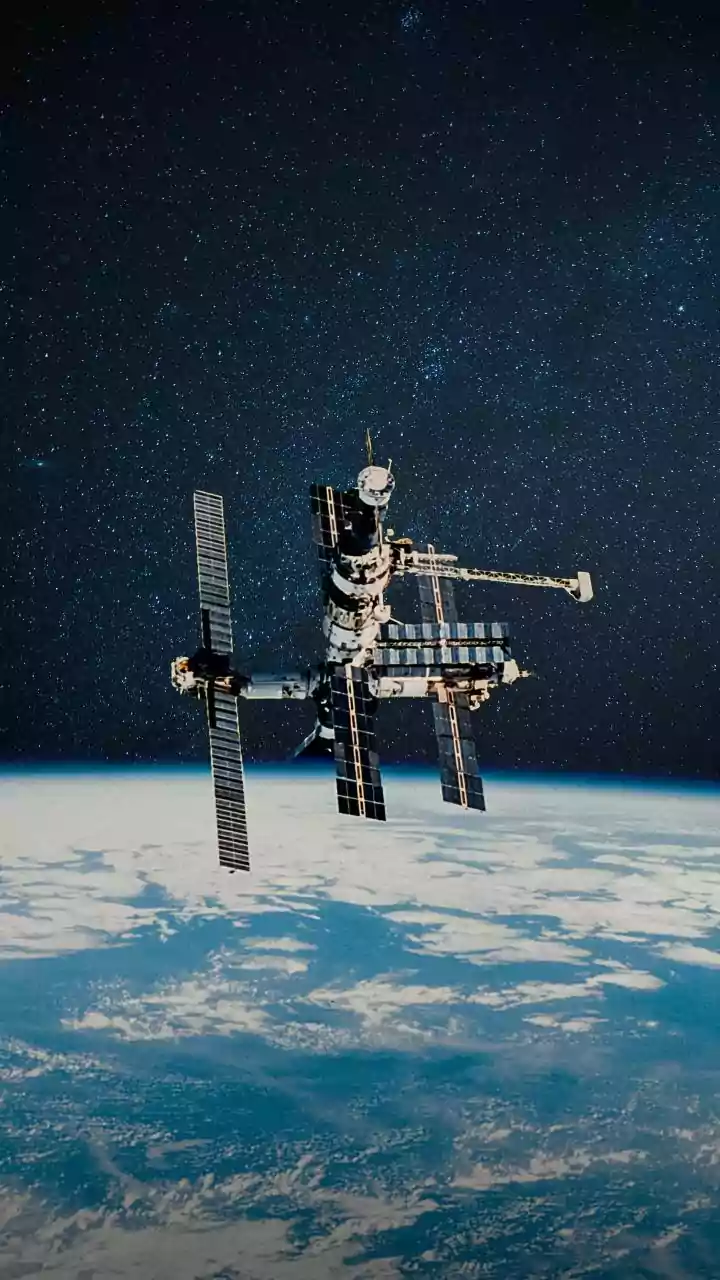
When a significant solar storm warning is issued, satellite operators scramble to protect their multi-million dollar assets. The primary defensive manoeuvre is to place the spacecraft into 'safe mode'. This involves shutting down all non-essential systems, particularly sensitive scientific instruments and high-voltage electronics, to minimise the risk of damage from electrical discharges or corrupted data. The satellite orients itself to keep its solar panels pointed at the Sun to maintain power while effectively weathering the storm. In some cases, operators may adjust a satellite's orbit to reduce drag. Once the storm passes, ground control methodically reboots the systems and brings the satellite back to full operational status, a process that can take time but is vital for preserving our orbital infrastructure.
An Increasingly Vital Service
The need for robust space weather forecasting is more critical than ever. As our dependence on GPS, global communications, and satellite-based financial transactions grows, so does our vulnerability to solar activity. The Sun is currently near the peak of its 11-year cycle, known as the solar maximum, leading to more frequent and intense flares. The explosive growth of large satellite constellations in low-Earth orbit also raises the stakes. Recent studies have shown that severe storms can have a greater impact than previously estimated. The continued vigilance of solar observatories like Aditya-L1 and the global network they support is therefore not just a matter of scientific curiosity, but a fundamental part of protecting the technological backbone of modern society.