





A Wake-Up Call From Chelyabinsk
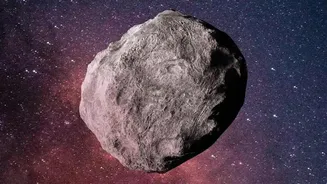
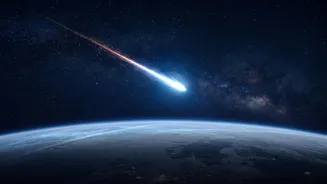
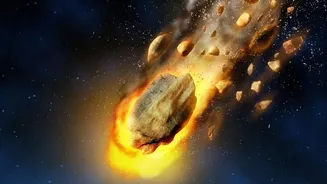
On a quiet February morning in 2013, an asteroid roughly 20 metres wide entered the atmosphere over Chelyabinsk, Russia. It was travelling at over 60,000 kilometres per hour and exploded in an airburst without ever hitting the ground. The resulting shockwave
was powerful enough to shatter thousands of windows, damage buildings, and cause around 1,500 injuries, primarily from broken glass. The event was a stark reminder of a critical gap in our planetary defense: nobody saw it coming. While astronomers are confident they have catalogued over 90% of the large, dinosaur-extinction-level asteroids, it's these smaller objects—ranging from tens to hundreds of metres—that pose a more frequent, and less predictable, threat.
Why Are They So Hard to Spot?
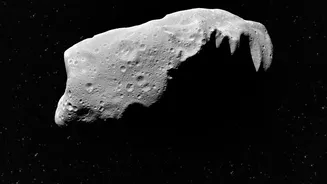
Finding these smaller Near-Earth Objects (NEOs) is a monumental challenge for several reasons. First is their size and composition. Many are described as being darker than coal, reflecting very little sunlight, which makes them incredibly faint targets for optical telescopes. Second, they are moving at incredible speeds across the vastness of space. A small, dark object moving quickly is easy to miss. Finally, there's the problem of geometry. Ground-based telescopes can only survey the night sky. An asteroid approaching from the direction of the sun is effectively hidden in its glare, as was the case with the Chelyabinsk meteor. This creates a significant blind spot in our detection efforts, reducing potential warning times from years to mere hours, or none at all.
The Next Generation of Sky Watchers
Recognising this gap, space agencies are developing a new generation of detection tools. A key part of this new effort is moving the search into space. NASA's upcoming NEO Surveyor is a space-based infrared telescope specifically designed for this task. By looking for the heat signature of asteroids rather than reflected visible light, NEO Surveyor will be able to spot them regardless of how dark they are. Positioned at a stable point between the Earth and the Sun, it will also be able to look in the direction of the Sun, closing a critical gap in our current survey capabilities. On the ground, the Vera C. Rubin Observatory, expected to begin its main survey soon, will also revolutionize asteroid detection. Its wide-field camera will scan the entire southern sky every few nights, creating a massive dataset that will uncover thousands of new NEOs.
From Finding to Fending
Detection is only the first half of the planetary defense equation. Once a threatening asteroid is found, we need to be able to do something about it. This is where missions like NASA's Double Asteroid Redirection Test (DART) have proven invaluable. In 2022, the DART spacecraft successfully slammed into a small asteroid moonlet named Dimorphos, altering its orbit. The mission was not just a success; it was more effective than predicted, demonstrating that a 'kinetic impactor' is a viable strategy for nudging an asteroid off a collision course. The European Space Agency's Hera mission, set to launch and later arrive at Dimorphos, will study the aftermath of the impact in detail, providing crucial data for planning future deflection missions. These missions prove that with enough warning—which brings us back to the importance of detection—we have the ability to protect ourselves.