





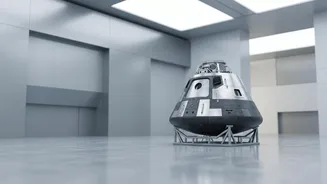
The Astronaut’s Personal Biosphere
The Environmental Control and Life Support System, or ECLSS, is the unsung hero of human spaceflight. It’s far more than just air conditioning; it's a sophisticated set of machines that creates a bubble of Earth-like conditions in the vacuum of space.
This system manages everything essential for life: it supplies oxygen, removes the carbon dioxide (CO2) astronauts exhale, controls cabin pressure, and maintains a stable temperature and humidity. Without it, an astronaut couldn't survive. For Gaganyaan's short mission, the system will carry all necessary supplies from Earth and store waste for disposal upon return. It must keep the crew comfortable and, more importantly, safe from threats like CO2 buildup, which can cause dizziness and impair judgment in microgravity where air doesn't circulate naturally.
Simulating a Worst-Case Scenario
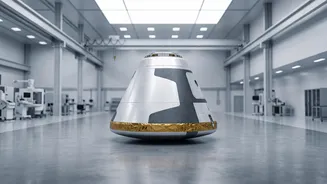
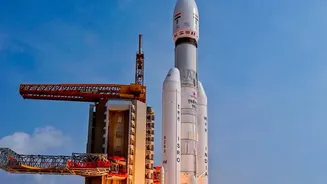
A launch abort is one of the most dangerous situations a crew can face. If the rocket veers off course or a critical failure occurs mid-flight, a powerful Crew Escape System is designed to fire, pulling the crew module away from the failing booster at incredible speed. This process is not gentle. It subjects the entire capsule and everything inside it to immense G-forces, violent vibrations, and sudden, bone-jarring shocks. The Indian Space Research Organisation (ISRO) has conducted several tests to simulate these conditions, including a successful in-flight abort test where a test vehicle intentionally triggered an anomaly at over 11 km altitude to test the escape sequence. These abort missions are designed to prove the escape system works under the most stressful conditions, ensuring the crew can be pulled to safety.
Why Shock Testing is Non-Negotiable
This brings us to the core question: why test the life support system under these extreme shocks? The answer is simple: it absolutely must keep working. If the ECLSS fails during a launch abort, the crew could survive the initial emergency only to face a new, silent threat inside their own capsule. The severe vibrations could crack a pipe, sever an electrical connection, or damage the sensitive filters that scrub CO2 from the air. A failure in the oxygen supply, pressure regulation, or temperature control would be catastrophic. The goal of these ground tests is to subject the ECLSS to forces even greater than those expected during an actual abort. By shaking, rattling, and shocking the hardware on Earth, engineers can identify and fortify any potential weak points. It’s a process of finding failure on the ground so that it never happens in the sky.
Engineering for Absolute Reliability
ISRO's tests are meticulously designed to validate the structural integrity and functionality of every component. In qualification tests, systems are often pushed to endure loads significantly higher than what they would face in a real flight—sometimes up to 1.75 times the estimated forces. This ensures a wide safety margin. For the ECLSS, this means ensuring that every valve, sensor, fan, and canister remains securely in place and fully operational throughout the intense judder of an escape maneuver. The system must not only withstand the initial shock but continue to provide a breathable atmosphere while the crew module parachutes down to a safe landing in the ocean. This rigorous testing is a cornerstone of making the spacecraft 'human-rated'—a certification that it is as safe as technologically possible for its precious cargo.