




The Ultimate Insurance Policy
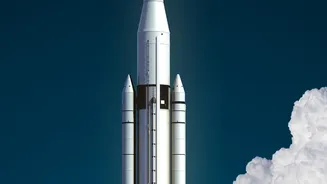
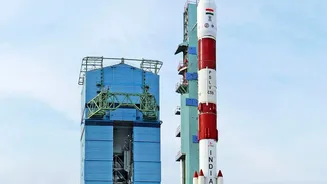
Sending humans to space is inherently risky, especially during the first few minutes of launch when the rocket is a controlled explosion of immense power. To protect the crew during this perilous phase, ISRO has developed and rigorously tested a Crew
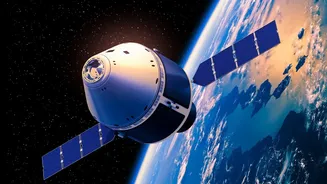
Escape System (CES). This system is essentially an emergency eject button. In the event of a catastrophic failure on the launchpad or during ascent, powerful, quick-acting solid-fuel motors are designed to fire instantly, pulling the crew module containing the astronauts away from the malfunctioning rocket. This system was validated in a crucial test known as the Test Vehicle Abort Mission (TV-D1), which simulated a failure during the intense transonic phase of flight, proving the capsule could be safely pulled away and recovered.
A Symphony of Parachutes
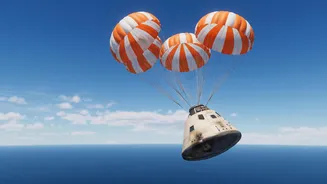
What goes up must come down, and for the Gaganyaan crew module, returning to Earth safely is as critical as launching. This is where a complex, multi-stage parachute system comes into play. ISRO has conducted a series of Integrated Air Drop Tests (IADT) to perfect this sequence. The entire deceleration system consists of ten parachutes of four different types. The sequence begins with apex cover separation parachutes, followed by two drogue parachutes. These smaller drogue chutes are vital for stabilizing the capsule and slowing it from high speeds upon re-entry. Once stabilized, pilot parachutes deploy the three massive main parachutes, which are responsible for slowing the module to a gentle splashdown speed in the ocean.
Testing for a Safe Splashdown
The mission doesn't end when the parachutes open; a safe recovery from the sea is paramount. ISRO has also successfully completed qualification tests for systems that ensure astronaut safety after splashdown. One of these is the Crew Module Up-righting System (CMUS). If the capsule lands upside down in the water, this system uses gas-inflated balloons to automatically flip it to the correct orientation, which is a critical safety feature. Another test validated the umbilical disconnect system, which ensures the crew module cleanly separates from its service module before re-entry into the atmosphere. These tests, while less dramatic than a launch, are just as crucial for the survival of the crew.
From the Ground Up
Safety isn't just about what happens in the air. Even before the rocket ignites, there are risks. ISRO is also implementing ground safety systems, including a Flight Crew Emergency Egress System. This is a ground-based rapid evacuation mechanism, like a zipline, that allows astronauts to quickly exit the crew module and get to a safe location in the seconds before a launch if a hazard like a fire or fuel leak is detected on the pad. This system works in tandem with the in-flight abort systems to provide a comprehensive safety net that covers every phase of the mission, from the countdown to recovery.
The Road Ahead for Gaganyaan
These successful tests are major milestones that build confidence for the next stages of the Gaganyaan programme. The current timeline involves a series of uncrewed test flights before any human mission is attempted. The first uncrewed flight, G1, is planned to carry Vyommitra, ISRO's humanoid robot, to test life-support systems and simulate human functions in orbit. Following a series of such validation flights, the first crewed Gaganyaan mission, which will carry three astronauts into low Earth orbit for three days, is targeted for 2027. Each successful test brings India one step closer to joining the elite club of nations—currently just the US, Russia, and China—with the independent capability to launch humans into space.