






What Are the Orionids?
The Orionid meteor shower is an annual celestial event that occurs when our planet passes through the debris stream of Comet 1P/Halley. While the comet itself only visits the inner solar system every 76 years (its next appearance is in 2061), its dusty
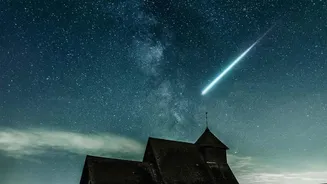
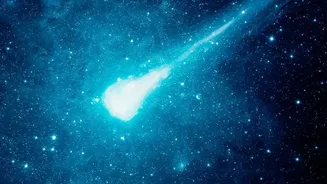
legacy gives us a spectacular show every autumn. These meteors are known for their remarkable speed, entering our atmosphere at about 66 kilometres per second. This velocity often results in bright, swift streaks that can leave behind glowing trails, known as persistent trains, which linger in the sky for several seconds after the meteor has vanished. Occasionally, a larger piece of debris can create a brilliant fireball, a meteor as bright as the planet Venus.
The Peak in 2026: A Pre-Dawn Opportunity
For 2026, the Orionid meteor shower will be active from early October to early November, with its peak activity expected on the night of October 21-22. However, there is a significant challenge for sky-gazers this year: a bright waxing gibbous moon will illuminate the sky for most of the night, washing out all but the brightest meteors. But this is where the headline's advice becomes crucial. The moon is predicted to set around 3 a.m. local time on the morning of October 22. This opens up a precious window of true darkness that lasts until the first light of dawn, offering the absolute best opportunity to catch the show. So, forget staying up late; the real event begins when you wake up early.
Why Before Dawn Is Prime Time
The hours between midnight and dawn are almost always the best time to watch any meteor shower, for two key reasons. First, the shower's radiant—the point in the sky from which the meteors appear to originate, in this case, the constellation Orion—climbs higher in the sky as the night progresses. A higher radiant means more meteors are visible across the entire sky. Second, and more importantly, this is when our part of the Earth is rotating to face the direction of the planet's orbit. Think of it like driving a car through a rainstorm: you see far more raindrops hitting the front windshield than the rear one. In the pre-dawn hours, we are on the 'front windshield' of Earth, moving head-on into the stream of cometary debris.
How to Watch: Your Viewing Guide for India
Watching the Orionids requires no special equipment, just a little planning. The most important step is to escape light pollution. Head to a location at least an hour away from city lights, whether it's a rural village, a remote hilltop, or a designated dark-sky spot. Give your eyes at least 20 to 30 minutes to fully adapt to the darkness; this means no looking at your phone screen. Lie back on a blanket or reclining chair so you can take in as much of the sky as possible without straining your neck. You don't need to stare directly at the constellation Orion; in fact, meteors will appear all over the sky, and those seen farther from the radiant often have longer, more dramatic trails. Patience is key. Under ideal conditions, you can expect to see 15 to 20 meteors per hour.
Setting Realistic Expectations
While some meteor showers produce a constant stream of shooting stars, the Orionids are typically more sporadic. You might see a few in quick succession, followed by a lull. The quoted rate of 15-20 per hour is an ideal figure for a perfectly dark, clear sky with the radiant directly overhead. In reality, you may see fewer. Weather is another critical factor in India. Check the forecast not just for clouds but also for haze, which can significantly reduce visibility even on a seemingly clear night. The reward for your patience is witnessing pieces of the most famous comet in history burning up in our atmosphere—a direct connection to the greater cosmos.