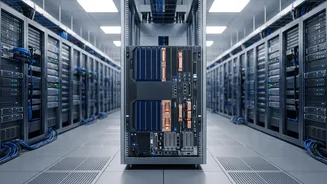







What is the Local API and Why Does it Matter?
Until now, Indian developers using OpenAI's powerful models sent their data to servers located abroad. The new local API means that data processing can now happen on Indian soil. For many companies, especially those in regulated sectors like finance and
healthcare, this is a game-changer. It addresses data localisation requirements, which have been a significant barrier to the full-scale adoption of AI for sensitive workloads. Essentially, this allows businesses to keep their data within India's borders, satisfying both regulatory needs and corporate data governance policies. Nitin Bawankule, OpenAI's Head of Enterprise for India, noted that some businesses were hesitant to deploy AI for critical tasks because of this very issue. Local processing provides them with greater control and removes a practical roadblock.
The Power of Proximity: Speed and Reliability
Beyond data residency, the most immediate benefit of a local API is the reduction in latency. Latency is the delay between a user's request and the AI's response. When data has to travel across continents to a server in Europe or the US and back, that delay can be noticeable. For applications that require real-time interaction, such as dynamic chatbots or instant data analysis, every millisecond counts. By processing requests within India, the round-trip time is significantly shortened. This leads to a snappier, more responsive user experience, which is crucial for customer-facing applications. Furthermore, it provides more predictable performance, free from the volatility of international network traffic.
A Spotlight on Text Summarisation
The headline specifically calls out text summarisation, and for good reason. It’s a versatile tool with broad business applications. This technology allows machines to read long documents and distill them into concise, accurate summaries. For law firms, this could mean summarising lengthy case files in minutes. For financial analysts, it could involve condensing dense market reports into key bullet points. Media companies can use it to create quick recaps of articles for their readers. With the local API ensuring data privacy and speed, Indian companies can now confidently apply this technology to internal documents, customer feedback, and other proprietary information to drive efficiency and faster decision-making.
Beyond Summarisation: The Broader Use Cases
While summarisation is a powerful example, the potential applications are far broader. Indian businesses can now more effectively leverage OpenAI's models for a range of tasks. Enhanced customer support through intelligent, context-aware chatbots that can access local knowledge bases is one key area. Another is personalised marketing, where the AI can analyse customer data stored in India to generate highly targeted campaigns and product recommendations. For India's massive software development sector, it means faster code generation and debugging assistance. Other use cases include sentiment analysis of social media trends, automated content creation for blogs and reports, and information extraction from unstructured documents.
The Impact on India's AI Ecosystem
This move by OpenAI is more than just a new product offering; it's an investment in the Indian AI ecosystem. It empowers local startups and developers to build next-generation applications without the previous constraints of data residency or high latency. By providing the foundational infrastructure, it encourages innovation and lowers the barrier to entry for building sophisticated AI-powered services. This could lead to a surge in new products tailored specifically for the Indian market, solving local problems with world-class technology. As India continues to build out its digital infrastructure, including massive data centres, the availability of local AI processing will be a critical catalyst for growth and competitiveness on the global stage.