



What Am I Actually Looking For?
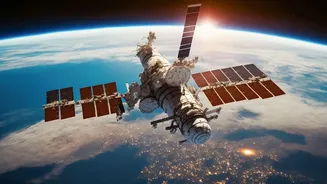
Forget what you think a satellite looks like. The ISS doesn't blink or have colourful flashing lights; if you see that, you're looking at an airplane. Instead, the space station appears as a very bright, fast-moving point of light, like a brilliant star
gliding steadily across the night sky. It travels much faster than a plane, moving at a staggering 28,000 kilometres per hour to orbit the Earth every 90 minutes. From your perspective on the ground, it will cross your entire field of view in just a few minutes, so you need to be ready. It’s often the brightest object in the sky, after the Moon, and you won’t need a telescope or binoculars to see it.
The Golden Hours for Viewing
The secret to spotting the ISS is all about timing and sunlight. You can't see it in the middle of the day because the sky is too bright, and you can't see it in the middle of the night because it's in Earth's shadow, with no sunlight to reflect. The magic happens in the hours just before sunrise and just after sunset. During these periods, it’s dark where you are, but the ISS, at its high altitude, is still bathed in sunlight. This makes its metallic structure shine brilliantly against the darker dawn or dusk sky. Sighting opportunities can happen several times a week or just a few times a month, depending on the station's orbital path over your specific location in India.
Your Essential Toolkit: Websites and Apps
You don't have to guess when to look up. Several fantastic, free tools do all the work for you. The most popular is NASA's official Spot The Station service. You can visit the website, select your city in India, and it will give you a list of upcoming sighting times, duration, and where to look in the sky (for example, 'Appears: 10° above WNW'). For even more convenience, you can download the official Spot The Station app on iOS or Android, which sends alerts directly to your phone about 12 hours before a sighting. Other highly-rated apps include Heavens-Above, ISS Detector, and Satellite Tracker, some of which offer augmented reality (AR) features that let you point your phone at the sky to see the station's exact path.
A Simple Step-by-Step Viewing Plan
Ready to give it a try? Follow these simple steps. First, use one of the apps or websites to find the next good viewing opportunity for your city. Look for a pass with a high 'Max Height'—anything over 40 degrees is great, as it means the ISS will be high in the sky and not hidden by trees or buildings. On the night of the pass, go outside about five minutes early to let your eyes adjust to the dark. Know your basic directions (North, South, East, West). The tracker will tell you where the station will first appear and where it will disappear. Then, just look in that direction for a steady, bright light to emerge and glide across the sky. It’s an unforgettable sight.
More Than Just a Light in the Sky
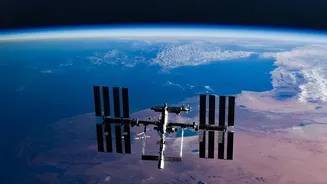
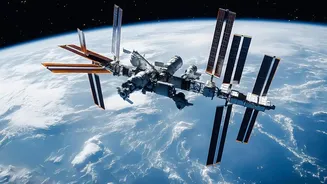
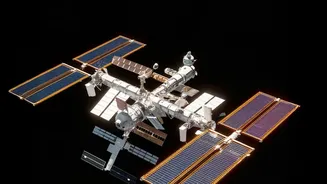
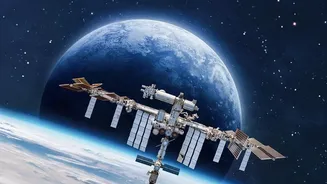
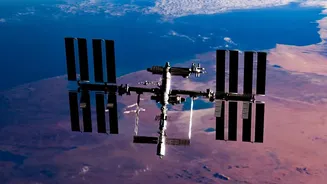
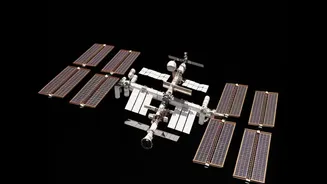
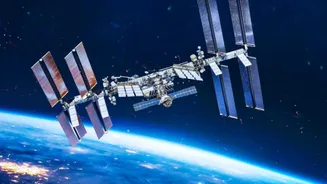
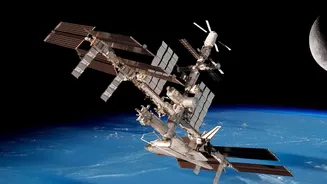
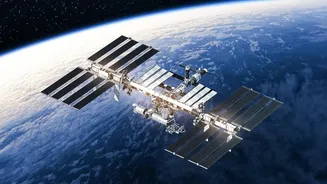
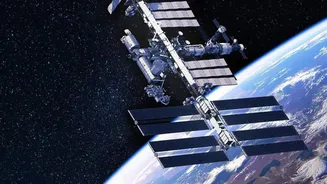
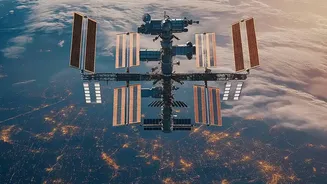
As you watch the ISS soar overhead, remember what you're seeing. It is the largest structure humans have ever put into space and has been continuously crewed since November 2000. This orbiting laboratory is a symbol of international cooperation, operated by five different space agencies from the US, Russia, Europe, Japan, and Canada. Onboard, astronauts from around the world, including those of Indian origin, conduct vital research in microgravity that helps us understand climate change, human health, and prepares for future missions to the Moon and Mars. Seeing it connects you directly to one of humanity's greatest achievements.