
The Heart of the Milky Way
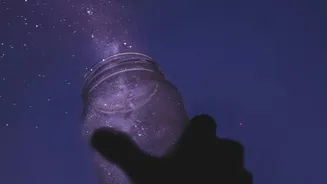
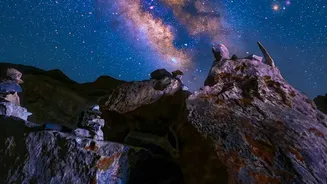
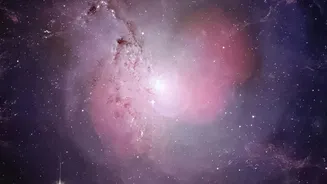
Late August provides a prime opportunity to witness the magnificent core of our own galaxy, the Milky Way. To find it, look towards the southern horizon for the constellations Sagittarius and Scorpius. In a dark location, away from city lights, the galaxy's
core appears as a dense, luminous band of light arching across the sky. This celestial river of stars is at its most beautiful between August and September, ideally viewed a couple of hours after sunset. The sight is breathtaking, with the teapot shape of Sagittarius pointing directly towards the galactic centre. While monsoon clouds can be a challenge, clear breaks in the weather will reward patient observers with one of the most spectacular sights in the night sky.
Saturn, the Golden Gem
The ringed planet, Saturn, is a brilliant and steady golden light in the August night sky, making it an easy target for beginners. Unlike stars, which twinkle, planets shine with a constant glow. You can find Saturn rising in the east during the evening, travelling through the constellation of Pisces. It will be visible all night long, a prominent and captivating fixture. On the nights of August 30th and 31st, the Moon will pass close to Saturn, creating a beautiful pairing that makes the planet even easier to identify. While it's a fantastic sight now, this is all a prelude to its opposition on October 4, 2026, when it will be at its closest and brightest for the year.
The Summer Triangle High Above
Dominating the sky directly overhead is a large and easily recognisable pattern of stars known as the Summer Triangle. This asterism is not a constellation itself but is formed by three of the brightest stars in the sky: Vega, Deneb, and Altair. Vega is the brightest star in the constellation Lyra, Deneb in Cygnus (the Swan), and Altair in Aquila (the Eagle). These three stars are so bright that the triangle can be spotted even from light-polluted urban areas, making it a reliable landmark for city-bound stargazers. Its position high in the sky makes it a focal point of the late summer heavens.
The Lingering Perseid Meteors
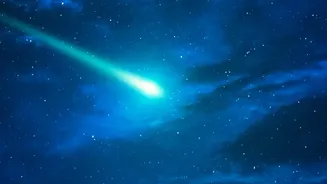
While the famous Perseid meteor shower had its peak around August 12-13, the shower remains active until August 24. This means that even in the final days of the month, you still have a chance to catch a few 'shooting stars'. These meteors are debris left behind by a comet, and they burn up brightly as they enter Earth's atmosphere. For the best chance of spotting one, find a dark location after midnight and simply look up. Although the rate will be much lower than during the peak, a stray, bright Perseid streaking across the star-filled sky is a memorable sight.
The Partial Lunar Eclipse
Mark your calendars for August 28, when a partial lunar eclipse will occur. During this event, a portion of the full Moon will pass through Earth's darkest shadow, known as the umbra. This will cause part of the Moon to appear noticeably dimmer or even reddish, as if a bite has been taken out of it. However, reports indicate this particular eclipse will not be visible from India. Skywatchers in much of the Americas, Europe, and Africa will be able to witness it. Despite this, the Full Moon on August 28, known as the Sturgeon Moon, will still be a beautiful sight rising in the sky.