






The Golden Rule: Carry-On Only
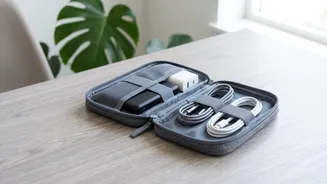
The single most important rule for travelling with a power bank is that it must be in your carry-on luggage. All aviation authorities, including India's Bureau of Civil Aviation Security (BCAS), strictly prohibit power banks in checked-in baggage. This
isn't an arbitrary rule designed to inconvenience you; it’s a critical safety measure. When you check in, airline staff will likely ask if you have any lithium batteries or power banks in your suitcase. Answering truthfully is essential for the safety of everyone on board. If a power bank is detected in your checked luggage during screening, your bag will be pulled aside, opened, and the item will be confiscated. This not only means you lose your charger but also causes significant delays for you and the airline's baggage handling process.
The Science of a No-Go Zone
The reason power banks are banned from the cargo hold lies in the chemistry of their lithium-ion batteries. These batteries, while generally safe, carry a small but serious risk of what is known as 'thermal runaway'. This is a chain reaction where a battery cell overheats, potentially due to damage or a short circuit, causing it to catch fire with intense heat that can reach over 900°C. In the passenger cabin, if a device starts to smoke or overheat, it can be quickly spotted and dealt with by the cabin crew, who are trained for such incidents. However, in the unmanned and inaccessible cargo hold, a fire could go undetected until it's too late, with potentially catastrophic consequences. The fire suppression systems in cargo holds are not designed to extinguish the specific type of chemical fire that lithium-ion batteries produce.
Know Your Power Limits
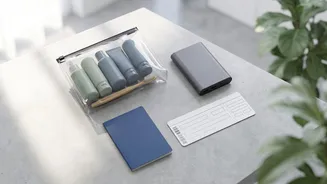
It’s not just about where you pack your power bank, but also its capacity. Aviation regulators measure battery capacity in Watt-hours (Wh). The rules are tiered: power banks under 100Wh are generally allowed without issue. Those between 100Wh and 160Wh may be permitted, but you must get prior approval from your airline. Any power bank exceeding 160Wh is strictly forbidden on passenger aircraft. Most power banks are labelled with their capacity in milliamp-hours (mAh). To find the Watt-hours, use this simple formula: (mAh * Voltage) / 1000 = Wh. The nominal voltage for most power banks is 3.7V. So, a 20,000mAh power bank is typically 74Wh, well within the limit. A capacity of 27,000mAh is roughly the 100Wh cut-off point. If the Wh rating isn’t printed on your device, it might be confiscated, so it’s best to travel with clearly labelled products.
Pack for a Swift Security Scan
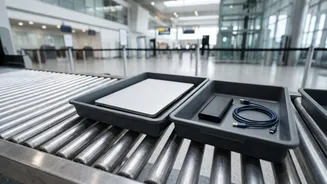
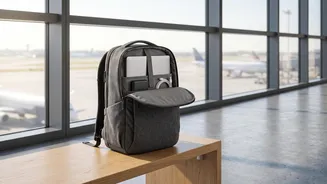
To ensure a smooth journey through the security checkpoint, think ahead. Don't bury your power bank at the bottom of a packed carry-on bag. Instead, place it in an easily accessible pocket. Just as you do with your laptop, you should remove the power bank from your bag and place it in a separate tray for X-ray screening. This allows security officers to get a clear view of the device and its specifications without having to manually search your entire bag, which is what causes delays. In India, regulations from the Directorate General of Civil Aviation (DGCA) also specify that power banks should not be placed in overhead bins during the flight but kept at your seat, either in the seat pocket or under the seat in front of you. This ensures the device is always within sight.
In-Flight Use Is Also Restricted
Recent changes to safety regulations in India have further tightened the rules. The DGCA has now banned the use of power banks to charge devices during a flight. This includes plugging them into the aircraft's in-seat power outlets. This restriction was introduced after a global increase in incidents involving batteries overheating in the cabin. While you can carry them on board, you must wait until you land to use them. Passengers are required to immediately inform the cabin crew if they notice any device emitting heat, smoke, or an unusual smell. This vigilance is a key part of the modern safety system for air travel.