





Cyclones have long been a fact of life for India’s vast coastline. But as our planet warms, the familiar patterns of these powerful storms are beginning to shift, forcing us to ask new questions about where and how they will strike next.
The Shifting Cyclone Story
For decades, the
narrative around cyclones in the Indian Ocean was relatively stable. The Bay of Bengal was the active, turbulent basin, responsible for the vast majority of storms threatening the subcontinent. The Arabian Sea, by contrast, was considered calmer. However, recent scientific studies and observational data are painting a more complex and concerning picture. While the total number of cyclones might not be dramatically increasing across the board, their behaviour is changing. We are seeing a distinct trend towards more intense and rapidly strengthening storms, a phenomenon that poses a significant challenge to forecasting and disaster management.
A Tale of Two Seas
The most critical finding for India is the growing divergence between its two neighbouring seas. The Bay of Bengal continues to be a prolific cyclone generator, but the Arabian Sea is where the most dramatic changes are occurring. Historically, the cooler sea surface temperatures and atmospheric conditions over the Arabian Sea were less conducive to the formation of powerful cyclones. That is no longer the case. Due to accelerated warming, the Arabian Sea is now fertile ground for cyclones to form and, more importantly, to intensify at an alarming rate. We are witnessing an increase in the frequency of 'very severe' and 'extremely severe' cyclonic storms in a region that was once spared the worst. This means that states like Gujarat, Maharashtra, and even Kerala are facing a threat level that was previously associated almost exclusively with the eastern coast.
What's Driving the Change?
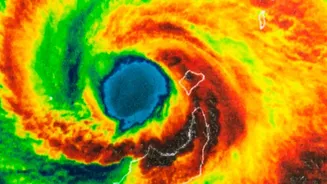
The primary driver behind this shift is rising ocean temperatures. Cyclones are essentially giant heat engines that feed on warm, moist air over tropical waters. As climate change warms the oceans, it provides more fuel for these storms to develop and sustain their power. A warmer sea surface, particularly above 26 degrees Celsius, allows for deeper convection and greater moisture availability in the atmosphere. This not only helps cyclones form but enables them to undergo 'rapid intensification'—a dangerous process where a storm’s wind speeds increase dramatically in a short period, often catching forecasters and communities off guard. Furthermore, changes in atmospheric wind patterns, known as vertical wind shear, are also contributing. While strong wind shear can tear a budding cyclone apart, some studies suggest that these patterns may also be changing in ways that favour storm development in new areas.
The Human Impact
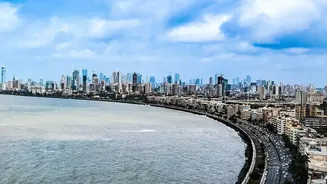
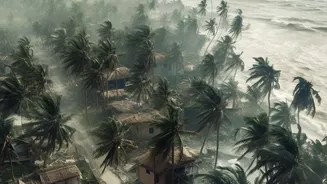
These scientific trends have profound real-world consequences. The increased threat to India's western coast means that critical infrastructure, dense population centres, and vital economic hubs that were built with a lower cyclone risk in mind are now more vulnerable. Ports, industrial complexes, and cities like Mumbai are having to re_evaluate their preparedness strategies. For disaster management agencies, the challenge is twofold. First, they must extend robust warning and evacuation systems to regions that have less experience with severe cyclones. Second, the rapid intensification of storms shortens the lead time for warnings, making swift and decisive action more critical than ever. For millions of people living along the coastline, this changing risk profile means a new and uncertain reality.
Preparing for a New Normal
Adapting to this evolving threat requires a focus on region_specific strategies. A one_size_fits_all approach to cyclone preparedness is no longer sufficient. Coastal planning on the west coast must now incorporate the higher risk of severe storms, potentially requiring updated building codes and better_protected infrastructure. Investment in advanced forecasting technology that can better predict rapid intensification is paramount. For communities, this means greater awareness and education about the new risks they face. While the Bay of Bengal will remain a major focus for cyclone mitigation, the rising threat from the Arabian Sea demands equal attention and resources. Understanding these regional differences is no longer just an academic exercise; it is essential for protecting lives and livelihoods in a warming world.