




The Great Data Traffic Jam in Space
For decades, the model for space-based observation has been simple: a satellite gathers enormous amounts of raw data—images, sensor readings, and more—and beams it all down to Earth. Only then can powerful ground-based computers and human analysts sift
through it to find what's important. This process, however, has created a major bottleneck. The sheer volume of data being collected by modern satellites far exceeds the available bandwidth to send it back. Imagine trying to download thousands of high-definition movies on a slow internet connection. This delay makes it difficult to respond quickly to time-sensitive events like natural disasters, illegal deforestation, or military movements. A significant portion of the transmitted data might even be useless due to factors like cloud cover, further wasting precious bandwidth and resources.
What is Orbital AI?
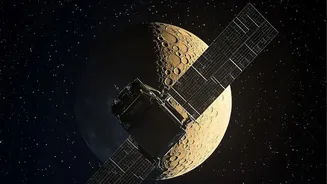
Orbital AI, also known as on-board or edge computing, flips the traditional model on its head. Instead of sending raw data to Earth for analysis, it places the analytical 'brain' directly onto the satellite. It's the difference between a security camera that streams video 24/7 and a smart camera that only alerts you when it detects a person. By integrating AI and machine learning algorithms, the spacecraft can process information as it's collected. Using powerful, miniaturised processors, the satellite can autonomously analyse images, identify patterns, classify objects, and flag anomalies in real-time. It decides what's important and sends back only the finished, actionable insights, rather than terabytes of unprocessed data.
From Raw Data to Instant Insights
The benefits of this approach are transformative. The most significant advantage is speed. For disaster management, a satellite with orbital AI can detect a wildfire or flood and transmit an alert to emergency responders within minutes, not hours or days. This drastically reduces latency and allows for rapid intervention when every second counts. It also dramatically reduces the strain on communication networks, potentially cutting data transmission volumes by as much as 80%. Furthermore, it allows for more efficient and autonomous missions. A satellite can intelligently re-prioritise its own tasks, for instance, by deciding on its own to focus its sensors on a developing storm it has identified, without waiting for commands from Earth. This capability is crucial for deep-space exploration, where communication delays can be hours long.
The Challenges of a Brain in Orbit
Putting a complex computer in space is not without its difficulties. The space environment is incredibly harsh. Cosmic radiation can damage sensitive electronics and corrupt data, potentially causing an AI to make flawed decisions. AI systems also consume significant power and generate heat, both of which are scarce resources on a satellite that relies on solar panels and has limited cooling options. Another major hurdle is maintenance and security. How do you securely update or retrain an AI model on a satellite that's miles above the Earth? The risk of cyberattacks, where an adversary could manipulate a satellite's decision-making, is a serious concern that requires robust security protocols.
India’s Stake in a Smarter Orbit
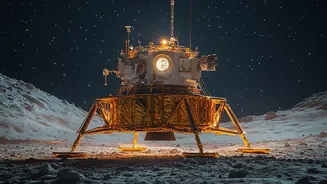
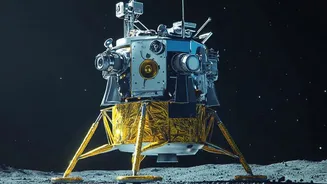
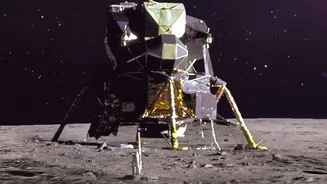
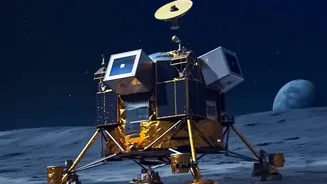
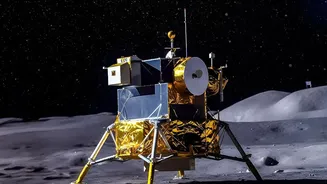
For India's ambitious space program, mastering orbital AI is a strategic imperative. The Indian Space Research Organisation (ISRO) is already leveraging AI in various areas, from mission planning to data analytics. The technology was crucial in the historic Chandrayaan-3 mission, where AI-powered sensors helped the lander detect hazards and achieve a safe autonomous touchdown on the Moon's surface. Looking ahead, ISRO has reportedly begun studying the feasibility of in-orbit data centres and plans to launch dozens of new AI-powered satellites for enhanced geo-intelligence and border surveillance. By developing these capabilities, India can not only improve its Earth observation and disaster management systems but also solidify its position as a leading power in the rapidly growing global space economy.